
Mold inspection report red flags are specific indicators within a written assessment that reveal unreliable data, potential inspector bias, or dangerously incomplete findings. Recognizing these warning signs protects your health and your investment before you sign a purchase agreement or authorize expensive remediation work. A credible mold assessment, formally called an Indoor Environmental Quality (IEQ) report, covers sampling data, lab results, chain-of-custody documentation, and remediation recommendations. When any of those elements are missing or suspicious, the entire report loses its value. Here is what every homeowner and prospective buyer needs to know.
1. Mold inspection report red flags in structural observations
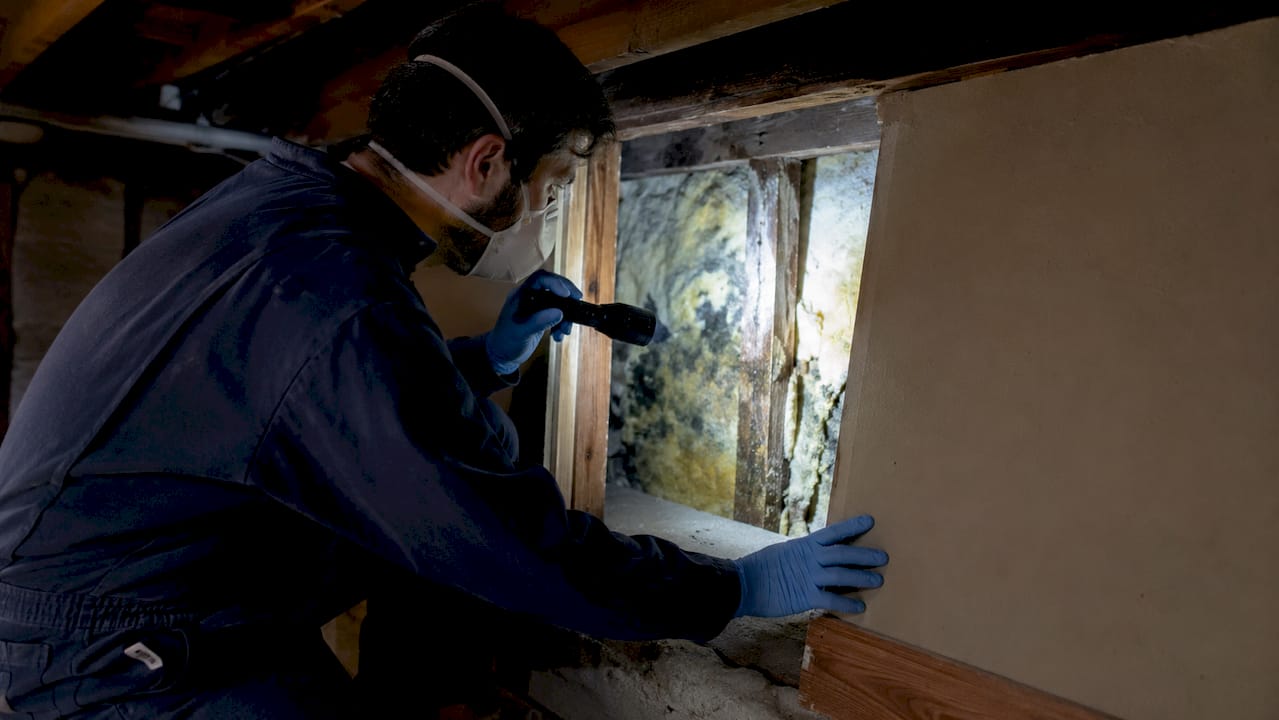
Physical observations are the foundation of any credible mold report. Visible mold patches, discolored walls, or water damage notations in a report alert you to underlying moisture conditions that actively support mold growth. These findings are not cosmetic. They signal that water has been present long enough to compromise building materials and potentially affect air quality.
Watch for these structural warning signs in any report you review:
- References to bubbling, warped, or buckled drywall, flooring, or ceiling tiles
- Staining patterns near plumbing chases, HVAC ducts, or crawl space access points
- Notes about efflorescence (white mineral deposits) on basement walls, which indicate chronic moisture intrusion
- Any mention of previous water damage repairs without follow-up moisture readings
The location of these findings matters as much as their presence. Mold discovered behind walls, under flooring, or inside HVAC systems is far more serious than surface growth on a bathroom tile grout line, because hidden colonies spread without visible cues.
Pro Tip: Ask the inspector to photograph every structural concern noted in the report. A report that lists water staining without photographic documentation is harder to act on and easier to dispute.
2. Vague or incomplete sampling data
Missing or incomplete sampling information such as absent sample locations and unclear spore count tables is a major red flag in mold reports. Without knowing exactly where samples were collected, you cannot determine whether the inspector tested the areas of greatest concern or simply grabbed easy access points.
A credible report documents the following for every sample collected:
- Exact room location and height at which the air cassette or swab was placed
- Time, duration, and volume of air sampled (typically measured in liters)
- Whether the HVAC system was running or off during collection
- A corresponding outdoor reference sample collected the same day
That last point is critical. Valid mold report interpretation relies heavily on properly matched outdoor reference samples collected the same day as indoor measurements. Outdoor spore counts change with weather, wind, and season, so a reference sample from a different day is scientifically meaningless. If your report shows indoor spore counts without any outdoor comparison, you have no baseline to judge whether those numbers are elevated or normal.
3. Biased recommendations and conflict-of-interest warnings
Conflict of interest is a red flag when the same company provides both mold inspection and remediation, especially when paired with free inspection offers linked to immediate remediation pressure. This arrangement creates a financial incentive to find problems, whether or not they exist at actionable levels.
Look for these specific warning signs in the recommendations section of any report:
- A recommendation for immediate, large-scale remediation with no explanation of the scope or reasoning
- No mention of a second opinion or independent verification
- A “free inspection” offer that is conditional on using the same company for cleanup
- Remediation cost estimates included in the inspection report itself
“Inspection companies using free testing bundled with remediation often produce biased results to drive sales rather than provide objective assessments.”
Reports that recommend immediate remediation with no explanation or second opinion are often indicative of scams or inexperience. A trustworthy inspector delivers findings and lets you decide next steps with full information. If you feel pressured to sign a remediation contract before leaving the property, treat that pressure as a red flag in itself. You can learn more about ethical mold assessment practices to understand what unbiased guidance looks like.
4. Lab and procedural red flags in testing quality
The credibility of any mold report depends entirely on the laboratory that analyzed the samples. AIHA accreditation is the gold standard for mold analysis labs and ensures quality, chain-of-custody integrity, and defensible results. Non-accredited labs cannot guarantee consistent analysis, which means their findings may not hold up in a real estate dispute or legal proceeding.
| Credible report feature | Red flag equivalent |
|---|---|
| AIHA-accredited lab listed by name | No lab name or accreditation number provided |
| Chain-of-custody form included | No documentation of sample handling |
| Pump calibration records noted | No mention of equipment calibration |
| Sampling volume and duration logged | Vague or missing collection parameters |
| Outdoor reference sample included | Indoor-only results with no baseline |
Rushed sampling without documented pump calibration, chain of custody, or proper sampling procedures compromises report validity. Calibration records confirm that the air pump collected the correct volume of air. Without that confirmation, the spore count per cubic meter calculation is unreliable. Any report that omits these procedural details should be treated with serious skepticism.
5. Missing outdoor reference samples
Indoor spore counts comparable to or lower than outdoor counts indicate background levels, while significantly higher indoor counts suggest an indoor mold source. This comparison is the single most important analytical tool in any air quality report, yet many low-quality reports skip it entirely.
Outdoor spore counts fluctuate with weather and season, so only same-day outdoor samples are logically consistent for interpreting indoor mold levels. A report that uses a reference sample from a previous inspection, a different address, or a published regional average is not giving you a defensible comparison. The outdoor sample must be collected at the same time, under the same weather conditions, and analyzed by the same lab as the indoor samples.
Prioritize inspection reports with detailed sampling plans and traceability and properly contextualized indoor versus outdoor comparisons to ensure defensible conclusions. If your report lacks this structure, the spore count numbers printed on the page are essentially uninterpretable on their own.
6. Odor and symptom indicators not addressed in the report
A persistent musty smell is frequently the first clue to concealed mold growth, and a credible inspector documents it. Musty odors and allergy-like symptoms often indicate hidden mold even when no visible signs are present. If you or your family members experience sneezing, eye irritation, or respiratory discomfort that clears up when you leave the property, that pattern is a mold presence indicator worth documenting.
A report that makes no mention of odor observations despite a homeowner complaint is incomplete. Inspectors trained under IICRC standards are expected to note sensory findings alongside air and surface sample data. The absence of odor documentation in a report does not mean the inspector found nothing. It may mean the inspector did not look carefully enough.
Pro Tip: Before your inspection appointment, write down any rooms where you have noticed musty smells or where occupants have experienced allergy-like symptoms. Hand that list to the inspector and confirm those areas appear in the final report.
7. How to read mold reports and when to get a second opinion
Reading a mold report critically means resisting the urge to react to a single high spore count number without context. A raw indoor count of 2,000 spores per cubic meter sounds alarming, but it is not meaningful without knowing whether the outdoor count that day was 1,800 or 200. Context determines whether a number signals a problem or reflects normal seasonal variation.
Signs that a second opinion is warranted include a report with no outdoor reference sample, a single inspector who also sells remediation services, lab results from a non-AIHA-accredited facility, or a recommendation for full-property remediation based on one or two air samples. You can verify a mold inspector’s credentials through the American Council for Accredited Certification (ACAC) or the Indoor Air Quality Association (IAQA). Both organizations maintain searchable databases of certified professionals.
For homeowners dealing with mold in the basement, where moisture problems are most common, a second opinion from an independent inspector is especially worth the cost. Basement environments are prone to chronic dampness, and a single inspection may not capture the full scope of the problem.
Key takeaways
Mold inspection report red flags are identifiable, specific, and avoidable when you know what a credible report must contain.
| Point | Details |
|---|---|
| Require outdoor comparison samples | Indoor spore counts are only meaningful when compared to a same-day outdoor reference sample. |
| Verify lab accreditation | Only AIHA-accredited labs produce defensible, legally reliable mold analysis results. |
| Flag conflict-of-interest setups | Inspectors who also sell remediation have a financial incentive to find problems. |
| Demand complete sampling documentation | Missing locations, volumes, or chain-of-custody records make results unverifiable. |
| Document odors and symptoms | A credible report addresses sensory findings, not just air sample numbers. |
What I’ve learned from reading hundreds of mold reports
After reviewing mold inspection reports across Lake County, Cook County, and DuPage County properties for years, the single most consistent pattern I see is homeowners reacting to numbers they do not have the context to interpret. A report hands them a spore count, they search it online, and they either panic or dismiss it. Neither response is grounded in the actual data.
The reports that concern me most are not the ones with high spore counts. They are the ones with no outdoor reference, no lab name, and a remediation quote stapled to the back. That combination tells me the inspection was designed to sell a service, not deliver an honest assessment. I have seen homeowners spend thousands of dollars on remediation for conditions that were within normal outdoor variation.
My honest advice: treat any free inspection offer from a company that also does remediation the way you would treat a free car inspection from a shop that profits from repairs. The incentive structure is not in your favor. Pay for an independent inspection from a certified professional with no financial stake in the outcome. The cost is minor compared to the clarity it provides.
If a report recommends remediation, ask for the outdoor comparison data before you agree to anything. If the inspector cannot produce it, that absence is your answer. Seek a second opinion from an ACAC or IAQA-certified inspector before committing to any remediation contract.
— John
Act on mold inspection concerns with certified professionals
When a mold inspection report raises concerns, the next step is a certified, unbiased assessment from professionals who separate inspection from remediation.
Masterservicepro provides IICRC-certified mold inspection and remediation services across Lake County, Cook County, DuPage County, Will County, and Kane County, IL. Our technicians do not bundle inspections with remediation sales. You get honest findings, documented results, and a clear path forward. If remediation is needed, we handle it under one roof with full transparency and a 100% satisfaction guarantee. Explore our mold remediation guide for homeowners to understand what a trustworthy process looks like from start to finish.
FAQ
What are the biggest red flags in a mold inspection report?
The most serious red flags in mold reports include missing outdoor reference samples, no AIHA-accredited lab identification, absent chain-of-custody documentation, and remediation recommendations from the same company that conducted the inspection. Any one of these issues undermines the reliability of the findings.
How do I know if indoor spore counts are actually dangerous?
Indoor spore counts are only meaningful when compared to a same-day outdoor reference sample. Counts that are significantly higher indoors than outdoors suggest an active indoor mold source, while comparable counts indicate background levels consistent with normal outdoor air.
Can I trust a free mold inspection?
Free inspections offered by companies that also sell remediation services carry a built-in conflict of interest. These inspections are frequently designed to generate remediation contracts rather than deliver objective findings. An independent, paid inspection from a certified professional is the more reliable option.
What lab credentials should a mold report include?
A credible mold report identifies the analyzing laboratory by name and confirms AIHA (American Industrial Hygiene Association) accreditation. Non-accredited labs cannot guarantee consistent or legally defensible results, which weakens the entire report.
When should I get a second opinion on a mold report?
Request a second opinion when the report lacks outdoor comparison samples, when the inspector also offers remediation services, when no lab accreditation is listed, or when the remediation recommendation seems disproportionate to the findings described.