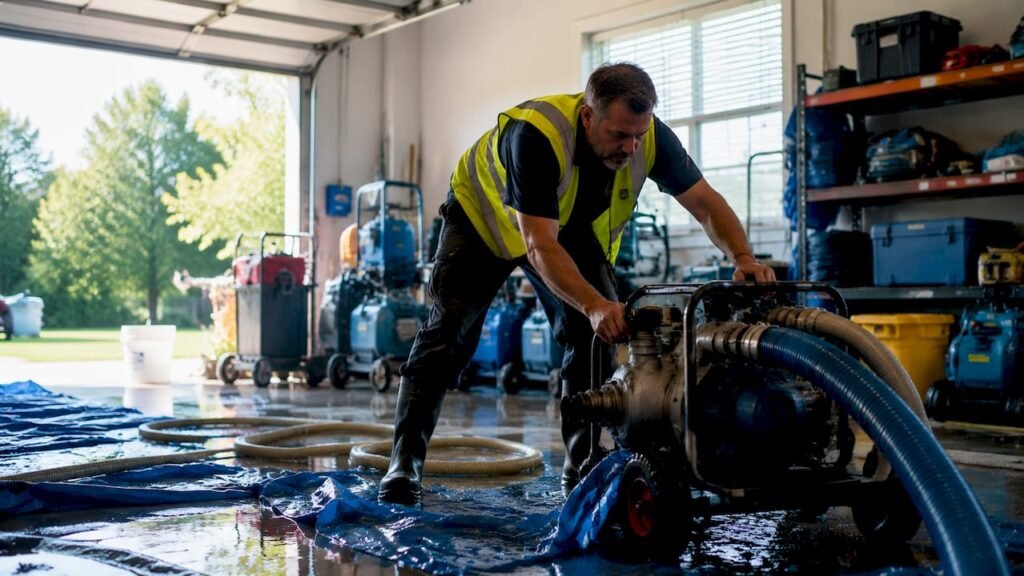
Water extraction is defined as the professional removal of standing and trapped water from a property to stop structural damage and prevent mold growth before it takes hold. When a pipe bursts, a basement floods, or a storm drives water through your foundation, the clock starts immediately. Searching for water extraction near me is the right first move, but knowing what to expect from that service determines whether your home recovers fully or carries hidden damage for years. This guide explains the process, the science behind timing, and exactly how to choose a qualified local team.
How does professional water extraction work?
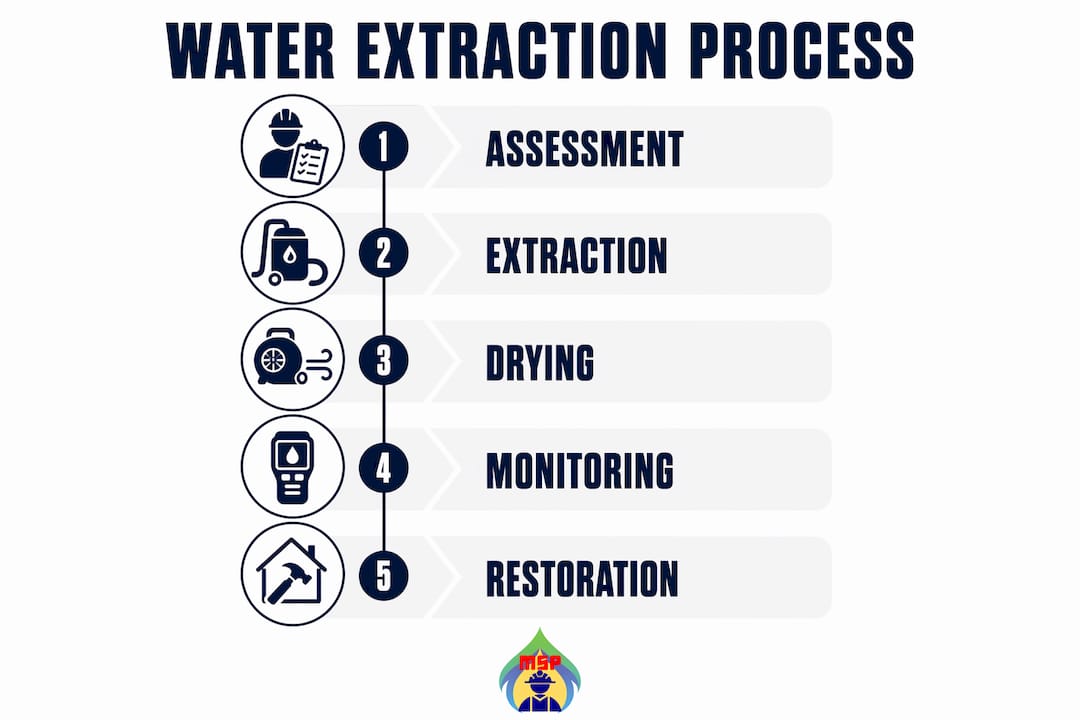
Professional water extraction follows a structured sequence, not just a pump-and-go visit. Understanding each step helps you hold any contractor accountable and recognize quality work when you see it.
-
Initial assessment and water categorization. Technicians classify the water source as Category 1 (clean water from a supply line), Category 2 (gray water from appliances or overflow), or Category 3 (black water from sewage or flooding). This classification drives every decision about safety protocols, equipment, and which materials can be saved.
-
Bulk water removal. High-powered truck-mounted extraction units and submersible pumps pull standing water from floors, carpets, and low-lying areas. Extraction typically runs a few hours after arrival, with the exact time depending on water volume and the size of the affected area. A flooded basement with several inches of standing water takes longer than a single soaked room.
-
Accessing trapped water. Water does not stay where you can see it. Technicians drill weep holes, lift flooring, and remove baseboards to reach trapped water inside wall cavities and subflooring. Skipping this step is one of the most common reasons homeowners end up with mold weeks after a seemingly successful cleanup.
-
Deploying drying equipment. Once bulk water is gone, air movers and commercial dehumidifiers take over. This equipment typically runs 3 to 5 days with daily moisture checks and repositioning as conditions change. The goal is to drive moisture out of building materials, not just dry the air.
-
Moisture mapping and documentation. Crews use moisture meters to log daily readings across the affected area. This daily moisture documentation serves two purposes: it confirms drying is actually progressing, and it creates the paper trail your insurance adjuster needs to process your claim.
Pro Tip: Ask any contractor you hire to show you their moisture logs at each visit. If they cannot produce written readings, they are not verifying dryness. They are guessing.
Why the 24 to 48 hour window is the line between mitigation and mold
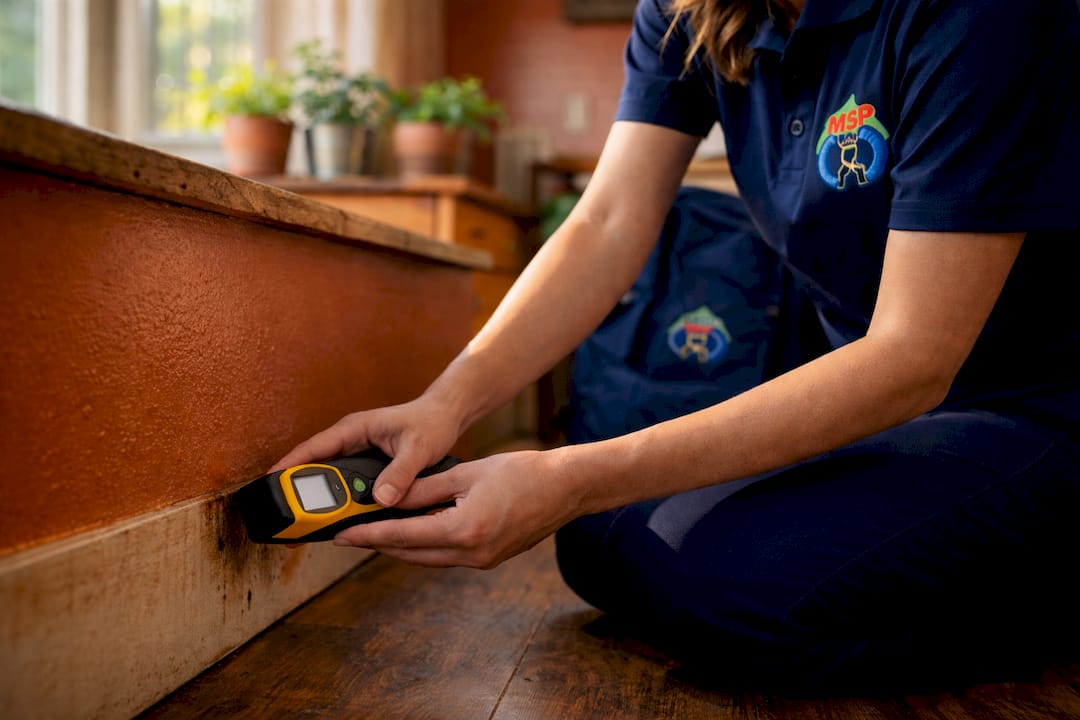
Speed is not a selling point. It is a biological reality. Mold spores begin germinating within 24 hours after water damage under favorable conditions, and visible growth can appear within 1 to 3 days if moisture persists. That means a weekend delay waiting for a cheaper quote can turn a water damage job into a full mold remediation project costing several times more.
The EPA is direct on this point. Dry water-damaged areas within 24 to 48 hours using fans and dehumidifiers, keep indoor humidity below 60% (ideally between 30% and 50%), and remove bulk water first. This is not a suggestion for worst-case scenarios. It is the standard protocol for any water intrusion event. Prioritizing extraction and drying within that window is the boundary between manageable mitigation and a mold remediation necessity.
Here is what rapid professional extraction controls:
- Mold germination: Removing bulk water and dropping humidity below 50% cuts off the moisture mold spores need to activate.
- Structural integrity: Wood framing, subfloors, and drywall absorb water quickly. Extended saturation causes swelling, warping, and rot that extraction alone cannot reverse.
- Air quality: Wet porous materials like carpet padding and drywall become reservoirs for bacteria and mold. Removing or drying them fast limits airborne contamination.
- Restoration costs: The longer water sits, the more materials cross from “salvageable” to “must replace.” Prompt extraction keeps those costs down.
“The highest-impact action after water intrusion is moisture control: fixing leaks, removing bulk water, and drying quickly to prevent mold.” — EPA guidance on moisture control
IICRC-certified contractors follow the S500 Standard for Professional Water Damage Restoration, which requires adjusting blower and dehumidifier placement as conditions evolve. This is not a set-it-and-forget-it process. It is a connected workflow of equipment runtime and moisture level tracking that separates certified professionals from general contractors with a shop vac.
Common questions about water extraction and restoration
How much does water extraction cost?
Basic pumping costs start around $500 and can exceed $10,000 depending on water volume, equipment required, and restoration complexity. That wide range reflects real variables: a single-room pipe burst costs far less than a flooded basement with contaminated water requiring full material removal. Getting a written estimate that separates extraction, drying, and restoration line items protects you from surprise charges.
What is the difference between water extraction and dehumidification?
These are two distinct processes that work in sequence. Extraction removes liquid water to stabilize the site; dehumidification then removes moisture from the air and draws it out of saturated building materials. Skipping extraction and jumping straight to dehumidifiers is like mopping a floor while the faucet is still running. You need both, in order.
| Process | What it does | Equipment used |
|---|---|---|
| Water extraction | Removes standing and trapped liquid water | Pumps, wet vacuums, truck-mounted units |
| Dehumidification | Removes airborne moisture and dries materials | Commercial dehumidifiers, air movers |
Does homeowners insurance cover water extraction?
Insurance typically covers sudden and accidental water damage but not long-term leaks or maintenance-related failures. A burst pipe covered; a slow leak under the sink that went unnoticed for months is usually not. Document the damage with photos before any work begins, and ask your contractor to provide moisture logs and a scope of work that supports your claim.
Pro Tip: Call your insurance company before the contractor starts work whenever possible. Some policies require pre-authorization for emergency services. A good restoration company will help you navigate this call.
When do materials need to be removed rather than dried?
Porous materials like carpet padding, drywall, and insulation that have been saturated with Category 2 or Category 3 water are typically removed rather than dried. The contamination risk outweighs the cost of replacement. For water damage restoration mistakes that homeowners commonly make, attempting to dry contaminated materials in place ranks near the top.
How to find reliable water extraction services near you
Choosing the right local water extraction service under pressure is hard. Here is what to verify before you commit.
-
IICRC certification. Look specifically for the Water Restoration Technician (WRT) and Applied Structural Drying (ASD) credentials. These certifications confirm the technician understands moisture science, not just equipment operation. Masterservicepro technicians hold IICRC certification, which is the industry standard for professional water damage work.
-
24/7 emergency availability. Water damage does not wait for business hours. Any company you consider for emergency water removal should answer calls around the clock and commit to a response time. Ask directly: “How quickly can you be on site?”
-
Moisture mapping and written documentation. Require written moisture logs from day one. Correct drying classification directly affects how efficiently equipment is deployed and how quickly your property dries. A contractor who cannot explain their classification method is a risk.
-
Equipment inventory. Truck-mounted extraction units pull significantly more water than portable units. Ask what equipment they bring and whether they have enough air movers and dehumidifiers to cover your square footage without renting additional units mid-job.
-
Insurance claim support. A reputable company provides a detailed scope of work, photo documentation, and moisture logs formatted for insurance submission. This support saves you hours of back-and-forth with your adjuster.
-
Reviews and BBB standing. Check Google reviews specifically for water damage jobs, not just general cleaning. Look for mentions of response time, communication, and whether the home passed a final moisture check. The Better Business Bureau rating adds a second layer of accountability.
For homeowners in Lake County, Cook County, DuPage County, Will County, and Kane County, IL, Masterservicepro offers local water damage restoration with certified technicians and documented drying protocols.
Key takeaways
Rapid water extraction within 24 to 48 hours is the single most effective action to prevent mold growth, protect structural integrity, and control restoration costs after water damage.
| Point | Details |
|---|---|
| Act within 24 to 48 hours | Mold germination begins within 24 hours; extraction in this window prevents remediation-level damage. |
| Extraction and drying are separate steps | Pumps remove liquid water first; dehumidifiers and air movers then dry materials over 3 to 5 days. |
| Moisture mapping is non-negotiable | Daily logged moisture readings verify drying progress and support insurance claims. |
| IICRC certification matters | WRT and ASD credentials confirm technicians understand moisture science, not just equipment. |
| Insurance covers sudden damage | Document everything before work starts and confirm your policy covers the specific cause of loss. |
Why I tell every homeowner the same thing after a flood
I have seen the full range of outcomes after water damage, from a clean recovery in five days to a mold remediation project that dragged on for weeks because someone waited too long or hired the wrong crew. The pattern is consistent. The homeowners who fared worst were not the ones with the worst floods. They were the ones who spent 48 hours calling around for the lowest price or assumed a shop vac and some fans would handle it.
DIY extraction with consumer-grade equipment misses trapped water in walls and subflooring almost every time. You cannot feel moisture inside a wall cavity. You need a moisture meter and someone who knows how to read it. I have watched homeowners declare a room “dry” because the carpet felt dry underfoot, only to find active mold growth behind the baseboard three weeks later.
The other mistake I see constantly is failing to push contractors on documentation. If a company cannot hand you a moisture log at each visit, you have no proof your property is actually drying. That matters for your peace of mind, and it matters enormously when your insurance adjuster asks for evidence of proper mitigation. Documented drying is not a paperwork formality. It is your protection.
My honest advice: treat the first 24 hours after water intrusion the same way you would treat a medical emergency. Get a certified professional on site fast, ask for credentials, and demand written moisture readings from day one. The cost of doing it right is always less than the cost of doing it twice.
— John
Masterservicepro is ready when water damage strikes
When water enters your home, every hour counts. Masterservicepro provides 24/7 emergency water extraction across Lake County, Cook County, DuPage County, Will County, and Kane County, IL. Our IICRC-certified technicians arrive with truck-mounted extraction units, commercial dehumidifiers, and moisture mapping equipment to stabilize your property fast. We document every step of the drying process to support your insurance claim and back our work with a 100% satisfaction guarantee. You will not need to coordinate multiple contractors. We handle extraction, drying, mold inspection, and full restoration under one roof. Call us now to schedule an emergency evaluation and get your home on the path to recovery today.
FAQ
What does water extraction near me actually include?
Professional water extraction includes removing standing water with pumps or truck-mounted units, accessing trapped water in walls and floors, and deploying drying equipment. The full process typically takes 2 to 6 hours for extraction followed by 3 to 5 days of monitored drying.
How quickly should I call for emergency water removal?
Call within the first hour if possible. Mold can begin growing within 24 hours of water damage, so every hour of delay increases both the biological risk and the restoration cost.
Can I dry out water damage myself?
Consumer fans and wet vacuums cannot reach water trapped inside wall cavities or subflooring. Without moisture meters and commercial drying equipment, you cannot verify that materials are fully dry, which leaves your home at risk for hidden mold growth.
How do I know when my home is fully dry?
Dryness is confirmed through moisture meter readings, not surface feel. A certified technician should provide written moisture logs showing readings at or below baseline levels for your specific building materials before declaring the job complete.
Does flood water extraction affect my insurance claim?
Prompt, documented extraction strengthens your claim. Homeowners insurance typically covers sudden and accidental water damage, and providing moisture logs, photos, and a detailed scope of work from a certified contractor supports faster adjuster approval.