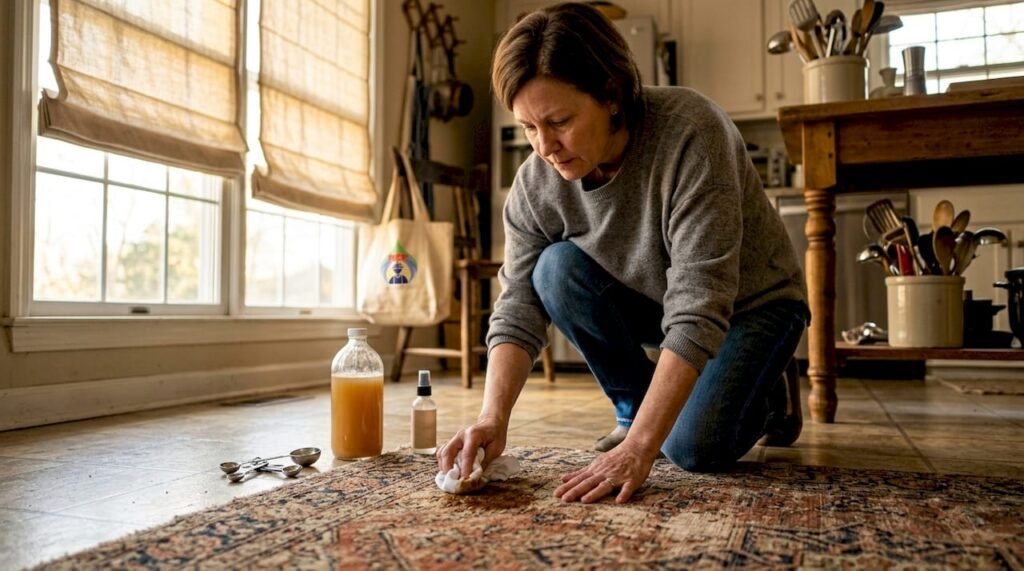
Rug cleaning is the process of removing embedded dirt, stains, allergens, and odors from area rugs to restore their appearance and extend their useful life. Most homeowners underestimate how much a rug holds: dust mites, pet dander, bacteria, and dried spills accumulate deep in the fibers long before the surface looks dirty. The right approach depends on your rug’s fiber type, the nature of the soiling, and whether the job calls for careful DIY work or a certified professional. This guide covers both paths clearly, so you can protect your investment and keep your home healthier.
What does rug cleaning actually involve?
Rug cleaning covers two distinct tracks: routine maintenance you handle at home and periodic deep cleaning best left to specialists. Routine care removes surface dust and prevents grit from grinding down fibers over time. Deep cleaning addresses embedded soils, set stains, and biological contaminants that vacuuming cannot reach.
The industry term for thorough fiber cleaning is textile restoration cleaning, though most professionals simply call it area rug cleaning. Understanding the difference matters because the wrong method on the wrong rug causes permanent damage. Dye-stability testing is the step that separates professional rug cleaning from general carpet cleaning. Without it, wet cleaning can bleed colors and destroy a rug’s pattern permanently.
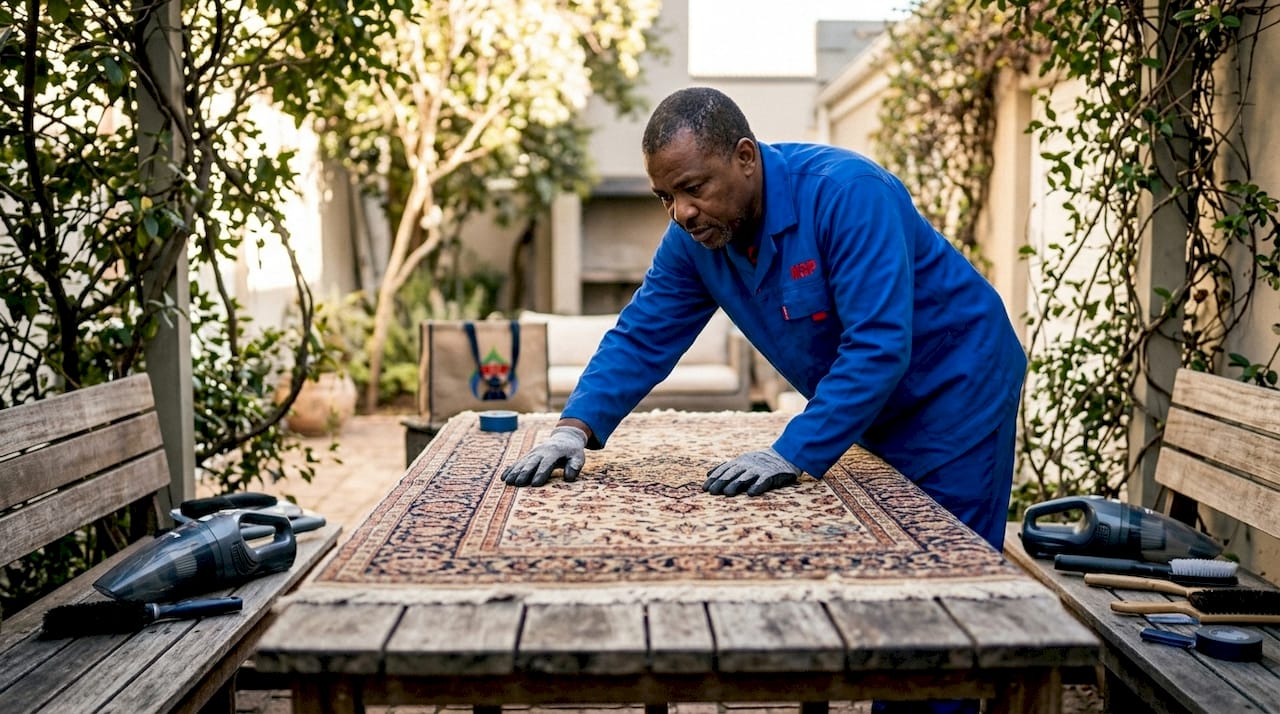
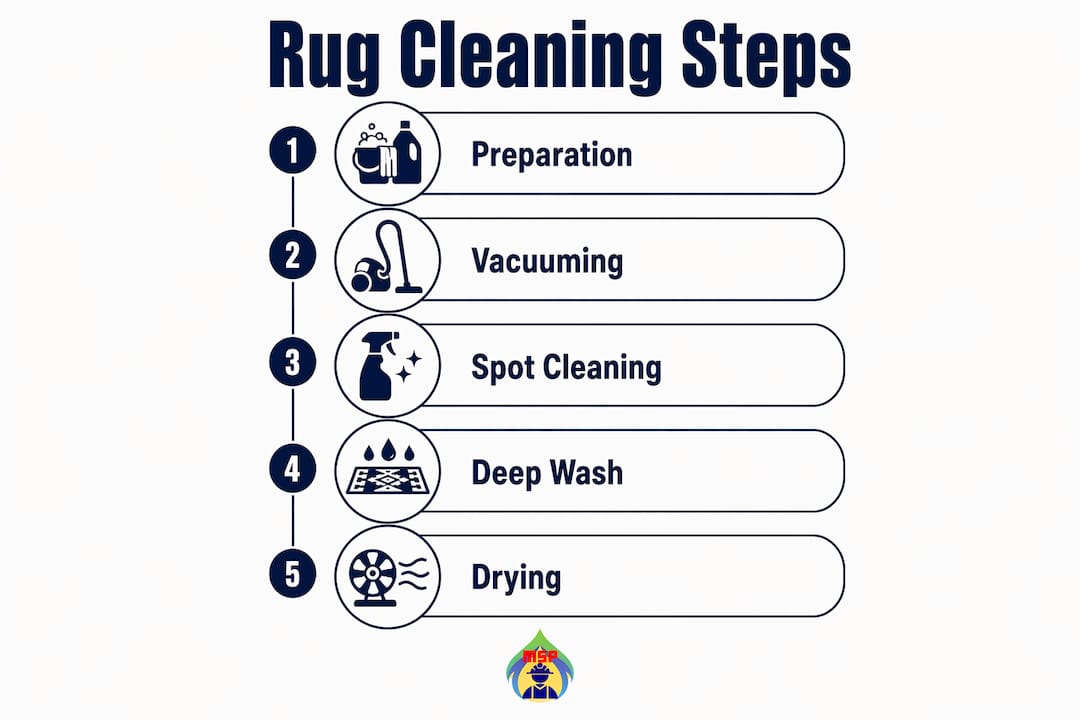
Services like those offered by Masterservicepro in Lake County, Cook County, and DuPage County, IL combine inspection, dusting, immersion washing, and controlled drying into one workflow. That full process protects rug integrity in ways a garden hose and dish soap simply cannot replicate.
What tools do you need for DIY rug cleaning?
The right supplies make the difference between a clean rug and a damaged one. Gather everything before you start so you are not improvising mid-job.
Essential supplies:
- Vacuum with suction-only mode. Beater bars accelerate wool shedding and should never touch delicate fibers. Use a suction-only attachment or a handheld vacuum for pile rugs.
- Clean white cloths and towels. White fabric prevents dye transfer onto your rug during blotting. Keep at least four on hand for a single cleaning session.
- pH-neutral mild soap or dish detergent. Dawn dish soap diluted in cold water works for most synthetic and wool rugs. Avoid anything labeled “heavy duty” or “degreaser.”
- Cold water. Hot water sets protein-based stains like blood and pet urine. Always use cold.
- Spray bottle. Controls the amount of water you apply and prevents over-wetting.
- Protective gloves. Even mild soaps irritate skin during extended scrubbing.
- Stiff-bristle brush (soft for wool). Loosens dried soil before vacuuming.
Optional but useful:
- Enzyme-based pet odor remover (Rocco and Roxie, Nature’s Miracle)
- Oxygen-based stain remover safe for colorfast rugs
- Rubber-backed rug pad to keep the rug flat during drying
Pro Tip: Never use store-bought spot cleaners on antique, hand-knotted, or wool rugs without testing first. General spot-cleaning products with incompatible pH levels can set stains permanently on fine fibers.
Ventilate the room well during cleaning. Open windows or run a fan. Trapped moisture under a rug creates the exact conditions mold needs to grow.
How to clean area rugs at home: step-by-step
This process works for most modern synthetic and wool-blend area rugs. Silk, antique, and hand-knotted rugs require professional care.
-
Vacuum both sides. Flip the rug and vacuum the back first to dislodge deep grit. Then vacuum the front using suction-only mode. This single step removes the majority of dry soil before any moisture touches the fibers.
-
Shake or beat out dust. Take the rug outside and hang it over a railing or fence. Beat it firmly with a broom handle. You will be surprised how much dust falls out even after vacuuming.
-
Spot-treat fresh spills immediately. Blot, never rub. Rubbing pushes the spill deeper into the pile and spreads it outward. Fresh spills are manageable within 24 hours if you blot with a clean dry cloth right away. Work from the outer edge of the spill inward to contain it.
-
Mix your cleaning solution. Combine one teaspoon of pH-neutral dish soap with two cups of cold water in a spray bottle. Shake gently.
-
Apply solution sparingly. Mist the stained area lightly. Do not soak the rug. Over-wetting causes shrinkage, color bleeding, and mold growth because many rug materials absorb water readily but dry slowly.
-
Blot and lift. Press a clean white cloth firmly onto the treated area and lift straight up. Repeat with a fresh section of cloth until no more color transfers.
-
Rinse with cold water. Mist the area lightly with plain cold water and blot again to remove soap residue. Leftover soap attracts dirt faster than a clean fiber would.
-
Air dry flat. Lay the rug flat in a well-ventilated area away from direct sunlight and heat sources. Direct sun fades dyes. Heat from a dryer or radiator can shrink fibers and warp the rug’s foundation.
Pro Tip: Rotate your rug every 6–12 months to distribute foot traffic evenly. Professional deep cleaning every 12–18 months significantly prolongs both appearance and fiber life, especially in high-traffic rooms.
For general cleaning without visible stains, repeat steps 1 through 2 weekly and do a full wash every three to six months depending on foot traffic and pets.
How do you handle stains, odors, and delicate fibers?
Not every rug problem responds to the same solution. Knowing what you are dealing with determines whether you reach for a spray bottle or pick up the phone.
Stain-specific guidance:
- Red wine and juice. Blot immediately, then apply cold water and a small amount of dish soap. Club soda also works as a first-response tool. Never use hot water.
- Pet urine. Act within the 24-hour window before urine salts bond to fibers and create a permanent odor source. Blot up as much liquid as possible, then apply an enzyme-based cleaner like Nature’s Miracle. Enzymes break down the uric acid that causes the smell.
- Mold or mildew. Do not attempt DIY mold removal on a rug. Mold spreads through spores, and scrubbing can release them into your home’s air. Call a certified professional.
- Dye transfer or ink. These require professional dye-stability testing before any wet treatment. Attempting to clean dye stains at home almost always makes them worse.
Odor management:
Sprinkle baking soda generously over the rug surface, let it sit for 30 minutes, then vacuum thoroughly. For persistent pet odors, enzyme cleaners are the only reliable DIY option. Ventilation alone rarely eliminates odors embedded in the pile.
Fiber sensitivity:
Wool, silk, and antique rugs require cold-water immersion washing with pH-neutral soap to preserve natural lanolin and prevent color fading. Machine or steam cleaning strips lanolin and causes fiber brittleness and dye bleeding. — ABC Decorative Rugs
If you own a hand-knotted Persian, Turkish, or antique rug, read this hand-knotted rug cleaning guide before attempting any home treatment. The fiber and dye combinations in these rugs are far more sensitive than modern machine-made rugs.
DIY rug cleaning vs. professional services: which is right for you?
| Factor | DIY Cleaning | Professional Cleaning |
|---|---|---|
| Cost | Low (supplies only) | Higher, but protects rug value |
| Best for | Fresh spills, routine maintenance, synthetic rugs | Set stains, wool, silk, antique, and hand-knotted rugs |
| Dye safety | No testing; risk of bleeding | Dye-stability testing before every wash |
| Drying control | Air dry at home; risk of mold if rushed | Controlled flat drying in a facility |
| Convenience | Immediate, no scheduling | Pickup and delivery available |
| Damage risk | Higher if technique is wrong | Lower with certified technicians |
DIY cleaning saves money and works well for routine care and minor spills on modern rugs. The limits show up fast with complex stains, delicate fibers, or rugs with sentimental or monetary value.
Professional services like those offered by Masterservicepro include a full workflow: pickup, inspection, dusting, immersion washing, and controlled drying. That process avoids foundation creasing and dye damage that DIY methods frequently cause. Pickup and delivery services also prevent improper folding of heavy rugs, which can crack the foundation during transport.
Pro Tip: If you are unsure whether your rug is colorfast, test any cleaning solution on a hidden corner first. Press a white cloth onto the damp area. If color transfers, stop and call a professional.
For homeowners in Lake County or Cook County, IL, scheduling a professional cleaning once a year alongside your regular DIY maintenance is the most cost-effective approach to long-term rug care.
Key takeaways
Effective rug cleaning combines consistent home maintenance with periodic professional deep cleaning matched to your rug’s fiber type and condition.
| Point | Details |
|---|---|
| Act within 24 hours | Fresh spills blotted immediately prevent permanent staining in most modern rugs. |
| Avoid beater bars | Use suction-only vacuum mode to prevent fiber damage, especially on wool rugs. |
| Match method to fiber | Wool, silk, and antique rugs require cold-water pH-neutral washing, not steam or machine cleaning. |
| Professional testing matters | Dye-stability testing before wet cleaning prevents irreversible color bleeding on delicate rugs. |
| Rotate and schedule | Rotate rugs every 6–12 months and schedule professional cleaning every 12–18 months for lasting results. |
What i’ve learned after years of watching homeowners clean rugs wrong
The most common mistake I see is treating every rug the same way. A homeowner with a $40 polypropylene rug from a big-box store and a homeowner with a $2,000 hand-knotted Persian rug both reach for the same spray bottle. The results are very different.
The second most common mistake is waiting. People see a stain, think they will deal with it later, and come back 48 hours after the damage is already done. The 24-hour rule is not a suggestion. Urine, wine, and dye-based spills bond to fibers quickly. Once that bond forms, no DIY product removes it cleanly.
Regular vacuuming without a beater bar is genuinely the single highest-return maintenance habit you can build. It takes five minutes and prevents years of fiber degradation. Most people vacuum too infrequently and with the wrong attachment.
My honest advice: handle routine maintenance yourself, but do not gamble with rugs that have real value. Silk and antique rugs belong in the hands of certified technicians who run dye tests before touching them with water. The cost of professional cleaning is always less than the cost of replacing a damaged rug. For non-toxic cleaning approaches that are safer for kids and pets, this non-toxic carpet cleaning guide is worth reading before you buy any product.
Blend the two approaches and your rugs will last decades, not years.
— John
Let Masterservicepro handle the hard part
When a stain is set, a fiber is delicate, or a rug simply needs a thorough reset, Masterservicepro delivers certified area rug cleaning with facility-based hand washing that preserves fiber integrity and color. Their IICRC-certified technicians inspect every rug before cleaning, run colorfastness tests, and dry rugs flat under controlled conditions. Free pickup and delivery is available across Lake County, Cook County, DuPage County, Will County, and Kane County, IL. If your rug has also been exposed to moisture or flooding, Masterservicepro’s carpet cleaning services and water damage restoration capabilities mean you get complete care under one roof. Schedule your cleaning today and protect the rugs you have invested in.
FAQ
How often should area rugs be professionally cleaned?
Professional cleaning every 12–18 months is the standard recommendation for most area rugs. High-traffic areas or homes with pets may need cleaning every 6–12 months.
Can you clean a wool rug at home?
Light spot cleaning with cold water and pH-neutral soap is safe for wool rugs. Avoid steam cleaners and machine washing, as both strip natural lanolin and can cause shrinkage and dye bleeding.
What removes pet urine odor from a rug?
Enzyme-based cleaners like Nature’s Miracle or Rocco and Roxie break down uric acid, which is the source of persistent pet odor. Standard soap and water mask the smell temporarily but do not eliminate it.
Is it safe to use store-bought stain removers on antique rugs?
No. Store-bought spot cleaners often have incompatible pH levels that permanently set stains on fine or antique rugs. Always consult a professional before treating any rug with significant value.
What is dye-stability testing and why does it matter?
Dye-stability testing checks whether a rug’s dyes will bleed when wet. Certified professionals perform this test before every immersion wash to prevent permanent color damage, particularly on hand-knotted and Persian rugs.