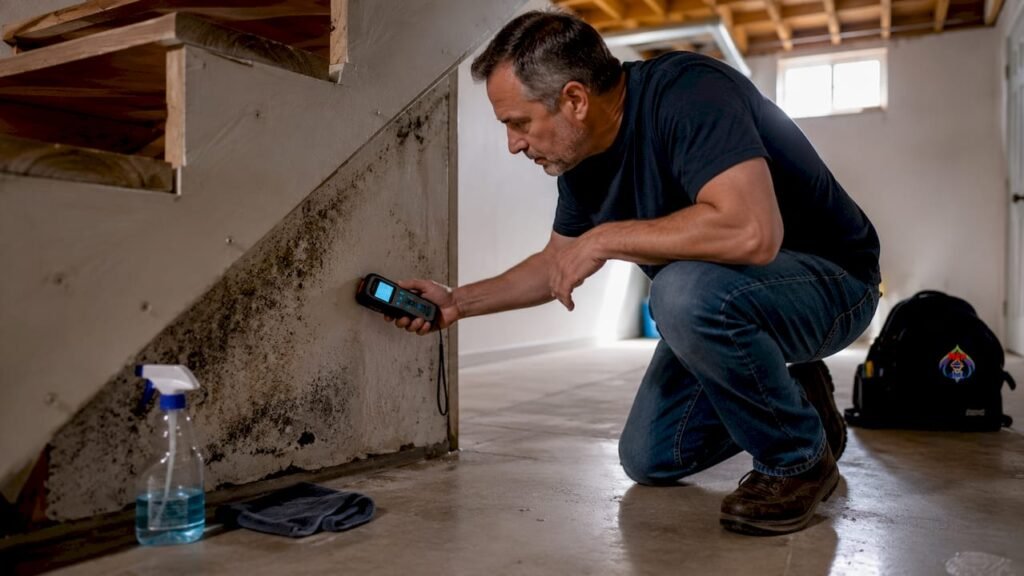
Basement mold is defined as fungal growth that forms when moisture accumulates on surfaces and mold spores, which are always present in indoor air, find a wet place to colonize. This basement mold cause identification guide focuses on one core principle: mold requires moisture to grow, and eliminating that moisture source is the only way to stop it from coming back. Spore elimination is not the goal. Moisture control is. Whether you smell something musty, see dark stains on your walls, or just suspect a problem, the right starting point is always tracing the water, not scrubbing the surface.
What causes basement mold? a moisture source identification guide
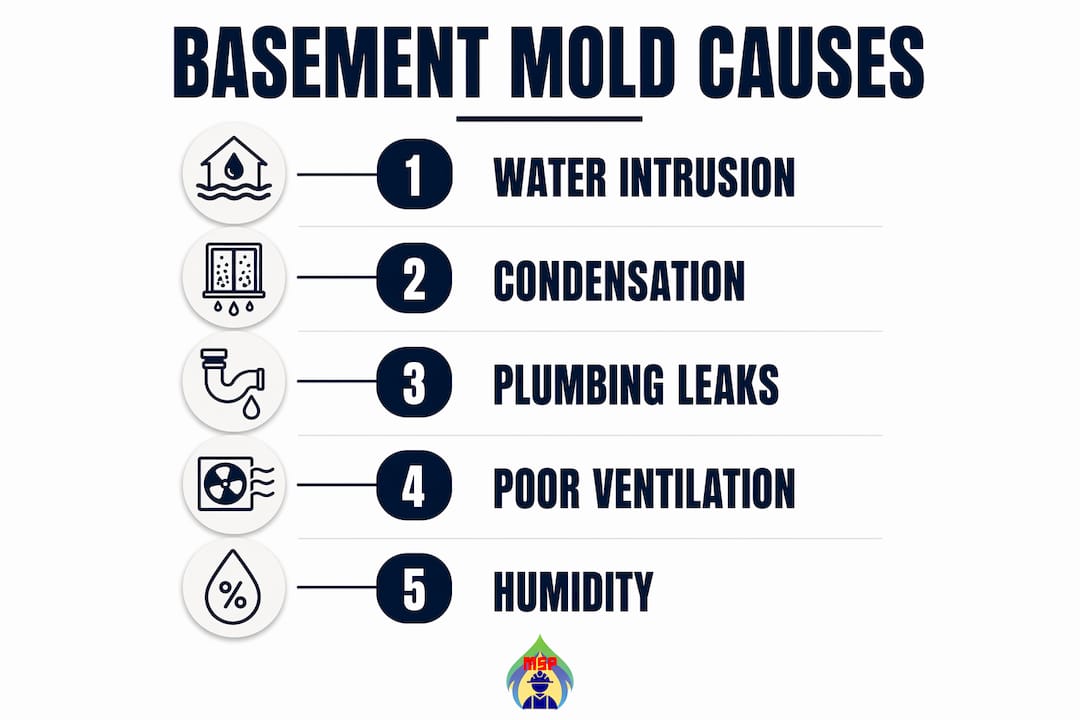
Basement mold causes fall into four main categories: liquid water intrusion, condensation, plumbing leaks, and poor ventilation. The Florida Department of Health confirms that storm flooding, indoor flooding, leaks, condensation on cold surfaces, and poor ventilation all contribute directly to basement mold growth. Each source behaves differently and requires a different fix.
Liquid water intrusion
Groundwater seepage through foundation cracks is one of the most common and overlooked moisture sources in basements. Water follows the path of least resistance, and even a hairline crack in a poured concrete wall can allow enough moisture to keep a section of drywall permanently damp. Window wells that collect rainwater and floor drains that back up during heavy rain are also frequent culprits in Cook County and Lake County, IL homes.
Condensation and humidity
Condensation forms when warm, humid air contacts a cold basement wall or pipe. This is especially common in summer months when outdoor humidity is high and basement walls stay cool. You may not see standing water anywhere, yet your walls feel damp to the touch. A hygrometer reading above 60% relative humidity in your basement is a reliable sign that condensation is actively feeding mold growth.
Plumbing leaks and HVAC issues
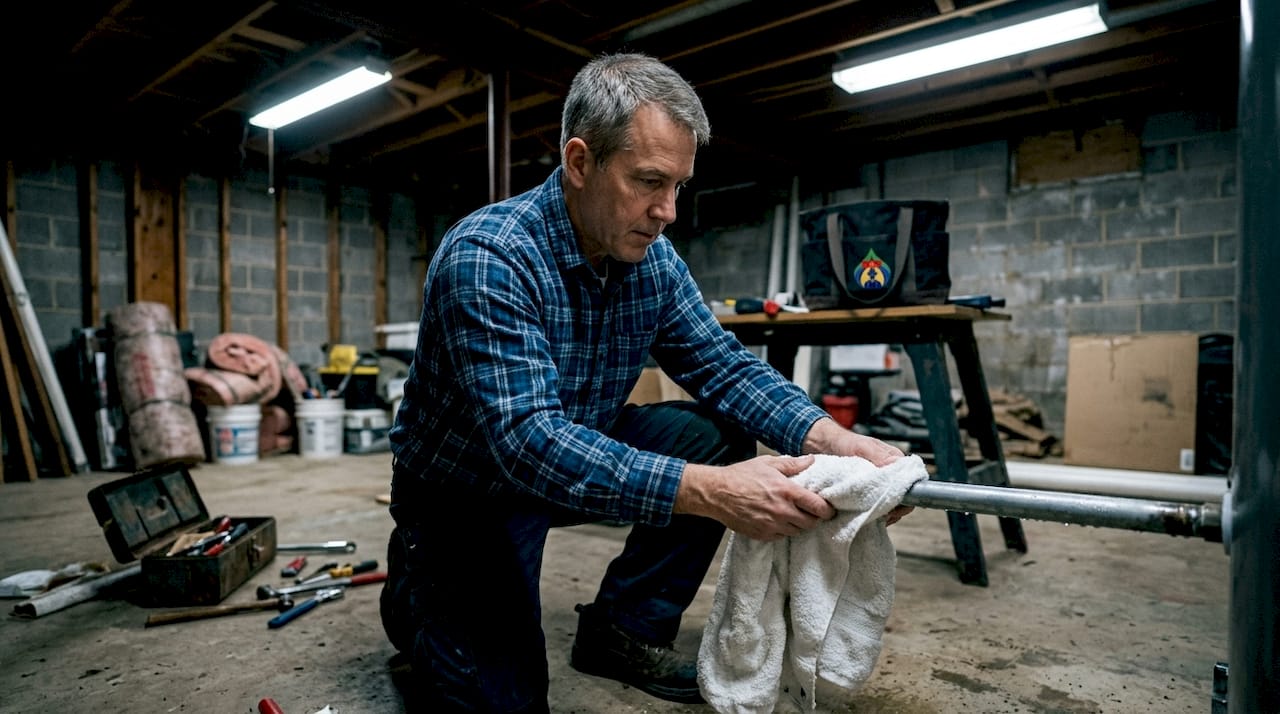
A slow drip from a water heater, a leaking supply line, or a clogged condensate drain on your HVAC unit can deposit enough moisture to trigger mold within 24 hours of exposure. HVAC systems are a particularly sneaky source because the moisture forms inside ductwork where you cannot see it. HVAC drain leaks and poor drainage are documented contributors to basement mold risk in residential properties.
- Foundation cracks: Check after heavy rain for wet spots or efflorescence (white mineral deposits) on walls.
- Window wells: Look for pooling water or soil graded toward the foundation.
- Plumbing connections: Inspect water heaters, washing machine hoses, and utility sink drains monthly.
- HVAC condensate lines: Confirm the drain line flows freely and is not backing up into the unit.
- Floor drains: Test that they drain freely and are not emitting sewer odors, which signal a blockage.
Pro Tip: Use a moisture meter on drywall, wood framing, and concrete in your basement. A reading above 16% on wood or above 4% on concrete signals active moisture that will support mold growth, even if the surface looks dry.
How do you identify the types of mold in your basement?
The industry term for classifying basement mold by species is mold identification, and it requires lab analysis, not just a visual check. Color and texture alone are not reliable indicators of species or toxicity. Black mold, green mold, white mold, and pink mold can all appear in basements, and none of those colors confirm which genus you are dealing with.
Common basement mold genera
The four most frequently identified types of basement mold are Cladosporium, Penicillium, Aspergillus, and Stachybotrys. Cladosporium appears olive green or brown and often grows on wood and fabric. Penicillium is typically blue or green and spreads quickly on water-damaged materials. Aspergillus comes in many colors and is common on drywall and insulation. Stachybotrys, the infamous black mold, is dark greenish-black, slimy, and grows specifically on cellulose materials like drywall paper that have been wet for extended periods.
Health symptoms as early warning signs
Mold exposure symptoms include nasal congestion, fatigue, and brain fog. These symptoms often appear before visible mold does. If household members experience persistent allergy-like symptoms that improve when they leave the home, mold exposure is a likely cause. That pattern is a strong signal to begin a thorough basement inspection immediately.
| Mold Type | Typical Color | Common Location | Lab Test Needed? |
|---|---|---|---|
| Cladosporium | Olive green or brown | Wood, fabric, carpet | Yes, for confirmation |
| Penicillium | Blue or green | Drywall, insulation | Yes, for confirmation |
| Aspergillus | Varies widely | Drywall, HVAC ducts | Yes, for confirmation |
| Stachybotrys | Dark green or black | Wet drywall paper, wood | Yes, always |
The key takeaway from this table: visual identification of different types of mold is a starting point, not a conclusion. Lab testing via tape lift samples or air quality testing by a certified inspector is the only way to confirm species and assess risk accurately.
Step-by-step basement mold inspection checklist
A thorough mold inspection follows a logical sequence. Starting with your senses and moving to tools gives you the most complete picture of where moisture is entering and where mold has established itself.
- Start with smell. A persistent musty odor in your basement is a reliable early indicator of mold, even when nothing is visible. Walk the perimeter and note where the smell is strongest.
- Look for visible signs. Check walls, floor joists, window frames, and the base of drywall for dark stains, fuzzy growth, or discoloration. Pay attention to corners and areas near plumbing.
- Check hidden areas. Hidden mold behind drywall, under carpets, and inside ductwork is common near leaks or condensation zones. Remove a section of baseboard or carpet edge to inspect the subfloor and wall base.
- Measure humidity. Use a hygrometer to record relative humidity in multiple spots. Readings consistently above 60% confirm a condensation problem that will sustain mold growth.
- Use a moisture meter. Press the probes against drywall, wood framing, and concrete near suspected problem areas. Elevated readings confirm active moisture even on surfaces that appear dry.
- Inspect plumbing and HVAC. Look for drips, rust stains, or mineral deposits around pipes, water heaters, and HVAC units. Check condensate drain lines for blockages.
- Examine the exterior. Walk around your foundation after a rain. Soil graded toward the house, clogged gutters, and downspouts that discharge near the foundation all direct water toward your basement walls.
Pro Tip: Diagnosing moisture type matters as much as finding mold. Liquid intrusion (water coming through walls or floors) requires waterproofing or drainage fixes. Condensation requires dehumidification and ventilation improvements. Treating the wrong cause wastes money and leaves the mold problem intact.
| Inspection Tool | What It Measures | When to Use It |
|---|---|---|
| Hygrometer | Relative humidity in air | Ongoing monitoring, especially in summer |
| Moisture meter | Moisture content in materials | When walls or floors feel damp or smell musty |
| Thermal camera | Temperature differences revealing moisture | Professional inspections for hidden leaks |
| Tape lift kit | Surface mold sample for lab analysis | When species identification is needed |
When your inspection reveals mold covering more than a 3 ft x 3 ft area, or when mold is present inside HVAC ducts or behind finished walls, professional assessment is the right call. Consulting a mold inspection report can help you understand what red flags to watch for before and after professional testing.
How do you stop basement mold from coming back?
Cleaning mold without fixing the moisture source guarantees recurrence. Harvard Health is direct on this point: fix water leaks first, then clean. The ANSI/IICRC S520-2024 standard for professional mold remediation reinforces this, stating that moisture source removal must precede any chemical treatment. Applying biocides to active mold without stopping the water source is a temporary cosmetic fix, not remediation.
Cleanup guidelines
- Small areas (under 3 ft x 3 ft): Scrub with soap and water or a diluted bleach solution. Wear gloves, goggles, and an N95 respirator. Discard porous materials like drywall and carpet that cannot be fully dried.
- Large areas (over 3 ft x 3 ft): Professional mold remediation is the safe and effective choice. Containment, negative air pressure, and HEPA filtration are required to prevent cross-contamination.
- Porous materials: Drywall, carpet, and insulation that have been wet for more than 48 hours should be removed and replaced, not dried in place.
Moisture control after cleanup
Preventing mold growth long-term requires keeping basement humidity below 50% year-round. A quality dehumidifier rated for your basement’s square footage, combined with adequate ventilation, handles most condensation problems. For liquid intrusion, the fix is structural: repair foundation cracks, regrade soil away from the foundation, extend downspouts at least 6 feet from the house, and install interior or exterior drainage systems where needed.
“Controlling moisture is the key to controlling mold. If you keep surfaces dry, mold cannot grow, no matter how many spores are present in the air.” — U.S. EPA
Regular maintenance is the final layer of prevention. Check your basement after every significant rain. Inspect plumbing connections twice a year. Replace dehumidifier filters on schedule. These habits cost almost nothing and prevent the kind of water damage that leads to expensive remediation.
Key takeaways
Basement mold is a moisture problem first and a cleaning problem second. Fixing the water source is the only way to stop mold from returning.
| Point | Details |
|---|---|
| Moisture is the root cause | Mold cannot grow without a wet surface, so finding the water source comes before any cleanup. |
| Hidden mold is common | Check behind drywall, under carpets, and inside HVAC ducts, not just visible surfaces. |
| Visual ID is not enough | Lab testing is required to confirm mold species; color alone does not identify type or toxicity. |
| DIY has clear limits | Clean areas under 3 ft x 3 ft yourself; call a professional for anything larger or inside walls. |
| Fix moisture and mold together | Cleaning without repairing the moisture source leads directly to mold regrowth. |
What i’ve learned after years of basement mold cases
The single most common mistake I see homeowners make is treating the mold they can see and calling it done. They scrub the wall, apply a bleach solution, and feel confident the problem is solved. Three months later, the mold is back in the same spot, sometimes worse. The reason is always the same: the moisture source was never addressed.
What surprises most people is how often the real moisture source is not obvious. I have seen finished basements where the mold was traced not to a foundation crack or a plumbing leak, but to a dryer vent that was partially disconnected inside the wall, pumping warm humid air directly into the stud cavity for years. You would never find that with a visual inspection alone. You need a moisture meter, a hygrometer, and sometimes a thermal camera to find what is actually happening inside the walls.
The other thing I want you to understand is the difference between condensation problems and liquid intrusion problems. They look similar on the surface, but they require completely different solutions. Condensation calls for dehumidification and better air circulation. Liquid intrusion calls for waterproofing and drainage work. Treating a condensation problem with waterproofing paint, or treating a liquid intrusion problem with a dehumidifier, wastes money and leaves the mold problem fully intact.
My honest recommendation: do not skip the inspection step. Spend time with a moisture meter before you spend money on cleanup. Knowing exactly where the water is coming from makes every other decision easier, faster, and cheaper.
— John
Masterservicepro can handle your basement mold problem
If your basement inspection has turned up mold, persistent dampness, or signs of water intrusion, Masterservicepro is ready to help. Our IICRC certified technicians handle both water damage restoration and mold remediation under one roof, so you never have to coordinate multiple contractors during a stressful situation. We serve homeowners across Lake County, Cook County, DuPage County, Will County, and Kane County, IL.

From flooded basement cleanup to full mold remediation, Masterservicepro brings certified expertise and a 100% satisfaction guarantee to every job. Do not let a moisture problem grow into a health hazard. Contact Masterservicepro today for a professional inspection and get your basement dry, clean, and safe.
FAQ
What is the main cause of basement mold?
The main cause of basement mold is moisture. Mold spores are always present in air, but they only grow when they land on a wet surface, so any source of water or humidity in your basement can trigger mold growth.
How do i identify mold versus dirt or stains in my basement?
Mold typically has a fuzzy or powdery texture, appears in irregular patches, and produces a musty odor. A simple test is to apply a drop of household bleach to the spot; if it lightens within a minute or two, it is likely mold rather than dirt.
Can i remove basement mold myself?
DIY mold cleanup is safe for areas smaller than 3 ft x 3 ft using soap, water, and protective gear. For larger areas, mold inside walls or ducts, or any suspected Stachybotrys growth, professional remediation is the safer and more effective choice.
What tools do i need to inspect for basement mold causes?
A hygrometer measures air humidity, a moisture meter checks material moisture content, and your nose detects musty odors in hidden areas. Together, these three tools give you a reliable picture of where moisture is entering and where mold is likely growing.
How do i stop basement mold from returning after cleanup?
Fix the moisture source first, whether that is a foundation crack, plumbing leak, or condensation from high humidity. Then keep basement humidity below 50% using a dehumidifier, and address moisture at the source before applying any cleaning treatment.