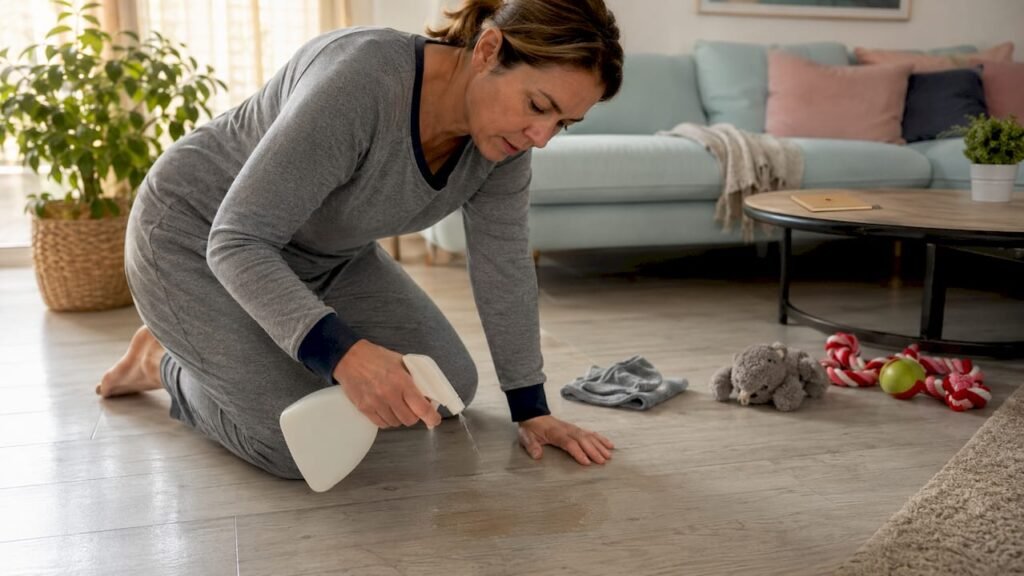
Pet odor removal is the process of eliminating unpleasant smells caused by pets through specialized cleaning agents and techniques that break down organic compounds at the molecular level. Spraying a scented product over a urine stain does not remove the odor. It hides it temporarily. The real solution requires breaking down organic compounds rather than masking them with fragrance. This guide covers the tools you need, step-by-step methods for carpets and upholstery, natural remedies that actually help, and the warning signs that tell you it is time to call a professional. Products like Rocco & Roxie and BISSELL are referenced throughout because they represent the two main cleaner categories worth understanding.
What products do you actually need for pet odor removal?
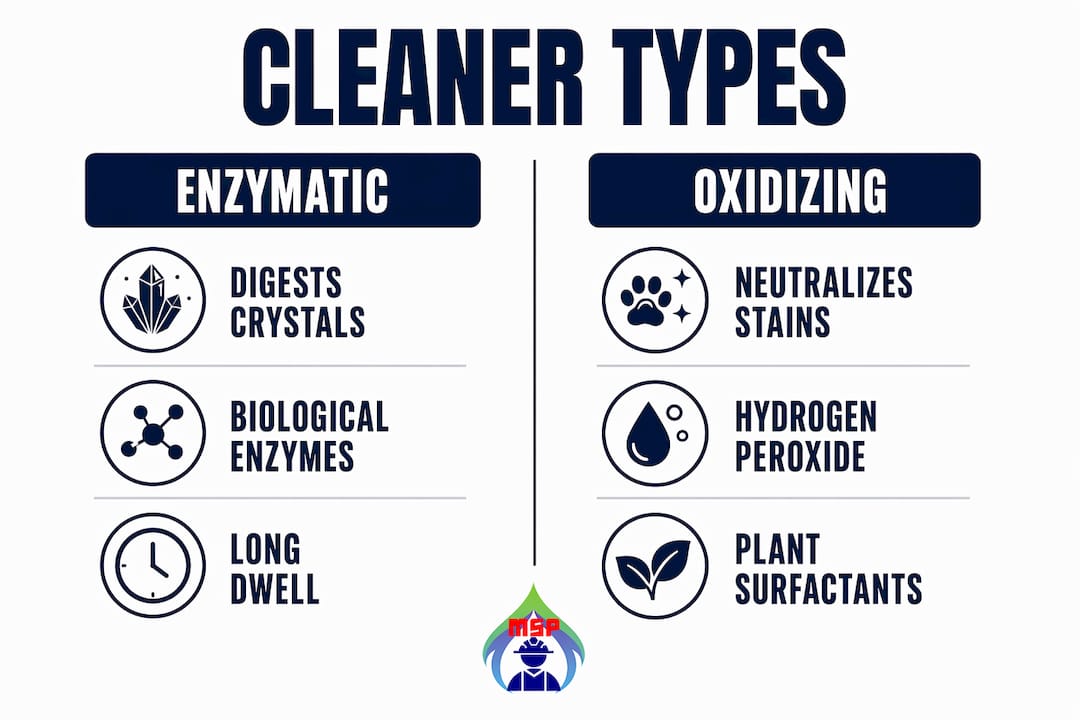
The two cleaner types that matter most are enzymatic cleaners and oxidizing cleaners. Every other product on the shelf is either a variation of these or a fragrance masker you should avoid. Understanding the difference saves you money and prevents repeat odor problems.
Enzymatic cleaners use biological enzymes to digest uric acid crystals, proteins, and bacteria left behind by pet waste. Rocco & Roxie Stain & Odor Eliminator is one of the most tested examples in this category. Enzymatic cleaners break down uric acid crystals that regular soap and water cannot touch, which is why odors return after a standard cleaning. The crystals reactivate when humidity rises, releasing the smell again.
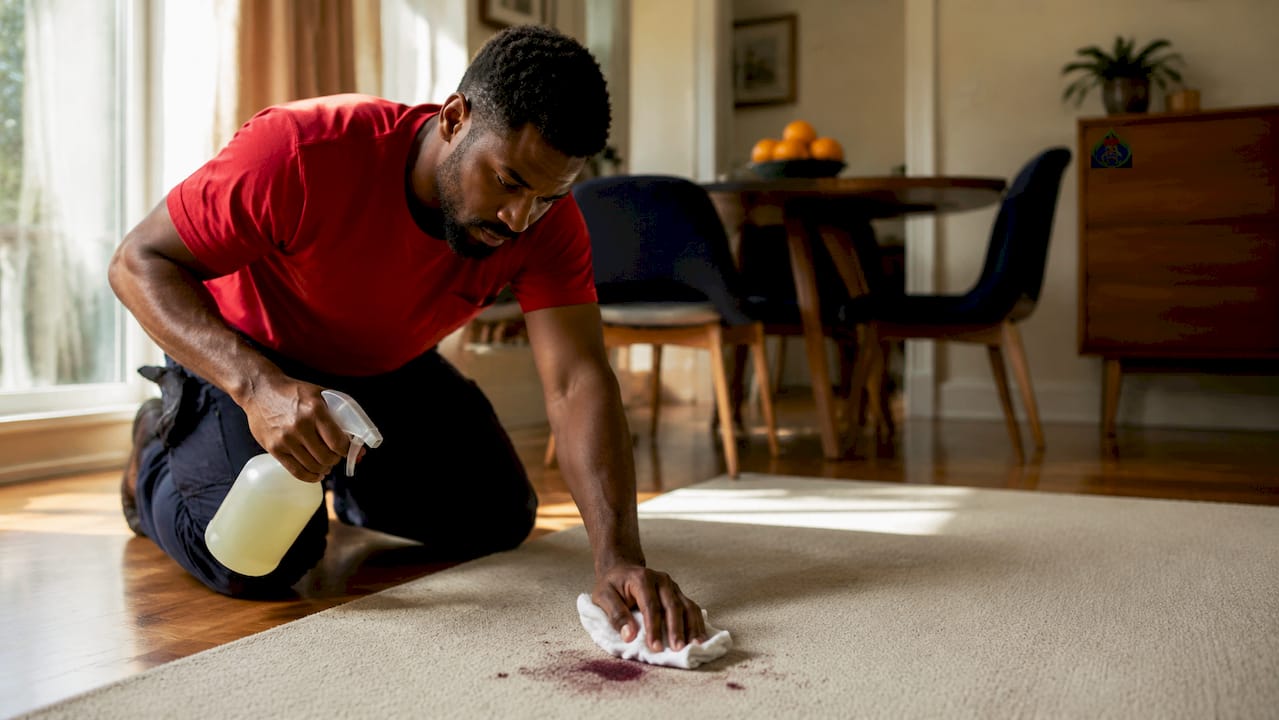
Oxidizing cleaners use hydrogen peroxide and plant-based surfactants to chemically neutralize stain compounds. Consumer Reports testing found that oxidizing formulas can work faster on specific pet stains than enzymatic options. Speed is the advantage. The tradeoff is that oxidizers carry a higher risk of fabric discoloration, so always spot-test before full application.
| Cleaner Type | How It Works | Speed | Safety on Fabric | Best For |
|---|---|---|---|---|
| Enzymatic | Digests organic proteins and uric acid | Slower (hours) | High | Urine, feces, vomit |
| Oxidizing | Chemical reaction neutralizes compounds | Faster (minutes) | Moderate | Surface stains, general odors |
| Baking soda | Absorbs surface odors | Immediate | Very high | Deodorizing between cleanings |
| Fragrance sprays | Masks odors temporarily | Immediate | High | Nothing lasting |
Beyond the cleaners themselves, you need a few tools before you start:
- Rubber gloves and eye protection for handling concentrated formulas
- A stiff brush or scrubbing pad for working cleaner into carpet fibers
- Clean white cloths or paper towels for blotting (never colored cloths that transfer dye)
- A wet/dry vacuum or carpet extractor for pulling liquid out of deep fibers
- An air purifier with a HEPA and activated carbon filter for ongoing odor control between cleanings
Pro Tip: Buy more enzymatic cleaner than you think you need. Undertreating a stain is the most common reason odors return. You need to saturate the area, not just dampen it.
How to remove pet odors from carpets and upholstery
Speed matters more than most pet owners realize. Pet urine will not permanently stain wool if treated within 30 minutes before uric acid crystals bond to the fibers. Synthetic carpets give you more time, but acting fast on any surface always produces better results.
Follow these steps for carpets:
- Blot the fresh stain immediately. Press a clean white cloth firmly into the stain and lift straight up. Never rub. Rubbing pushes the urine deeper into the padding and spreads the stain outward.
- Apply cold water and blot again. This dilutes the urine before applying any cleaner. Skip this step and you are sealing in concentrated waste.
- Saturate with enzymatic cleaner. Pour or spray enough product to reach the carpet padding. A surface application will not reach the source of the odor. BISSELL’s pet pretreatment line is formulated to eliminate 99.9% of bacteria on soft surfaces, which matters for hygiene as much as smell.
- Allow full dwell time. Enzyme cleaners require several hours of dwell time to complete the biological breakdown of stain molecules. Cover the area with a damp cloth to keep it moist. Letting the cleaner dry out before it finishes working is the second most common mistake.
- Extract the liquid. Use a wet/dry vacuum or carpet extractor to pull the cleaner and dissolved waste out of the fibers. Do not let it air dry without extraction.
- Repeat if needed. Older or larger stains often require two full treatment cycles.
For upholstery, the process is similar but requires more caution. Check the fabric tag for cleaning codes. Code “W” means water-based cleaners are safe. Code “S” means solvent only. Code “X” means vacuum only. Applying the wrong cleaner to upholstery can cause permanent damage. For professional-grade results on sofas and chairs, upholstery cleaning services use extraction equipment that removes far more residue than hand blotting.
Pro Tip: After extraction, place a stack of paper towels over the treated area and weigh them down with a heavy book overnight. They will pull remaining moisture and dissolved waste up from the padding.
Which natural remedies work for pet smells and when to use them
Natural odor removal for pets works best as a complement to commercial products, not a replacement. The most effective home remedy is a diluted white vinegar solution. Vinegar diluted with water neutralizes urine odors on the surface but lacks the enzymatic power to break down crystals deep in carpet fibers. Use it for fresh, minor accidents on hard floors or as a rinse after enzymatic treatment.
Here is where natural remedies genuinely help:
- Baking soda sprinkled over a dry, treated area absorbs residual odors overnight. Vacuum it up in the morning. This works well between professional cleanings.
- White vinegar and water (1:1 ratio) applied to hard floors, tile, and sealed surfaces neutralizes surface odors without harsh chemicals.
- Activated charcoal bags placed near pet sleeping areas absorb ambient odors from the air continuously.
- Hydrogen peroxide (3%) mixed with a small amount of dish soap works on surface stains on light-colored carpets. Test first. It can bleach darker fabrics.
The limitation of all natural remedies is depth. They address what is on the surface. Unremoved pheromone traces encourage pets to re-mark the same spots, creating a cycle that only ends with complete chemical neutralization. If your pet keeps returning to the same corner of the room, a natural remedy has not finished the job. Switch to an enzymatic cleaner and treat the area fully.
Avoid mixing vinegar and baking soda directly on a stain. The fizzing reaction looks satisfying but neutralizes both compounds before either can work effectively.
How do you stop pet odors from coming back?
Prevention is a cleaning strategy, not just a habit. The most overlooked cause of recurring odors is incomplete treatment. Pets detect pheromones humans cannot smell, and they return to re-mark any spot that still carries a trace of their scent. Thorough neutralization at the chemical level is the only way to break that cycle.
Beyond cleaning, these habits reduce odor buildup significantly:
- Wash pet bedding weekly in hot water with an enzyme-based laundry additive. Bedding holds more odor-causing bacteria than most pet owners expect.
- Vacuum carpets twice a week in areas where pets spend time. Pet dander and hair trap odors and feed bacteria.
- Groom your pets regularly. Bathing dogs every 4–6 weeks and brushing cats weekly reduces the amount of dander, oil, and bacteria they deposit on surfaces.
- Run an air purifier with an activated carbon filter in rooms where pets sleep. HEPA filters capture dander; carbon filters absorb odor molecules from the air.
- Improve ventilation. Open windows when weather allows. Stale, humid air intensifies pet smells.
- Use washable furniture covers on sofas and chairs your pets use. Wash them weekly.
Pro Tip: Place a UV black light flashlight in your cleaning kit. Pet urine fluoresces under UV light, revealing old stains invisible in normal lighting. Treat every glowing spot, not just the ones you can smell.
Regular professional carpet cleaning every 6–12 months removes the deep buildup that vacuuming and home treatments cannot reach. This is especially true in homes with multiple pets or older animals with incontinence issues.
When should you call a professional for odor problems?
Some odor problems are beyond what any consumer product can fix. Pet urine penetrates carpet padding and the subfloor beneath it, and once it reaches that depth, extraction equipment and professional-grade treatments are the only reliable solution. Recognizing when you have crossed that line saves you money on products that will not work.
Call a professional when you notice:
- Odor returns within days of a thorough home treatment. This signals the source is in the padding or subfloor, not the carpet surface.
- Multiple large or overlapping stains in the same area from repeated accidents over months or years.
- Odor in walls or baseboards near a pet’s regular spots. Urine wicks into drywall and wood framing.
- Visible staining on the subfloor after carpet removal.
- Odor that intensifies in humid weather. Uric acid crystals reactivate with moisture, and if humidity makes the smell worse, the source is deep.
For severe cases, ozone or hydroxyl generators are often necessary. These are professional tools that neutralize odors absorbed into structural components of the home. They are not available to consumers and require a trained technician to operate safely. For eco-friendly professional solutions that address deep-set odors without harsh chemicals, specialized restoration services offer targeted treatment plans.
Professional extraction and treatment typically costs more than a bottle of enzymatic cleaner, but it solves the problem once rather than repeatedly.
Key takeaways
Effective pet odor removal requires enzymatic or oxidizing cleaners, proper saturation and dwell time, and professional extraction for deep-set odors that consumer products cannot reach.
| Point | Details |
|---|---|
| Use the right cleaner type | Enzymatic cleaners eliminate uric acid crystals; oxidizers work faster on surface stains. |
| Act within 30 minutes | Treating urine before crystals bond to fibers prevents permanent staining and deep odor. |
| Saturate, don’t just dampen | Enzymatic cleaners need to reach the padding to break down the actual odor source. |
| Natural remedies have limits | Vinegar and baking soda help on surfaces but cannot neutralize deep pheromone traces. |
| Call a professional for deep odors | Subfloor penetration and structural odor require ozone treatment and professional extraction. |
What i’ve learned after years of watching odor problems get worse
The single most common mistake I see is under-applying the cleaner. Pet owners spray a light mist, blot it up after two minutes, and wonder why the smell returns in a week. Enzymatic cleaners are biological products. They need moisture and time to work. Treating them like a surface spray defeats the entire mechanism.
The second mistake is trusting your nose too soon. A treated area can smell clean within hours because the fragrance in the product is doing what fragrances do. The enzymes are still working. Give the product its full dwell time, extract thoroughly, and then evaluate. If you judge results too early, you will stop the process before it finishes.
The third thing I want you to understand is that natural remedies are not a budget substitute for enzymatic cleaners. They are a supplement. Vinegar is genuinely useful on hard floors and as a rinse. Baking soda is a solid deodorizer between cleanings. But neither one breaks down uric acid crystals. If you have a dog or cat with a regular accident spot, you need an enzymatic cleaner on that spot every single time.
Patience and product generosity are the two things that separate a clean home from one that smells like a pet lives there.
— John
Let Masterservicepro handle the tough pet odor jobs
When home treatments are not enough, Masterservicepro brings professional-grade equipment and IICRC-certified technicians to your home in Lake County, Cook County, DuPage County, Will County, and Kane County, IL. Our pet stain carpet cleaning service uses truck-mounted extraction systems that pull odor-causing residue from deep in the padding, not just the surface fibers. We also offer upholstery odor treatment for sofas, chairs, and area rugs. Every job comes with our 100% satisfaction guarantee. If you are dealing with persistent odors that keep coming back no matter what you try, contact Masterservicepro today for a consultation and let us solve it properly the first time.
FAQ
What is the best pet odor eliminator for carpets?
Enzymatic cleaners like Rocco & Roxie are the most effective option because they break down uric acid crystals at the source rather than masking the smell. For severe or deep stains, professional extraction is the most reliable solution.
How long does it take for enzymatic cleaners to work?
Enzymatic cleaners require several hours of dwell time in a damp environment to fully break down organic stain molecules. Allowing the product to dry out before it finishes working is the most common reason treatments fail.
Can pet urine permanently damage carpet?
Pet urine can permanently stain natural fibers like wool if not treated within 30 minutes of the accident. Synthetic carpets are more forgiving, but urine that reaches the padding and subfloor requires professional extraction regardless of fiber type.
Why does my pet keep going in the same spot?
Pets detect pheromones left behind by incomplete odor removal and return to re-mark the same area. Complete chemical neutralization with an enzymatic cleaner is the only way to break this cycle.
When should i call a professional for pet odors?
Call a professional when odors return within days of home treatment, when stains cover large or overlapping areas, or when you detect smell in walls or baseboards. These signs indicate the odor source has penetrated beyond the carpet surface into the padding or structural elements.