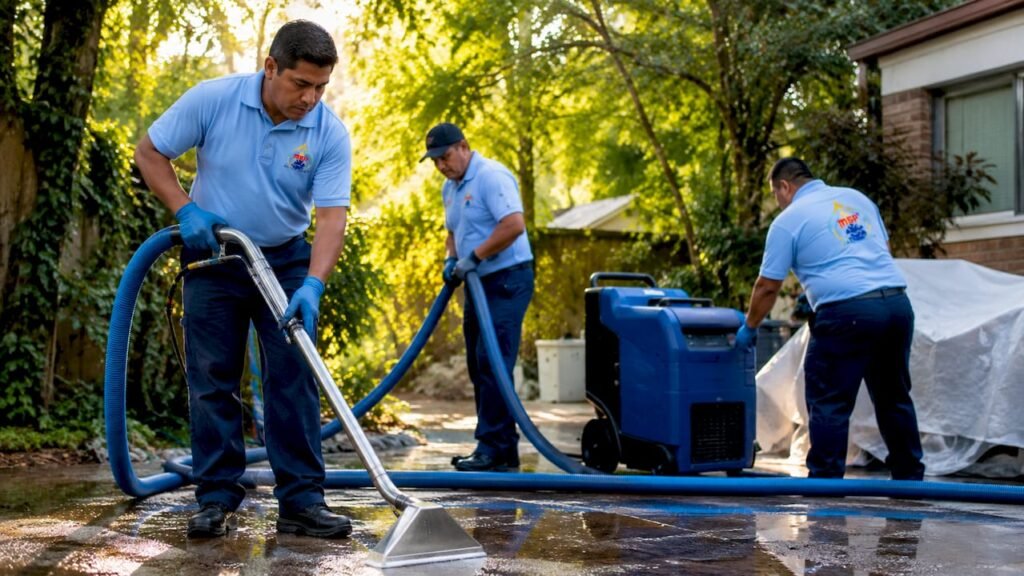
TL;DR:
- Water damage repair involves removing moisture, drying materials, and restoring the property quickly. Delaying repairs, misclassifying contamination, and rushing drying equipment lead to costly failures and mold growth. Proper assessment, documentation, and professional tools are essential to ensure complete drying and prevent repeat damage.
Water damage repair is defined as the process of extracting moisture, drying structural materials, and restoring a property to its pre-loss condition. The most costly water damage repair common mistakes are not dramatic oversights. They are quiet errors: waiting too long, misreading contamination levels, and trusting surface dryness. Mold can begin growing within 24 to 48 hours after water exposure. That single fact changes everything about how quickly you must act. The IICRC S500 standard governs professional water damage assessment, and ignoring its framework is where most restoration failures begin.
1. Delaying the start of repairs
Delay is the single most expensive mistake homeowners make after water damage. Drywall, insulation, and wood framing begin to degrade within 24–48 hours of moisture exposure. Waiting even one extra day can turn a manageable extraction job into a full structural remediation.
Standing water creates compounding risks beyond material damage. It saturates subfloors, wicks into wall cavities, and raises indoor humidity to levels that accelerate mold colonization. Once mold establishes itself, the scope of work and the cost grow significantly.
Pro Tip: Before professionals arrive, shut off the water source, turn off electricity to affected areas, and move portable valuables to dry ground. These steps are safe for homeowners and reduce ongoing damage without requiring specialized equipment.
- Remove standing water with a wet/dry vacuum if the volume is small and the source is clean.
- Open windows and interior doors to improve air circulation.
- Document everything with photos and video before touching anything else.
2. Misclassifying water contamination categories
The IICRC S500 defines three water damage categories. Category 1 is clean water from a supply line. Category 2 is gray water containing contaminants, such as washing machine overflow. Category 3 is black water, which includes sewage, floodwater, and any water that has sat long enough to become grossly contaminated.
Misclassifying a Category 2 or 3 loss as Category 1 is one of the most dangerous errors in restoration. It leads to treating contaminated materials as salvageable and skipping the antimicrobial protocols required to stop pathogen spread. The result is secondary contamination throughout the building.
Proper classification determines containment requirements, personal protective equipment, and which materials must be removed rather than dried. You can review a full breakdown of water damage categories to understand what each level means for your property.
- Category 1: clean source, low contamination risk, standard drying protocols apply.
- Category 2: gray water, requires antimicrobial treatment and careful material evaluation.
- Category 3: black water, requires full containment, PPE, and removal of all porous materials.
Pro Tip: Visible clarity of water does not indicate its safety. Water that entered through a flooded basement floor drain is Category 3 regardless of how clean it looks.
3. Running air movers before extracting standing water
This mistake is more common than most homeowners realize, and it causes serious harm. Running air movers on standing water without extraction first aerosolizes contaminants and pushes them into wall cavities, ceiling spaces, and HVAC ductwork. What started as a localized loss becomes a building-wide contamination event.
Professional water extraction uses truck-mounted or portable extraction units that physically remove water from the structure. Air movers are a drying tool, not a removal tool. They belong in the process only after extraction is complete and containment is confirmed.
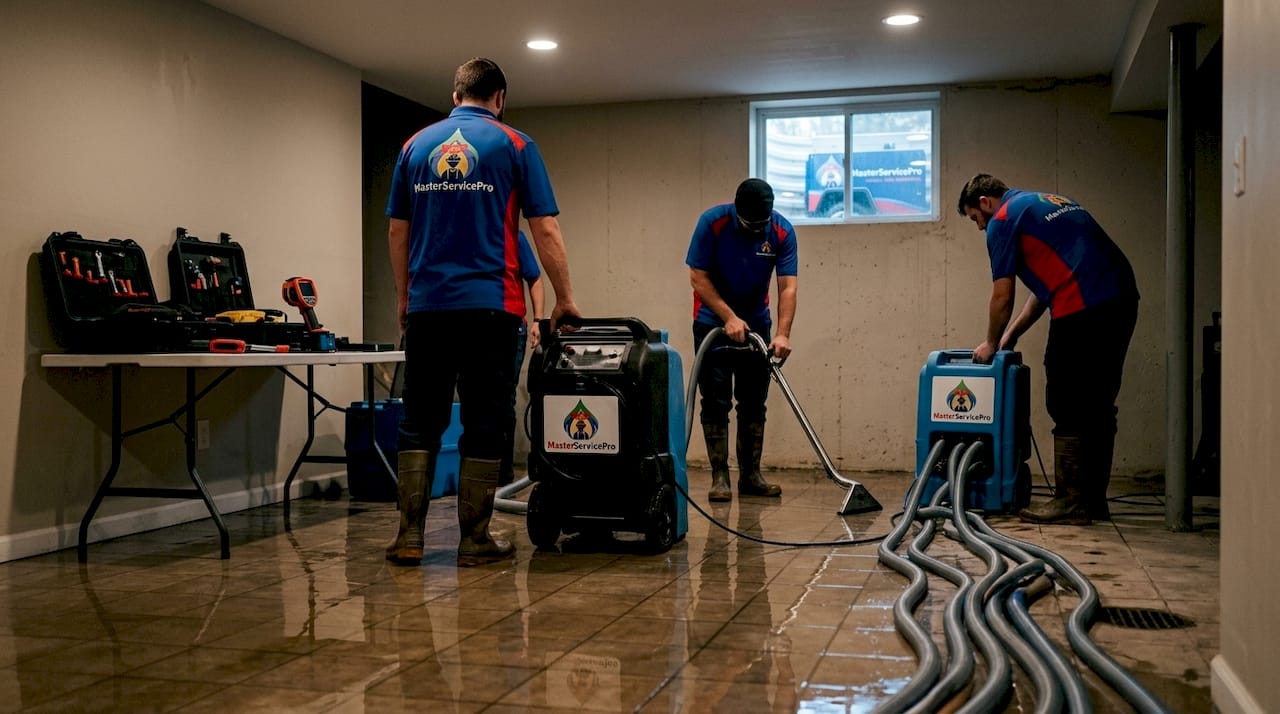
The HVAC system is the hidden casualty of premature air movement. Once contaminants enter the duct network, remediation costs multiply. Always confirm that standing water is fully extracted before any drying equipment is activated.
4. Trusting surface dryness as a sign of completion
A floor that feels dry to the touch can still hold dangerous moisture levels inside the subfloor, wall framing, or insulation. Surface dryness is misleading. Moisture trapped inside structural assemblies continues to feed mold growth and wood rot long after the visible water is gone.
Professional restorers use thermal imaging cameras and calibrated moisture meters to map hidden moisture pockets. These tools detect elevated readings behind drywall and under flooring that no visual inspection can find. Without them, you are guessing.
Structural drying is complete only when moisture readings return to the dry standard for each material type, not when the surface feels dry. Skipping this verification step is one of the most common restoration process pitfalls that leads to repeat mold problems months later.
Pro Tip: Ask your restoration contractor to provide daily moisture logs with meter readings at each measurement point. This protects you during the insurance claim process and confirms drying is progressing correctly.
5. Attempting DIY water extraction with household tools
Household wet/dry vacuums and box fans are not restoration equipment. They remove surface water and move air, but they cannot reach moisture inside wall assemblies, under hardwood flooring, or within insulation batts. Hidden moisture remains after the surface appears dry, and household tools have no way to detect or address it.
DIY water damage mistakes in this category are costly because they create a false sense of completion. Homeowners believe the job is done. Weeks later, a musty odor appears, paint bubbles, or a mold inspection reveals active growth behind the walls.
Professional equipment includes high-capacity dehumidifiers, desiccant systems for extreme moisture loads, and injectidry systems that force dry air directly into wall cavities. These tools are not available at hardware stores. Knowing when to call professionals is not a sign of defeat. It is the correct decision for any loss beyond a small, clean-water spill on a hard surface.
6. Leaving unsalvageable porous materials in place
Wet drywall, wet insulation, and wet carpet padding are not worth saving. Rushing restoration without removing damaged porous materials causes repeat mold growth and structural failure even after the initial repair appears complete. These materials absorb and hold moisture at levels that standard drying equipment cannot overcome.
The correct approach is to remove and discard any porous material that has been saturated with Category 2 or Category 3 water, or any material that cannot be dried to standard within the drying window. This includes drywall, carpet, carpet pad, and cellulose insulation.
Signs that a material needs replacement rather than drying include visible mold growth, a persistent musty odor, physical softening or delamination, and moisture readings that do not decrease over 24–48 hours of active drying. Holding onto these materials to save money almost always costs more in the end.
- Wet carpet padding: remove and discard in all Category 2 and 3 losses.
- Saturated drywall: cut and remove to at least 12 inches above the visible water line.
- Fiberglass or cellulose insulation: remove if saturated; it cannot be effectively dried in place.
- Hardwood flooring: evaluate with moisture meters; cupping or buckling indicates replacement.
7. Using the wrong repair materials on older structures
Older homes present a specific restoration challenge. Using Portland cement mortar on historic masonry traps moisture inside the wall assembly because it is harder and less permeable than the original lime-based mortar. This incompatibility accelerates moisture damage and spalling rather than preventing it.
The same principle applies to paint and sealants. Applying vapor-impermeable coatings over materials that have not fully dried seals moisture inside the assembly. That trapped moisture feeds mold and causes paint failure within months.
Match repair materials to the original construction. Older homes with plaster walls, brick exteriors, and wood lath require different products and techniques than modern construction. When in doubt, consult a restoration professional who has experience with the specific building type.
8. Skipping thorough documentation for insurance claims
Poor documentation is one of the most preventable water damage recovery challenges. Xactimate, the industry-standard estimating platform, contains roughly 17,000 line items. Miscoding even a few of those items or failing to track equipment days accurately results in underpayment on your claim.
Insurance adjusters audit claims against documented evidence. Incomplete moisture logs lead to audit reductions and claim denials. A claim that lacks daily readings, equipment placement records, and photo documentation of each affected area gives the adjuster grounds to reduce the payout.
Proper daily documentation of moisture readings, equipment placement, and restoration progress is the single most effective way to protect your claim. Start documenting from the moment damage is discovered, and do not stop until the final drying verification is complete.
| Common documentation error | Impact on claim |
|---|---|
| Missing equipment placement logs | Adjuster removes equipment days from reimbursement |
| No daily moisture readings | Drying scope disputed or reduced |
| Incorrect Xactimate line item codes | Line items denied or repriced downward |
| Photos taken only at start, not during | Scope of damage cannot be verified at each stage |
| No final drying verification record | Claim closed without confirming completion |
Key takeaways
Avoiding water damage repair common mistakes requires fast action, correct contamination classification, professional drying equipment, and thorough documentation from day one.
| Point | Details |
|---|---|
| Act within 24 hours | Mold growth begins within 24–48 hours; delay turns minor losses into major remediation jobs. |
| Classify contamination correctly | IICRC S500 categories determine treatment scope; misclassifying Category 3 as Category 1 spreads contamination. |
| Extract before drying | Running air movers on standing water aerosolizes contaminants and worsens building-wide damage. |
| Verify hidden moisture | Surface dryness does not confirm structural dryness; use moisture meters and thermal imaging. |
| Document everything daily | Daily moisture logs and correct Xactimate coding protect your insurance claim from underpayment. |
What I have learned from watching repairs go wrong
The pattern I see most often is not ignorance. It is impatience. Homeowners want their home back. Property managers want their units back online. That pressure to move fast is understandable, and it is also the main reason repairs fail and need to be redone.
The uncomfortable truth about water damage is that the work you cannot see matters more than the work you can. A freshly painted wall looks like a finished repair. If the framing behind it still reads elevated moisture, that wall will show mold within a few months. The repair was cosmetic, not structural.
I have also watched homeowners trust bleach as a comprehensive fix. Bleach does not penetrate porous materials and does not substitute for extraction and controlled drying. It addresses surface appearance, not the underlying moisture problem. That misplaced confidence delays real treatment and gives mold more time to establish.
The IICRC S500 standard exists because water damage restoration is a technical process with defined steps and measurable outcomes. Skipping steps does not save time. It creates a second job. The homeowners and property managers who get the best outcomes are the ones who treat the drying phase with the same seriousness as the visible repair work. Verify readings. Keep logs. Do not close out a job until the numbers confirm it is done.
— John
How Masterservicepro helps you avoid these costly errors
Masterservicepro provides water damage restoration services across Lake County, Cook County, DuPage County, Will County, and Kane County, IL. Every technician is IICRC certified and follows the IICRC S500 standard from the first assessment through final drying verification. Masterservicepro uses professional thermal imaging, calibrated moisture meters, and high-capacity dehumidification equipment to find and eliminate hidden moisture that household tools miss. The team handles documentation, moisture logs, and equipment tracking to support your insurance claim from start to finish. With a 100% satisfaction guarantee and an A-to-Z service model covering both water damage repair and mold remediation, you work with one trusted team rather than coordinating multiple contractors.
FAQ
How soon does mold grow after water damage?
Mold begins growing within 24 to 48 hours after moisture exposure. Starting extraction and drying within the first 24 hours is the most effective way to prevent mold colonization.
What is the IICRC S500 standard?
The IICRC S500 is the industry standard for professional water damage restoration. It defines contamination categories, drying protocols, and documentation requirements that certified restorers follow on every job.
Can I use bleach to treat water damage?
Bleach does not penetrate porous materials and cannot replace professional extraction and drying. It addresses surface discoloration but leaves trapped moisture and microbial growth untreated.
Why does my insurance claim keep getting reduced?
Xactimate claim audits require documented equipment days and daily moisture logs. Missing or incomplete records give adjusters grounds to reduce or deny line items. Thorough daily documentation is the most reliable protection against underpayment.
How do I know if my home is fully dry after water damage?
A professional moisture assessment using calibrated meters and thermal imaging is the only reliable method. Surface dryness does not confirm that wall assemblies, subfloors, or insulation have reached acceptable moisture levels.