TL;DR:
- Asking the right questions during a mold inspection ensures you receive an unbiased, thorough assessment.
- Inspectors should have recognized certifications, operate independently, and use specialized equipment like moisture meters and thermal cameras.
The most important questions to ask a mold inspector during their visit determine whether you get an accurate, unbiased assessment or a sales pitch disguised as science. A professional mold inspection, formally called an indoor environmental assessment, goes far beyond a visual walkthrough. Knowing the right mold inspection questions before the inspector arrives puts you in control of the process, the results, and the decisions that follow. This guide gives you the specific questions to ask, the answers to expect, and the red flags to watch for.
What questions should I ask a mold inspector during their visit?
The questions you ask a mold inspector during their visit fall into four categories: credentials, methods, reporting, and follow-up. Each category protects you from a different risk. Skipping even one leaves a gap that can cost you money, health, or both.
Credentials questions protect you from unqualified or conflicted inspectors. Method questions confirm the inspector uses proper tools. Reporting questions tell you what you will receive and when. Follow-up questions clarify what happens if mold is found.
Pro Tip: Write your questions down before the inspector arrives. Inspectors move quickly through a home, and a written list keeps you focused when you are also watching them work.
What certifications and independence should I verify?
Inspector independence is the single most critical filter you can apply. Truly independent inspectors do not offer remediation services, do not accept referral fees from remediation companies, and use accredited third-party labs. An inspector who also sells remediation has a financial reason to find mold, whether it is there or not.
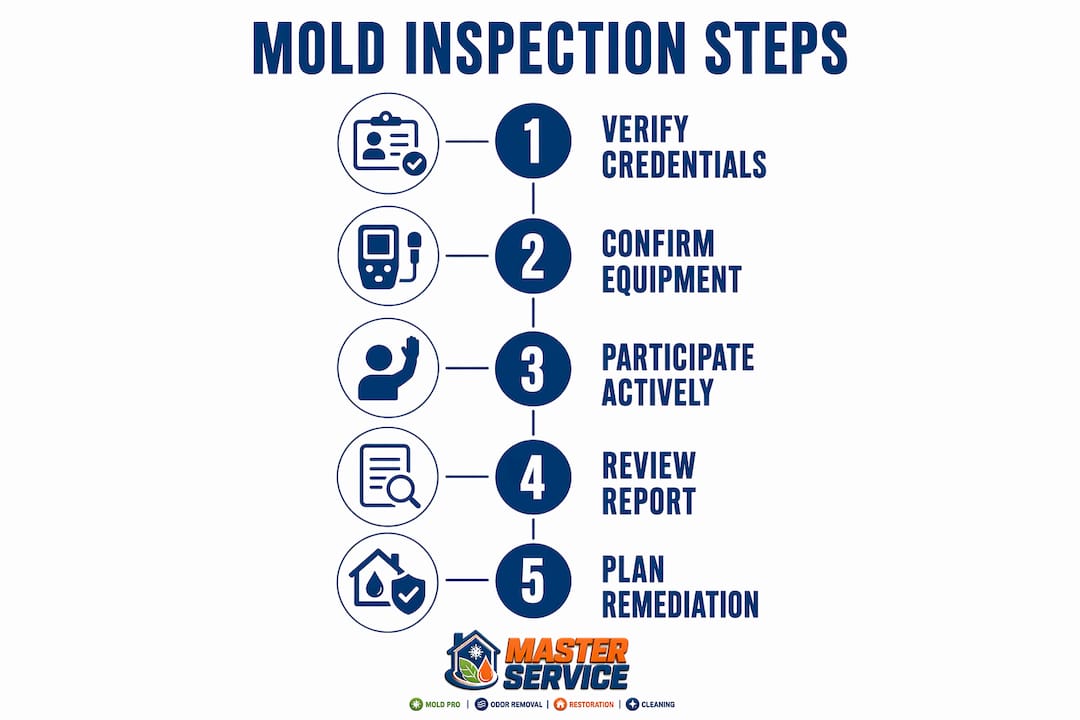
Ask for certifications from recognized bodies before the inspection begins. The three most credible credentials in the industry are:
- ACAC (American Council for Accredited Certification): Certifies indoor environmental consultants and mold inspectors with verifiable certificate numbers.
- IICRC (Institute of Inspection, Cleaning and Restoration Certification): The standard for restoration and inspection professionals, including mold remediation technicians.
- IAC2 (Indoor Air Consultant Certification): A widely recognized credential for inspectors who specialize in mold and indoor air quality.
Ask the inspector to show you their certificate number. You can verify ACAC and IICRC credentials directly on each organization’s website. Verified credentials prevent you from hiring a sales-driven operator with no real training.
Also confirm the inspector carries professional liability insurance, specifically errors and omissions coverage. This protects you if the inspector misses a significant mold problem that later causes damage or health issues.
Pro Tip: Ask directly: “Do you offer any remediation services, or do you receive referral fees from remediation contractors?” A qualified independent inspector will answer “no” without hesitation. Hesitation is your answer.
The certified mold remediation benefits for your family are only realized when the inspection that precedes remediation is objective and thorough.
What equipment and testing methods does the inspector use?
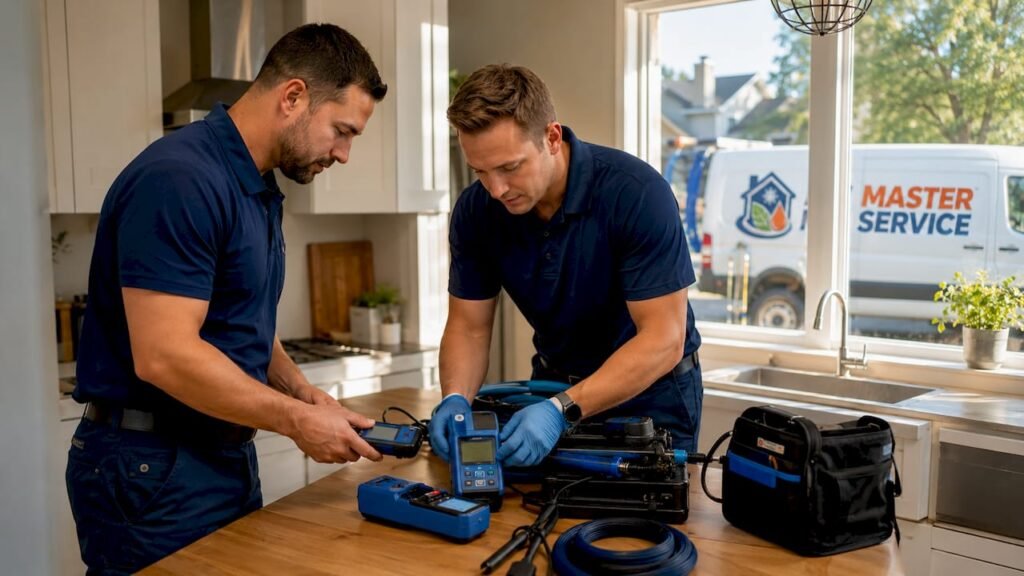
A professional mold inspection requires specialized equipment. Visual-only inspections are inadequate for comprehensive evaluation because mold grows inside walls, under flooring, and above ceiling tiles where no eye can reach. Ask the inspector to walk you through every tool they plan to use and why.
The core equipment a qualified inspector should bring includes:
- Moisture meter: Detects elevated moisture levels inside drywall, wood, and other building materials without cutting them open. Moisture is the root cause of mold growth, so mapping it is non-negotiable.
- Thermal imaging camera: Identifies temperature anomalies that indicate hidden moisture behind surfaces. Cold spots on a warm wall often signal water intrusion.
- Air sampling pump: Collects airborne mold spores for lab analysis. This identifies mold types and concentrations that are invisible to the naked eye.
- Surface sampling swabs or tape lifts: Collect mold directly from suspect surfaces for species identification.
- AIHA-accredited lab: All samples should go to a lab accredited by the American Industrial Hygiene Association. This ensures the results are scientifically valid and defensible.
Ask specifically: “How do you decide where to take samples?” A qualified inspector tailors sampling to what the investigation reveals, not to a fixed package. Good inspectors base sampling decisions on evidence, not upselling.
Pro Tip: If an inspector offers a “basic package” with a set number of samples regardless of findings, that is a red flag. Sampling should follow the evidence, not a price menu.
How can I prepare for the inspector’s visit and participate actively?
Being present during the inspection is one of the most valuable things you can do. Homeowners who attend gain real-time education about their home’s moisture vulnerabilities and can address specific concerns that a solo inspector might deprioritize.
Prepare your home before the inspector arrives by clearing access to every area where mold or moisture problems are likely:
- Attics, crawl spaces, and basements
- HVAC systems, air handlers, and ductwork access panels
- Under-sink cabinets in kitchens and bathrooms
- Utility rooms with water heaters or washing machines
- Any area with a history of leaks, flooding, or musty odors
Share your home’s moisture history with the inspector before they start. Sharing leak history and prior repair records enables a targeted assessment of hidden moisture sources that instruments alone might overlook. Tell the inspector about past plumbing leaks, roof repairs, basement flooding, or any area where you have noticed a musty smell.
During the inspection, ask questions out loud. “What are you looking for in that corner?” and “Should we check behind that wall?” are both fair and useful. Inspectors who welcome your questions are confident in their process. Inspectors who discourage questions are worth watching carefully.
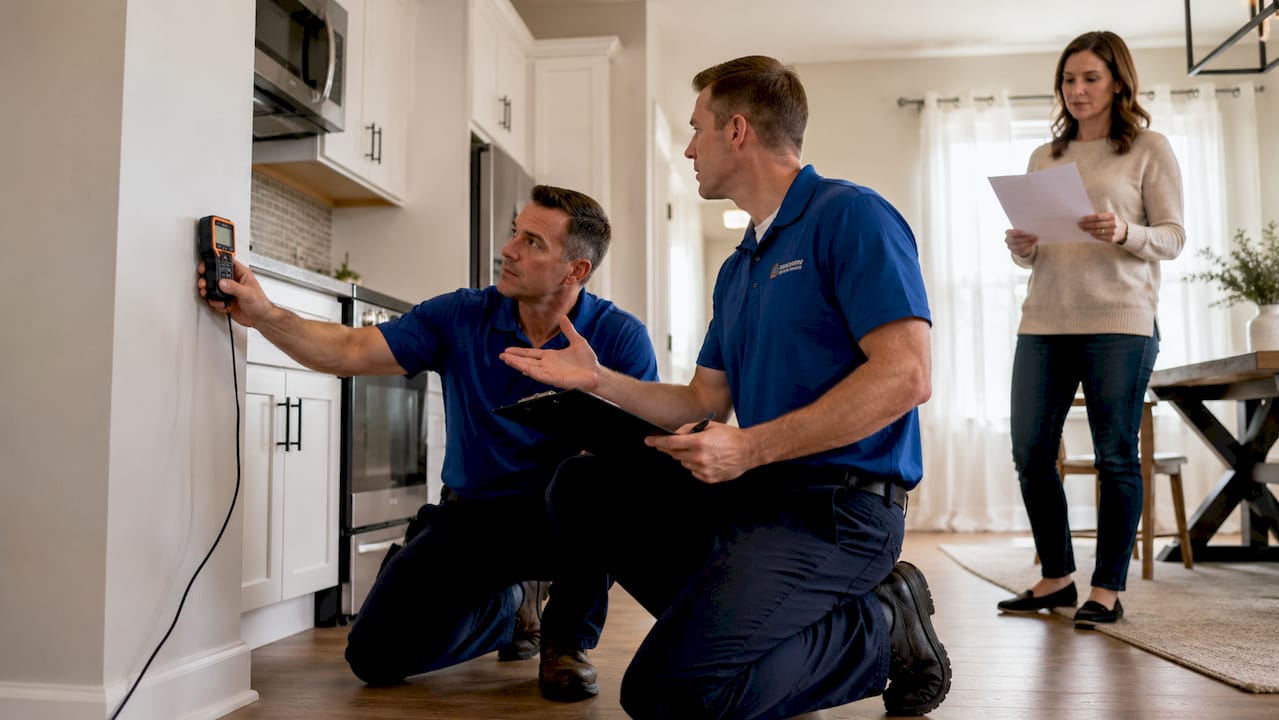
Active participation also gives you knowledge you can use for prevention. Understanding where your home holds moisture tells you where to focus future maintenance, regardless of whether mold is found today.
What should a comprehensive mold inspection report include?
A professional report is the deliverable you are paying for. Reports should be delivered within 3–5 business days and include far more than photos of visible mold. Ask the inspector what the report will contain before they leave your home.
A complete mold inspection report includes:
- Photographic evidence with labeled problem areas and GPS or room-specific location tags
- Moisture mapping showing readings from every area tested, not just problem spots
- Infrared thermography images that document temperature anomalies and suspected moisture intrusion
- Lab results with species identification and spore count interpretation
- Remediation protocols if mold is confirmed, including scope, priority, and suggested timeline
| Report Element | What to look for |
|---|---|
| Photos | Labeled by room and location, not just raw images |
| Moisture map | Numerical readings across all tested surfaces |
| Thermography images | Color-coded thermal scans with anomalies marked |
| Lab results | Species name, spore count, and health context |
| Remediation scope | Specific areas, methods, and timeline if mold is found |
Reports that include moisture meter and thermography data plus lab results provide objective evidence for remediation decisions rather than subjective visual opinions. This matters if you need to negotiate with a landlord, file an insurance claim, or sell the property.
Ask the inspector: “Will the report include your interpretation of the lab results, or just the raw numbers?” Raw numbers without context are nearly useless to a homeowner. You need the inspector to explain what the mold species found actually means for your health and your home.
Understanding mold inspection report red flags before you receive your report helps you evaluate whether what you received meets professional standards.
Key Takeaways
The most effective mold inspector visit combines verified credentials, specialized equipment, your active participation, and a detailed written report with lab-backed findings.
| Point | Details |
|---|---|
| Verify independence first | Confirm the inspector has no financial ties to remediation companies before hiring. |
| Require specialized equipment | Moisture meters, thermal cameras, and AIHA-accredited lab sampling are non-negotiable. |
| Be present and ask questions | Attending the inspection gives you real-time knowledge about your home’s moisture risks. |
| Share your home’s history | Disclosing past leaks and repairs helps the inspector target hidden problem areas accurately. |
| Demand a complete report | Reports must include moisture maps, thermography images, lab results, and remediation scope. |
What I have learned from watching homeowners navigate mold inspections
The mistake I see most often is homeowners treating the mold inspection like a passive service, the way you might treat a cable installation. You let the technician in, you leave them alone, and you wait for a result. That approach costs you real information.
The homeowners who get the most out of an inspection are the ones who show up curious and prepared. They have a list of questions. They know where the last leak happened. They point out the corner that always smells musty in july. That context changes what the inspector looks for and where they point the thermal camera.
I also tell every homeowner I advise to avoid any inspector who offers a free inspection. Free inspections tied to remediation contracts ultimately raise overall costs because the “free” part gets baked into an inflated remediation quote. A truly independent inspection costs between $250 and $550 for a typical single-family home, with lab samples adding $35 to $100 each. That is money well spent for an unbiased result.
One more thing: ask for references from inspections completed at least six months ago. Checking older references helps you assess whether the inspector’s findings held up over time or whether clients dealt with recurring mold problems after remediation. That question alone separates thorough inspectors from ones who are just going through the motions.
— John
Masterservicepro is ready to help after your inspection
When your inspection report confirms mold or moisture damage, the next step is remediation by a team you can trust.
Masterservicepro serves homeowners and renters across Lake County, Cook County, DuPage County, Will County, and Kane County, IL with IICRC-certified mold remediation and water damage restoration. The A to Z service model means you work with one team from inspection follow-up through full restoration, with no need to coordinate multiple contractors. For a clear path from mold findings to a clean, safe home, the Winnetka mold remediation guide is a strong starting point. If water damage is part of the picture, the water damage restoration service page covers what to expect at every stage.
FAQ
What certifications should a mold inspector have?
Look for ACAC, IICRC, or IAC2 certifications with verifiable certificate numbers. These credentials confirm the inspector has met recognized professional standards for indoor environmental assessment.
How long does a mold inspection take?
A thorough inspection of a typical single-family home takes two to four hours, depending on size and the number of areas requiring sampling. Inspectors who finish in under an hour are unlikely to have conducted a complete assessment.
What does a mold inspection cost?
A professional mold inspection for a typical single-family home costs between $250 and $550, with each lab sample adding $35 to $100. Free inspections are almost always tied to remediation contracts that inflate total costs.
Should I be home during the mold inspection?
Being present during the inspection is strongly recommended. It allows you to ask real-time questions, share your home’s moisture history, and learn about vulnerabilities the inspector identifies as they work.
How soon will I receive the inspection report?
A qualified inspector delivers the report within 3–5 business days. The report should include photographic evidence, moisture mapping, thermography images, lab result interpretation, and remediation protocols if mold is confirmed.