TL;DR:
- Complete building restoration services provide coordinated, full-spectrum repairs for water damage, mold, and structural failures. Certified professionals manage all phases from emergency response to final reconstruction, ensuring better results, lower costs, and stronger insurance claims. Early detection and hiring a single, certified provider prevent costly mistakes and recurring problems.
Complete building restoration services are full-spectrum solutions that integrate emergency response, structural repair, mold remediation, and finishing work to return a property to safe, functional condition. Property owners dealing with water damage, mold growth, or structural failures need more than a quick patch. They need a coordinated, multiphase process managed by certified professionals. Industry pricing for these projects typically ranges from $25,000 to $500,000+ depending on damage scale, making the choice of provider one of the most consequential decisions a homeowner can make. IICRC-certified contractors follow standardized restoration protocols that protect both the structure and the people living in it.
What are complete building restoration services?
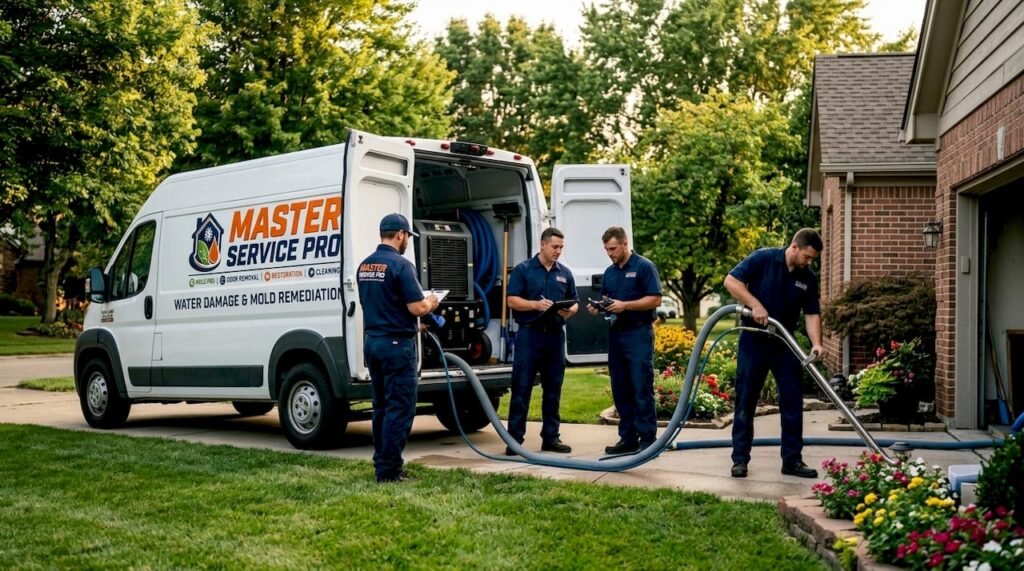
Complete building restoration services are defined as integrated, full-system repair and reconstruction programs that address a property from emergency stabilization through final finishing. The industry term used by certified professionals is “disaster restoration,” though the scope extends well beyond emergency cleanup to include mold remediation, structural rebuilding, and system replacement. Masterservicepro delivers this full scope under one roof, covering water damage restoration, mold remediation, plumbing, electrical work, and reconstruction across Lake County, Cook County, DuPage County, Will County, and Kane County, IL.
The core benefit of this approach is coordination. When one provider manages every phase, nothing falls through the cracks between contractors. A flooded basement, for example, requires water extraction, drying, mold inspection, structural assessment, and drywall replacement. Each step depends on the one before it. Fragmenting that work across separate vendors creates gaps that lead to mold recurrence, uneven flooring, and failed inspections.
Restoration differs from renovation in one critical way: restoration returns a property to its pre-damage condition, while building renovation services improve or upgrade it. In practice, many restoration projects include renovation elements, especially when outdated systems are exposed during demolition.
What are the typical phases of a building restoration project?
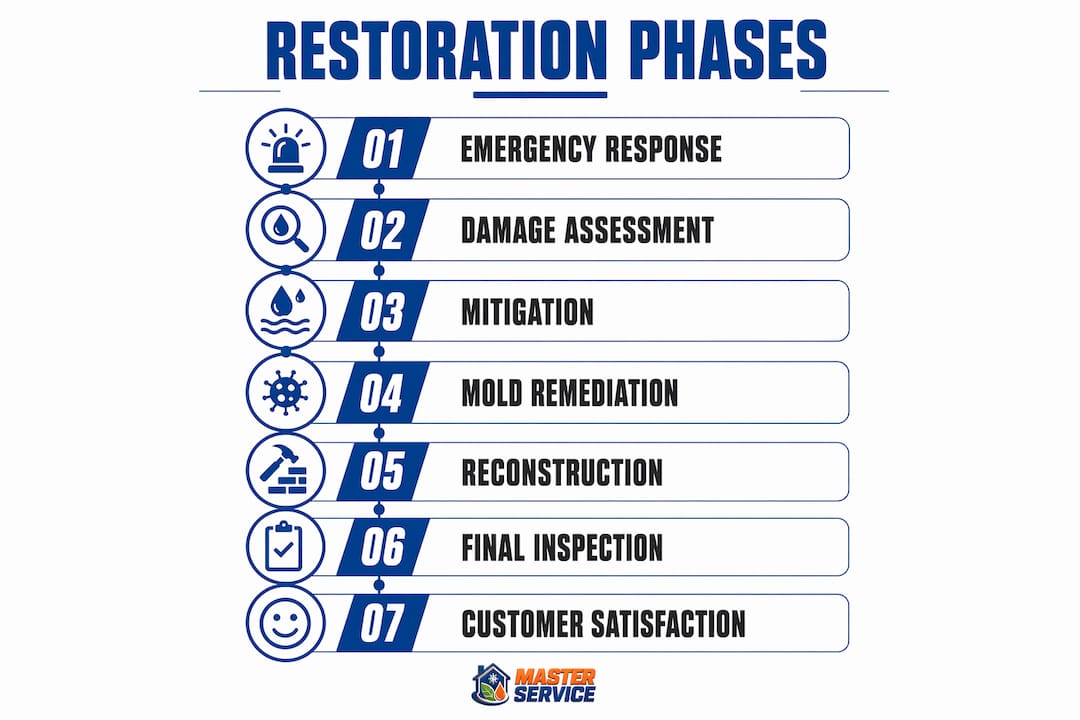
Industry-standard restoration follows a defined multi-phase process. Each phase builds on the last, and skipping any one of them creates long-term problems.
- Emergency assessment and stabilization. Certified teams respond 24/7 to stop active damage. This includes water extraction, board-up, and temporary structural support.
- Damage documentation. Professionals photograph and inventory all affected areas before any demolition begins. This documentation is required for insurance claims.
- Moisture mapping and hidden damage detection. Technicians use thermal imaging cameras and moisture meters to locate water and mold that visual inspection misses entirely.
- Mitigation and selective demolition. Damaged materials are removed to prevent further deterioration. This includes wet drywall, saturated insulation, and compromised flooring.
- Mold remediation. Any microbial growth identified during moisture mapping is treated using EPA-approved methods before reconstruction begins.
- Reconstruction and system integration. Structural elements, plumbing, electrical, and interior finishes are rebuilt to current code under a single management chain.
- Final inspection and sign-off. The completed work is verified against the original damage documentation and local building codes.
Pro Tip: Before signing any restoration contract, ask for the provider’s IICRC certification number. IICRC certification confirms the technician has completed standardized training in water damage restoration, mold remediation, and structural drying. It is the clearest signal of professional competence in this industry.
Single-chain management across all seven phases is what separates a true full-service building repair provider from a general contractor who subcontracts the specialty work. Managing multiple contractors creates communication gaps, delays, and accountability problems that cost homeowners time and money.
Which warning signs tell you that your property needs professional restoration?
Structural deterioration from deferred maintenance is the most common trigger for full restoration projects. Many property owners wait too long, addressing symptoms rather than causes, until the damage requires a complete rebuild. Knowing the warning signs early saves significant cost.
Buildings constructed before 1980 carry specific risks: galvanized plumbing that corrodes from the inside, aging electrical panels that fail to meet current load demands, and seismic vulnerabilities that modern codes require to be addressed. These are not cosmetic issues. They are foundational failures that affect safety and property value.
Watch for these warning signs in your property:
- Persistent musty odors in basements, crawl spaces, or behind walls, which indicate active mold growth even when nothing is visible
- Water stains on ceilings or walls that reappear after painting, signaling an ongoing leak rather than a past one
- Soft or uneven flooring that suggests moisture damage to the subfloor or structural joists beneath
- Rust-colored water from faucets or visible corrosion on pipe connections, pointing to deteriorating plumbing
- Frequently tripping breakers or flickering lights, which indicate an electrical system under stress
- Cracks in the foundation wider than a quarter-inch, especially horizontal cracks, which signal structural movement
A professional site inspection identifies problems that are invisible to the untrained eye. Many established firms offer creditable site inspections with a nominal fee, often around $199, credited back when you proceed with the project. That small upfront cost consistently prevents far larger expenses from delayed intervention.
How do mitigation, mold remediation, and rebuilding work together?
The three core phases of expert building revitalization, mitigation, mold remediation, and reconstruction, are not independent services. They are sequential steps in a single process, and each one depends on the previous phase being completed correctly.
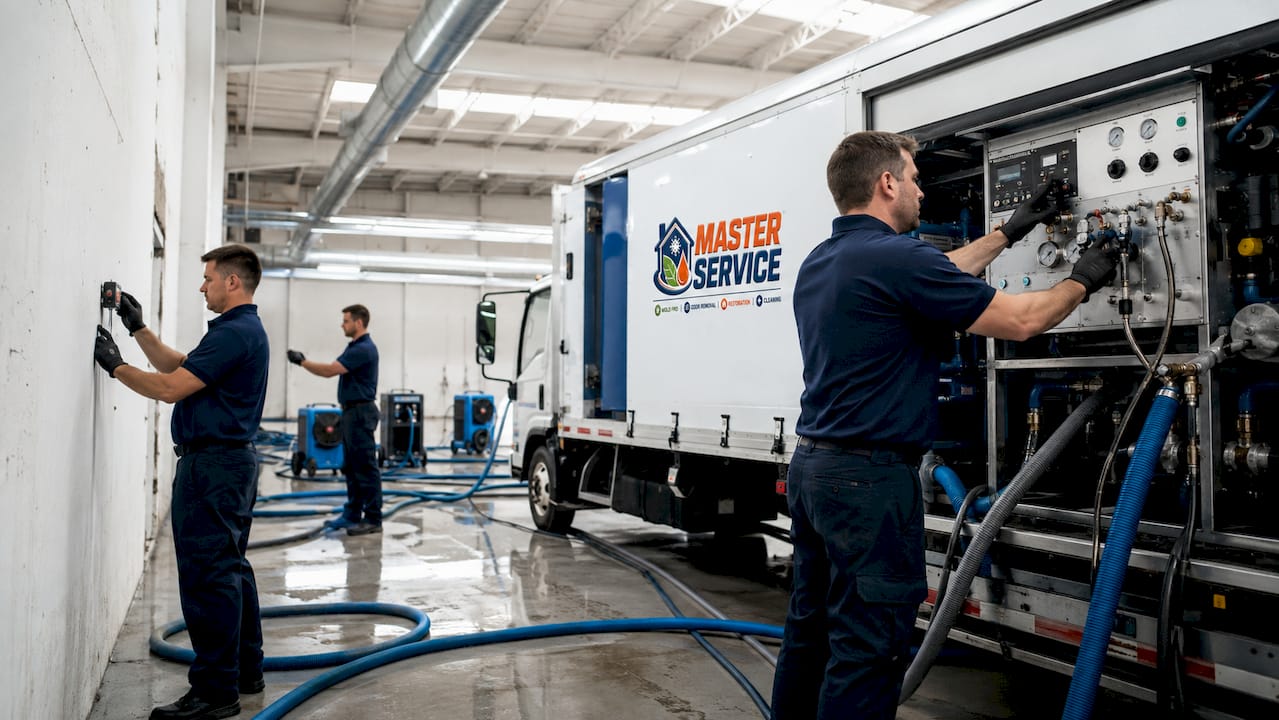
Mitigation removes the source and spread of damage. This means extracting standing water, running industrial dehumidification equipment, and tearing out materials that cannot be dried and saved. Stopping moisture at this stage is what prevents mold from colonizing the structure. Certified professionals use thermal imaging and moisture meters to confirm that all affected materials are identified before demolition begins. Visual inspection alone misses moisture trapped in wall cavities, under tile, and inside insulation.
Mold remediation follows mitigation and addresses any microbial growth that developed before or during the water event. This is not a surface wipe-down. Proper remediation includes containment of the affected area, HEPA air filtration, removal of contaminated materials, and treatment of structural surfaces with EPA-approved antimicrobial agents. Skipping this step and proceeding directly to reconstruction seals mold inside the walls.
Pro Tip: Ask your restoration provider whether mold remediation is performed in-house or subcontracted. When it is subcontracted, the handoff between phases creates scheduling gaps where moisture levels can rise again before remediation begins. In-house teams move faster and maintain consistent environmental controls throughout.
Reconstruction then integrates system replacements alongside structural repairs. This is where comprehensive restoration solutions go beyond cosmetic fixes. Exposed walls reveal plumbing and electrical systems that may need upgrading to meet current code. Addressing those systems during reconstruction costs far less than returning to open walls later.
Fragmented repairs from multiple contractors produce siloed results. One contractor dries the structure, another handles mold, and a third rebuilds. Without unified oversight, phases overlap incorrectly or leave gaps that cause recurrence. A single unified contract covering the full restoration scope is the standard that protects homeowners.
What do complete building restoration projects typically cost?
Restoration costs vary based on damage scale, building type, and the extent of system replacement required. The table below provides a practical reference for budgeting.
| Project Type | Typical Cost Range | Scope |
|---|---|---|
| Structural and system-wide restoration | $25,000–$125,000+ | Water damage, mold remediation, partial rebuild |
| Full building rebuild | $125,000–$500,000+ | Extensive structural failure, complete interior replacement |
| Site inspection | ~$199 (credited on contract) | Professional damage assessment before project start |
Restoration project costs at the lower end of the range typically involve water damage confined to one area of the home, with mold remediation and drywall replacement. Projects at the upper end involve structural failures, full system replacements, and extensive interior and exterior reconstruction.
Three factors drive costs higher than initial estimates. First, hidden damage discovered during demolition adds scope that was not visible during the initial assessment. Second, code compliance requirements for electrical and plumbing upgrades add cost when systems are exposed. Third, delays in starting mitigation allow damage to spread, increasing the volume of materials that must be replaced.
Professional project management reduces unexpected costs by documenting all damage before demolition begins. That documentation supports insurance claims and establishes a clear scope of work that limits scope creep. Homeowners who hire a single full-service provider consistently report fewer surprises than those who manage multiple contractors independently.
Pro Tip: Get a written scope of work before any demolition starts. A detailed pre-demolition inventory protects you during insurance negotiations and gives you a baseline to measure the final result against.
What are the advantages of hiring a certified full-service restoration provider?
IICRC certification is the industry standard that confirms a restoration provider has met defined training and process requirements. It is not a marketing label. It means the technicians follow documented protocols for moisture control, mold remediation, and structural drying that produce consistent, verifiable results.
Choosing a certified full-service provider delivers specific advantages:
- Single point of accountability. One provider owns the outcome from emergency response through final inspection. There is no finger-pointing between contractors when something goes wrong.
- Faster project completion. In-house teams coordinate phases without scheduling gaps between vendors. Certified full-service firms reduce delays and communication breakdowns that extend project timelines.
- Stronger insurance outcomes. Experienced restoration managers document hidden damages and file detailed inventories before demolition. That documentation maximizes claim approvals and reduces disputes with insurers.
- Code-compliant results. Full-service providers manage permits and inspections as part of the project, ensuring the finished work meets current building codes.
- Warranty protection. Certified providers stand behind their work with written warranties. Fragmented contractor arrangements rarely include unified warranty coverage.
Masterservicepro holds IICRC certification and operates with a 100% satisfaction guarantee. Property owners in Lake County and the surrounding Illinois counties benefit from a single provider handling water damage restoration, mold remediation, plumbing, electrical, and reconstruction without the complications of coordinating separate vendors.
Key Takeaways
Certified, single-provider restoration covering mitigation, mold remediation, and reconstruction produces better outcomes, lower costs, and stronger insurance results than fragmented contractor arrangements.
| Point | Details |
|---|---|
| Restoration follows defined phases | Emergency stabilization, moisture mapping, mitigation, remediation, and reconstruction must occur in sequence. |
| Hidden damage requires advanced detection | Thermal imaging and moisture meters find water and mold that visual inspection misses. |
| Costs range widely by scope | Structural restoration runs $25,000–$125,000+; full rebuilds reach $125,000–$500,000+. |
| Single-provider contracts protect homeowners | Unified management eliminates gaps between phases and strengthens insurance documentation. |
| IICRC certification is the quality standard | Certified technicians follow documented protocols that produce consistent, code-compliant results. |
What I’ve learned after years of watching restoration projects go wrong
The most expensive mistake I see homeowners make is not waiting too long to call a professional. It is calling too many professionals at once. A property owner hires one company to extract the water, a second to handle the mold, and a third to rebuild. Each contractor does their piece correctly, and the result is still a failure. The mold company arrives three days after extraction ends, and moisture levels have already climbed back up. The rebuild contractor starts framing before the remediation clearance test comes back. Six months later, the homeowner has mold growing inside brand-new walls.
The restoration industry has a term for this: siloed repairs. Each phase is technically correct in isolation, but the handoffs between phases are where properties fail. I have seen this pattern repeat in basements, bathrooms, and entire first floors. The fix is simple in principle and harder in practice. You hire one provider who owns every phase.
The second mistake is treating a restoration project like a renovation project. Homeowners focus on the finishes, the paint color, the new flooring. The certified restoration professional is focused on moisture content readings, air quality tests, and structural load calculations. Those two priorities need to coexist, but the technical work has to come first. A beautiful finish over unresolved moisture is a mold problem waiting to happen.
Early assessment is the single highest-return action a property owner can take. A professional damage assessment costs a fraction of what delayed intervention costs. Call a certified provider at the first sign of water intrusion or mold. Do not wait for visible damage to confirm what moisture meters would have found weeks earlier.
— John
Masterservicepro: certified restoration from start to finish
When water damage or mold puts your property at risk, you need one team that handles everything from emergency response to final reconstruction.
Masterservicepro is IICRC certified and serves Lake County, Cook County, DuPage County, Will County, and Kane County, IL. The team covers water damage restoration, mold remediation, plumbing, electrical work, and full reconstruction under one contract. Transparent pricing, creditable site inspections, and a 100% satisfaction guarantee mean you know exactly what you are getting before work begins. Five-star reviews from property owners across the Illinois service area reflect a consistent record of reliable emergency response and quality results. Contact Masterservicepro to schedule your assessment and get your property back to safe, livable condition.
FAQ
What are building restoration services?
Building restoration services are professional, multi-phase programs that repair and rebuild properties damaged by water, mold, fire, or structural failure. The process covers emergency stabilization, damage documentation, mitigation, mold remediation, and reconstruction.
How long does a complete restoration project take?
Project timelines vary based on damage scope. Water damage restoration with mold remediation typically takes one to four weeks. Full structural rebuilds can take several months depending on permit requirements and the extent of system replacement.
Why is IICRC certification important for restoration work?
IICRC certification confirms that technicians follow standardized protocols for moisture control, mold remediation, and structural drying. Certified providers produce consistent, code-compliant results and are better equipped to support insurance claims with proper documentation.
Can restoration work support my insurance claim?
Yes. Certified restoration professionals document hidden damages and file detailed inventories before demolition begins. That documentation is required by most insurers and directly affects claim approval and payout amounts.
What is the difference between restoration and renovation?
Restoration returns a property to its pre-damage condition following an event like flooding or mold growth. Renovation improves or upgrades a property beyond its original state. Many restoration projects include renovation elements when outdated systems are exposed during the repair process.