TL;DR:
- Mold remediation involves identifying, containing, removing, and verifying mold to prevent regrowth. It requires a structured six-step process that includes inspection, containment, removal, cleaning, drying, and verification, following standards like ANSI/IICRC S520. Proper containment, moisture control, and independent clearance testing are essential for lasting, effective results.
Mold remediation is defined as the complete process of identifying, containing, removing, cleaning, drying, and verifying mold to prevent regrowth, and it is fundamentally different from simple mold removal. The types of mold remediation techniques used by certified professionals follow the ANSI/IICRC S520 standard, a structured sequence that addresses both visible mold and its underlying moisture source. Homeowners and property managers who understand these methods make better decisions about when to call professionals, what to expect during the process, and how to confirm the job is truly done. A full remediation process typically lasts 1–5 days and costs an average of $2,300, depending on contamination size and complexity.
1. What are the main types of mold remediation techniques used?
Mold remediation is not a single action. It is a structured six-step process covering inspection, containment, removal, cleaning, drying, and verification. Skipping any step raises the risk of regrowth and leaves the root moisture problem unresolved. Each technique in the sequence serves a specific purpose, and professionals apply them in order to produce lasting results.
The six core techniques are:
- Inspection and assessment to locate all mold and moisture sources
- Containment to prevent spore spread during work
- Physical removal of contaminated materials
- Cleaning and treatment of remaining surfaces
- Drying and moisture control to eliminate conditions for regrowth
- Post-Remediation Verification (PRV) to confirm success
Understanding each technique helps you evaluate any contractor’s proposal and spot shortcuts before they cost you money.
2. Containment methods that isolate mold during remediation
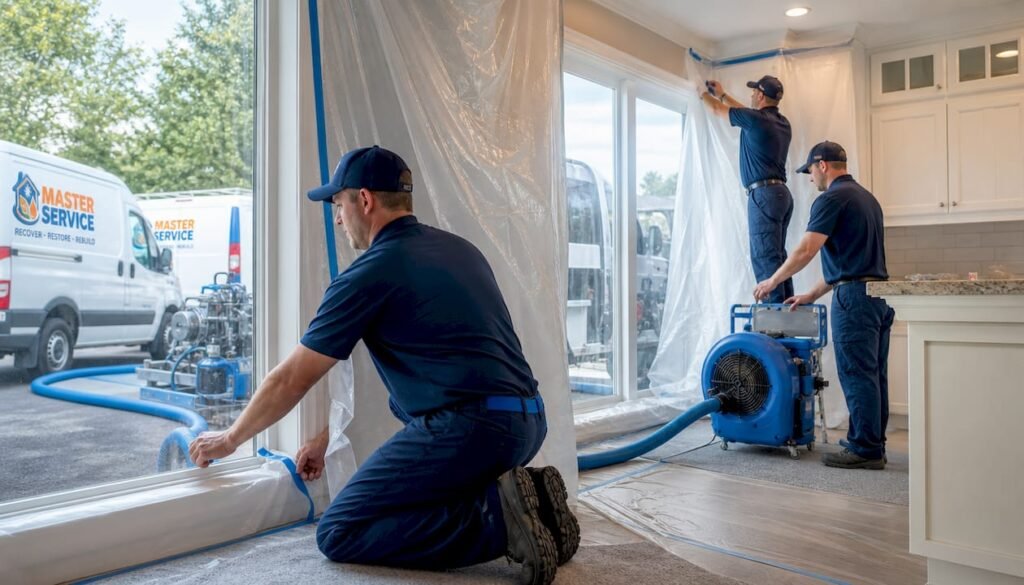
Containment is the first active technique applied after inspection. Its purpose is to stop mold spores from spreading to unaffected areas of your home while work is underway. Without proper containment, remediation activity can actually worsen air quality throughout the building.
Effective containment relies on three elements:
- 6-mil polyethylene sheeting sealed over doorways, vents, and openings to create a physical barrier
- Negative air pressure maintained at a minimum of negative 5 Pa inside the work zone, which pulls air inward rather than outward
- HEPA-filtered air scrubbers that capture 99.97% of particles as small as 0.3 microns, preventing spores from escaping through the air
For small contamination areas, limited containment using plastic sheeting over a single doorway is sufficient. Larger or more severe jobs require full containment with a sealed anteroom for workers to change protective gear. Preventing HVAC contamination is critical during this phase. Professionals seal all supply and return vents inside the work zone to stop spores from traveling through ductwork. For properties with complex HVAC systems, HVAC mold removal may be a necessary companion service.
Pro Tip: Ask your contractor to show you the negative pressure reading before work begins. A reading of at least negative 5 Pa confirms the containment is functioning correctly.
3. Physical removal and cleaning of mold-affected materials
Once containment is established, technicians assess which materials require removal and which can be cleaned. This decision drives the bulk of the remediation cost and timeline.
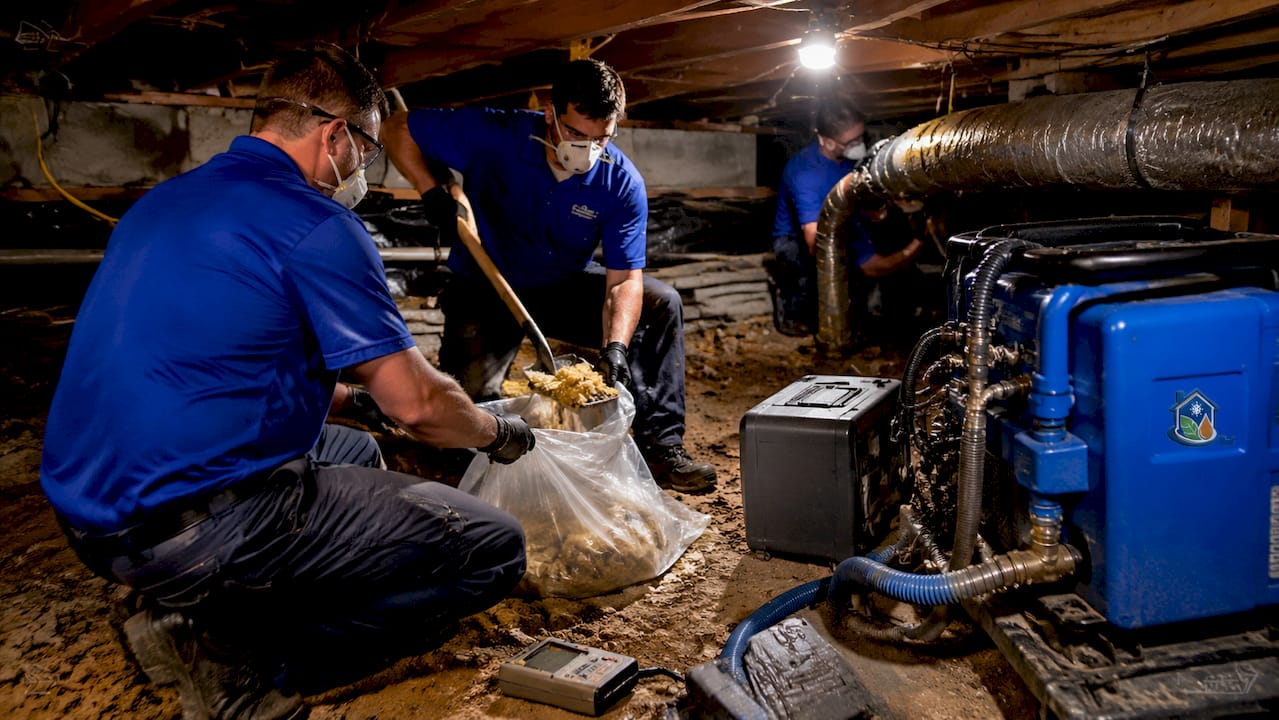
Porous materials like drywall, insulation, and carpet absorb mold deep into their fibers. These materials cannot be cleaned effectively and must be removed entirely. Non-porous surfaces like concrete, metal, and glass do not absorb mold and can be cleaned in place.
The removal process follows strict protocols:
- Contaminated materials are cut out carefully to minimize spore disturbance
- All debris is double-bagged in heavy plastic and sealed before transport
- Bags are labeled as contaminated waste and disposed of according to local regulations
After removal, EPA and OSHA recommend HEPA vacuuming of all remaining surfaces, followed by damp wiping with a detergent solution to physically lift and remove spores. EPA-registered antimicrobial agents are applied as an adjunct treatment, not as a substitute for physical removal. Encapsulants may be applied to treated surfaces to seal any residual spores on materials that cannot be removed, such as structural wood framing.
Pro Tip: Biocides and bleach do not replace physical removal. Ozone generators and bleach-only approaches are not substitutes for the physical removal and moisture control that lasting remediation requires.
Personal protective equipment (PPE) for technicians includes N-95 or P-100 respirators, disposable coveralls, gloves, and eye protection. This protects workers and prevents cross-contamination between the work zone and clean areas.
4. Drying and moisture control techniques for lasting results
Removing mold without fixing the moisture source guarantees regrowth. Drying and moisture control are the techniques that make remediation permanent rather than temporary.
Drying uses air movers and dehumidifiers to reach documented moisture targets in affected building materials. Professionals take baseline moisture readings with calibrated moisture meters before drying begins, then monitor progress daily until materials reach acceptable levels. This documentation proves the structure is dry and supports insurance claims.
Key moisture control steps include:
- Repairing the root moisture source, whether a plumbing leak, roof penetration, or condensation problem, before or during remediation
- Monitoring indoor relative humidity and targeting levels below 50% to prevent regrowth
- Using thermal imaging cameras to detect hidden moisture behind walls or under flooring
- Documenting all moisture readings to meet ANSI/IICRC S520 standards
Skipping moisture source repair is the single most common reason mold returns after remediation. A contractor who cleans mold without addressing the leak or humidity problem is not performing true remediation.
5. Verification and clearance techniques that confirm success
Post-Remediation Verification (PRV) is the technique that separates professional remediation from surface-only cleaning. PRV uses visual inspection, moisture meter readings, and air sampling to confirm that mold levels are safe and materials are dry.
The verification process follows this sequence:
- Visual inspection confirms no visible mold remains and no moisture is present
- Moisture meter readings verify all structural materials have reached dry standard
- Air sampling compares indoor spore counts to outdoor baseline controls
- Clearance report documents all findings in writing
Independent PRV is the gold standard. This means a separate, third-party inspector, not the remediation contractor, conducts the final testing. Independent verification produces defensible documentation for insurance claims and real estate transactions. Failure to obtain independent PRV is a leading cause of lost insurance claims and unresolved mold disputes during property sales.
The clearance report becomes a permanent record of the remediation. Property managers especially benefit from keeping this documentation on file, as buyers and insurers increasingly request it during transactions.
6. How different mold remediation strategies compare by situation
Not every mold problem requires the same response. Matching the technique to the situation saves money and avoids unnecessary disruption.
| Situation | Recommended approach | Key consideration |
|---|---|---|
| Small surface mold under 10 sq ft | Limited containment, HEPA vacuum, damp wipe | Moisture source must still be fixed |
| Moderate contamination, 10–100 sq ft | Full containment, material removal, antimicrobial treatment | Independent PRV recommended |
| Large or hidden mold, over 100 sq ft | Full containment, structural removal, drying protocol, independent PRV | Professional required; ANSI/IICRC S520 compliance mandatory |
| HVAC contamination | Duct isolation, HEPA cleaning, air scrubbing | Specialist service needed alongside structural remediation |
| DIY bleach-only approach | Not recommended for porous materials | Does not address moisture source or subsurface mold |
Mold removal targets visible mold only, while full remediation addresses moisture sources, containment, and verification. For minor surface mold on non-porous materials in a dry environment, limited cleaning may be appropriate. For anything involving porous materials, hidden growth, or recurring mold, professional remediation following ANSI/IICRC S520 is the correct choice.
Budget-conscious homeowners sometimes attempt DIY remediation for small jobs. The risk is real: without moisture mapping, proper containment, and clearance testing, the mold often returns within weeks. The cost of a second remediation always exceeds the cost of doing it correctly the first time. You can also compare service quality and approach by reviewing providers like Green Star Pro Clean, Tanin Water Damage & Mold, and Home Pro Water Mold Carpet alongside Masterservicepro to find the right fit for your situation.
Key takeaways
The most effective mold remediation combines physical containment, material removal, moisture source correction, and independent verification in a documented sequence aligned with ANSI/IICRC S520.
| Point | Details |
|---|---|
| Remediation vs. removal | Full remediation addresses moisture sources and includes verification; removal only targets visible mold. |
| Containment is non-negotiable | Negative air pressure at minimum negative 5 Pa and HEPA filtration prevent spore spread during work. |
| Porous materials must go | Drywall, insulation, and carpet absorb mold and require removal, not cleaning. |
| Fix the moisture source first | Remediation without repairing the leak or humidity problem guarantees mold returns. |
| Independent PRV protects you | Third-party clearance testing provides documentation for insurance claims and property sales. |
What I’ve learned after years of watching mold jobs go wrong
Most homeowners focus on the wrong thing when mold appears. They want the mold gone fast. What they actually need is the moisture problem solved permanently, and that requires a completely different mindset.
I’ve seen property managers approve remediation bids that skipped independent verification to save a few hundred dollars. Every single one of those properties had mold return within a year. The clearance report is not a formality. It is the only proof that the job was done correctly, and without it, you have no recourse with your insurer or the next buyer.
The other mistake I see constantly is treating containment as optional for “small” jobs. Disturbing mold without containment spreads spores to clean areas of the home. A 10-square-foot problem in a bathroom can become a whole-house air quality issue in an afternoon if the work zone is not sealed properly.
My honest advice: hire contractors who follow ANSI/IICRC S520, insist on independent PRV, and get the clearance report in writing before you pay the final invoice. The mold remediation documentation you collect today protects your property value for years.
— John
Masterservicepro: professional mold remediation from inspection to clearance
Masterservicepro provides full-service mold remediation for homeowners and property managers across Lake County, Cook County, DuPage County, Will County, and Kane County, IL. Every job follows the ANSI/IICRC S520 standard, covering inspection, containment, removal, cleaning, drying, and independent verification.
Masterservicepro’s IICRC-certified technicians handle the complete process under one roof, eliminating the need to coordinate multiple contractors. From water damage restoration that triggers mold growth to full structural remediation with documented clearance, the team delivers reliable results backed by a 100% satisfaction guarantee. Contact Masterservicepro to schedule an inspection and get a clear plan for restoring your property to a safe, mold-free condition.
FAQ
What is the difference between mold removal and mold remediation?
Mold removal targets only visible mold on surfaces, while mold remediation addresses the moisture source, applies containment, removes affected materials, and includes verification to prevent recurrence.
How long does professional mold remediation take?
A typical remediation job lasts 1–5 days. Small single-area jobs may finish in 1–3 days, while larger or more complex contamination requires additional time for drying and verification.
What does Post-Remediation Verification include?
PRV includes visual inspection, moisture meter readings, and air sampling compared to outdoor baseline controls. An independent third-party inspector conducts the testing and issues a written clearance report.
Can bleach or ozone generators replace professional mold remediation?
No. Bleach and ozone generators do not substitute for physical removal and moisture control. They may kill surface mold but leave spores in porous materials and do not address the moisture source driving regrowth.
When should a homeowner call a professional instead of attempting DIY mold cleanup?
Call a professional when mold covers more than 10 square feet, involves porous materials like drywall or insulation, appears in HVAC systems, or has returned after a previous cleanup attempt.