TL;DR:
- Water extraction involves physically removing standing and trapped water rapidly to prevent ongoing damage. It is the critical first step in restoring water-damaged properties, reducing drying time, mold risk, and repair costs. Proper equipment use and thorough extraction are essential for effective drying and safe restoration.
Water extraction is defined as the physical removal of standing and trapped water from a property using powered pumps, vacuums, and specialized tools. It is the first step in any water damage restoration job, and how fast and thoroughly you complete it determines how much of your home you save. The IICRC (Institute of Inspection, Cleaning and Restoration Certification) classifies extraction as the critical action that stops damage from spreading into walls, subfloors, and structural materials. Extraction typically begins the same day water is reported, lasting 2–8 hours depending on volume, followed by a drying phase that runs 3–5 days for minor events or 2–4 weeks for severe or contaminated losses. Every hour you delay, water travels further and costs more to fix.
How does the water extraction process work in a residential property?
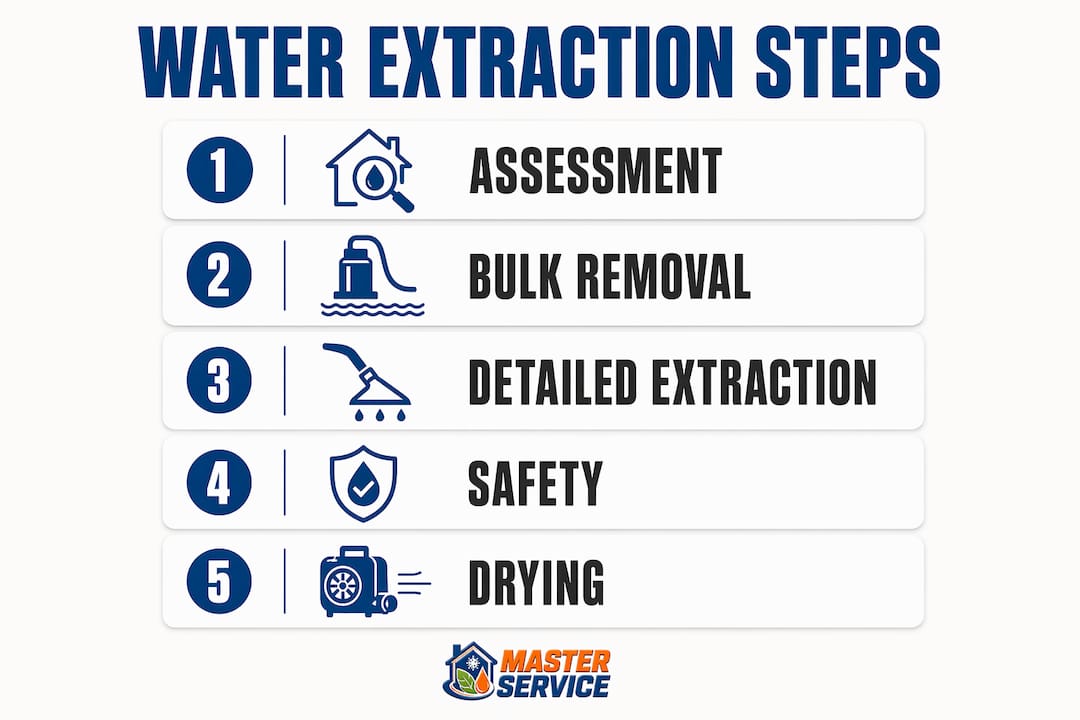
The water extraction process follows a clear sequence that trained technicians execute on every job. Skipping or rushing any step leads to hidden moisture, mold, and structural damage weeks later.
Step 1: Initial assessment
Technicians first determine the extent and category of the water damage. Category 1 is clean water from a broken pipe. Category 2 is gray water from appliances or overflows. Category 3 is black water from sewage or flooding. The category dictates the safety protocols, equipment, and disposal methods used throughout the job.
Step 2: Bulk water removal
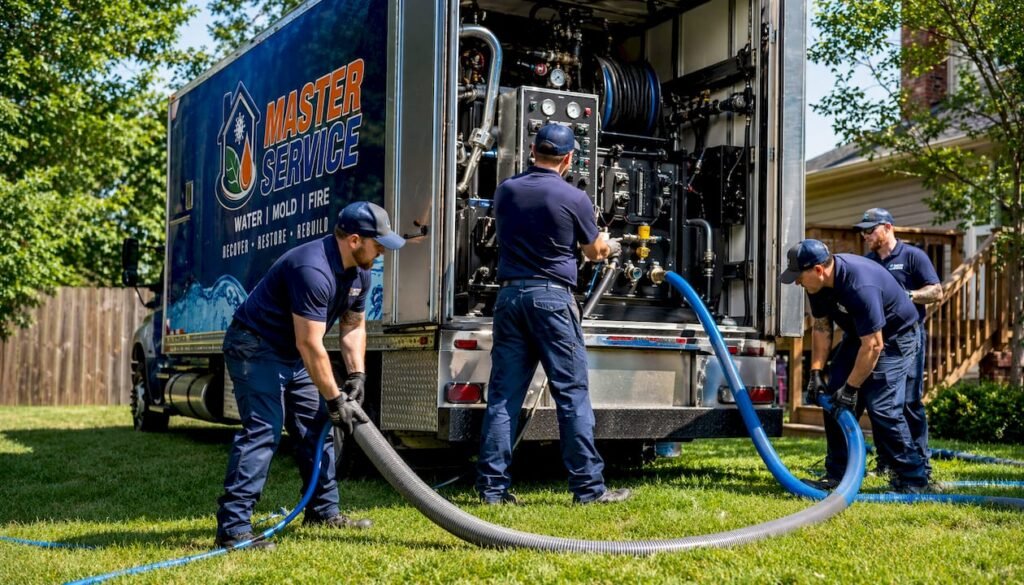
For standing water, technicians deploy submersible pumps or truck-mounted extractors. These machines move hundreds of gallons per hour and are far beyond what any shop vac can handle. Emergency response teams arrive in around 30 minutes on urgent calls, which is critical because water migrates into porous materials within the first hour.
Step 3: Detailed extraction
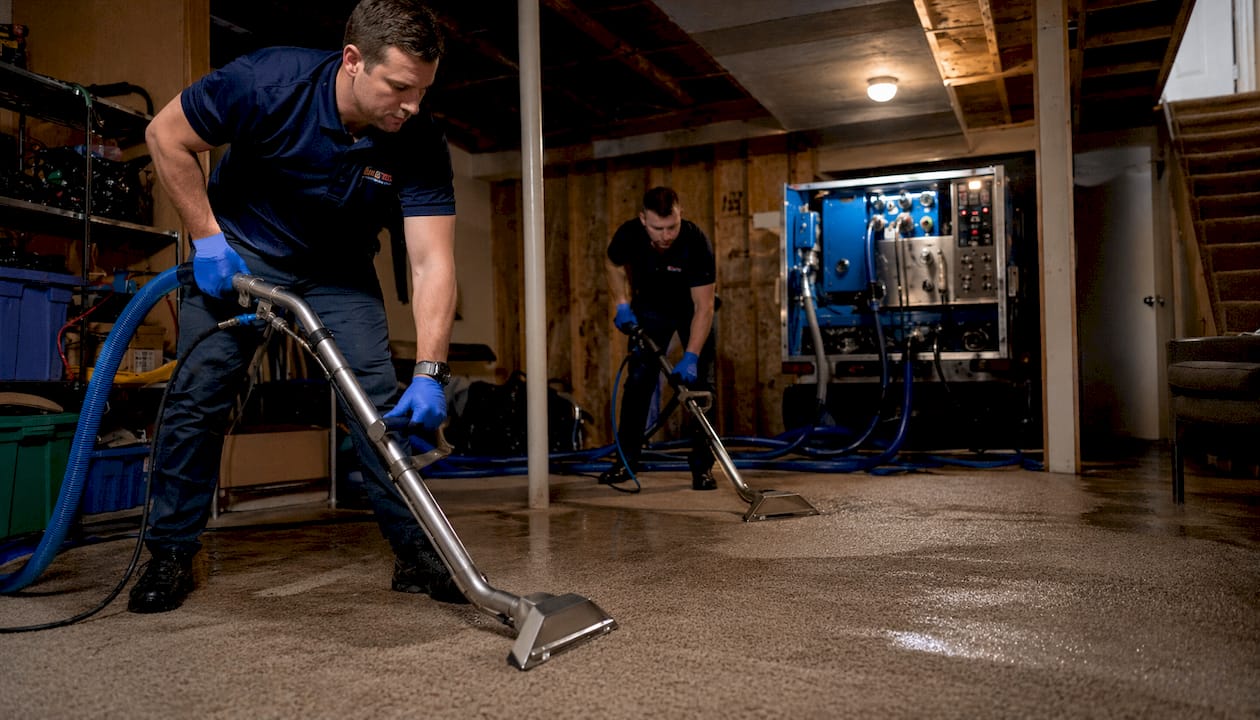
After bulk water is gone, technicians use weighted extraction wands pressed firmly into carpet and padding. The weight forces the tool into the fibers, pulling water that suction alone cannot reach. Hard surfaces like tile, hardwood, and concrete get surface extraction tools designed for flat contact.
Step 4: Safety and containment
Contaminated water requires special handling, including personal protective equipment, containment barriers, and regulated disposal. Technicians do not mix contaminated water with clean waste streams. This protects both the occupants and the workers on site.
Pro Tip: If you smell sewage or see discoloration in the water, do not enter the affected area before technicians arrive. Category 3 water carries bacteria and pathogens that pose real health risks.
What are the common water extraction methods and equipment used?
Water extraction methods include vacuum extraction, pumping, mopping, squeegeeing, and wiping. Each method fits a specific surface type and saturation level. Professional teams combine multiple methods on a single job.
Equipment types and their applications
| Equipment | Best Application | Key Advantage |
|---|---|---|
| Truck-mounted extractor | Carpet, padding, large areas | High suction power, continuous operation |
| Submersible pump | Standing water over 2 inches deep | Moves high water volume fast |
| Portable extractor | Tight spaces, upper floors, stairs | Flexible placement |
| Weighted extraction wand | Saturated carpet and padding | Forces suction deep into fibers |
| Surface extraction tool | Hardwood, tile, concrete | Flat contact prevents surface damage |
The most important performance factors in any extractor are vacuum lift and airflow volume. Vacuum lift measures suction strength in inches of water column. Airflow, measured in CFM (cubic feet per minute), determines how much water the machine moves per pass. Balancing both factors is what separates effective extraction from a surface-level pass that leaves moisture behind.
Key points about equipment selection:
- Truck-mounted units deliver the strongest suction but require access from outside the home.
- Portable extractors work well on upper floors where truck hoses cannot reach.
- Weighted wands are non-negotiable for carpet jobs. Without them, padding stays saturated even after multiple passes.
- Surface tools for hardwood require careful pressure control to avoid warping the boards.
Why is professional water extraction important and what are its benefits?
Professional extraction targets removing 90–95% of physical moisture from affected materials. That figure is unreachable with household wet vacuums or mops. The remaining moisture is then addressed by the drying phase using air movers and dehumidifiers.
The benefits of professional water removal are direct and measurable:
- Faster drying. Every gallon removed during extraction shortens the drying phase and reduces energy costs. Drying equipment works on vapor, not liquid. The less liquid left behind, the faster the job finishes.
- Mold prevention. Mold begins growing within 24–48 hours of water exposure. Thorough extraction cuts the moisture that mold needs to establish itself.
- Reduced repair costs. Water that sits in subfloors, wall cavities, and insulation causes rot and structural damage. Early extraction stops that migration before it reaches expensive materials.
- Safe handling of contaminated water. Not all extracted water is equal. Contaminated water categories require specific PPE and disposal methods that protect your family and the technicians working in your home.
- Carpet and pad salvage decisions. Heavily saturated or old carpet padding usually requires removal even after extraction. Technicians assess pad condition on site and make that call based on saturation level and age.
Pro Tip: Do not let a contractor skip weighted extraction on your carpet. A single pass with a standard wand leaves the pad soaking wet, which guarantees mold growth under the carpet within days.
For homeowners dealing with a flooded basement cleanup, the extraction phase is especially critical because concrete and block foundations absorb water and release it slowly over days.
What happens after water extraction: drying and restoration steps homeowners should know
Extraction and dehumidification serve completely different roles. Extraction removes bulk liquid water immediately, while dehumidification pulls moisture out of structural materials during the drying phase. You cannot skip extraction and go straight to dehumidifiers. That approach leaves gallons of water in the structure and overloads the drying equipment.
After extraction, technicians place air movers and dehumidifiers throughout the affected area. Air movers accelerate evaporation from surfaces. Dehumidifiers pull that vapor out of the air and drain it away. The two systems work together.
Drying timelines homeowners should expect
| Damage Scenario | Typical Drying Duration |
|---|---|
| Minor clean water event (Category 1) | 3–5 days |
| Moderate water damage (Category 2) | 5–10 days |
| Severe or contaminated loss (Category 3) | 2–4 weeks |
Structural drying timelines vary based on severity, contamination level, and building materials. Technicians monitor moisture readings daily using moisture meters and thermal imaging cameras. They adjust equipment placement based on those readings, not on a fixed schedule.
Post-extraction issues homeowners commonly face:
- Residual moisture in wall cavities that was not caught during initial extraction.
- Carpet padding that appears dry on top but holds moisture underneath.
- Furniture legs wicking water back into carpet during drying. Carpet blocking, placing aluminum foil or foam blocks under furniture legs, prevents this and stops rust and stain damage to your flooring.
- Incomplete drying leading to mold growth behind baseboards or under flooring.
Understanding how long water damage takes to dry helps you set realistic expectations and hold your restoration team accountable to daily monitoring.
How can homeowners and property managers prepare for water extraction?
The actions you take in the first 30 minutes after water intrusion directly affect how much of your property is saved. Speed matters more than almost anything else at this stage.
Steps to take immediately:
- Shut off the water source if the intrusion is from a pipe or appliance. Do not wait for the technicians to arrive.
- Cut power to affected areas if water is near electrical outlets, panels, or appliances. Do not enter standing water with live electricity present.
- Document everything. Take photos and video of all affected areas before anyone moves furniture or starts cleanup. Your insurance claim depends on this documentation.
- Call a certified restoration company. Look for IICRC-certified technicians. Certification means the team follows industry-standard protocols for extraction, drying, and contamination control.
- Move valuables and furniture out of the affected area if it is safe to do so. This gives technicians clear access and protects your belongings.
When the team arrives, they will assess the damage category, measure moisture levels with meters, and map the affected area before deploying equipment. Expect some disruption. Extraction equipment is loud, and air movers run continuously for days. Clear access paths through your home before the team arrives to speed up setup.
For property managers handling multiple units, water extraction near you with rapid response capability is the deciding factor in how many units are affected and how long tenants are displaced.
You can also review common water damage repair mistakes to avoid decisions that extend the restoration timeline or void your insurance coverage.
Key Takeaways
Professional water extraction removes 90–95% of physical moisture from affected materials, and every gallon extracted directly reduces drying time, mold risk, and total repair cost.
| Point | Details |
|---|---|
| Extraction is the first step | Removing standing water before drying is non-negotiable; dehumidifiers cannot compensate for skipped extraction. |
| Equipment selection matters | Weighted wands, submersible pumps, and truck-mounted extractors each serve specific surfaces and saturation levels. |
| Contaminated water requires special handling | Category 2 and 3 water needs PPE, containment, and regulated disposal to protect occupants and workers. |
| Drying follows extraction | Structural drying runs 3–5 days for minor events and up to 2–4 weeks for severe or contaminated losses. |
| Act within the first hour | Water migrates into walls and subfloors fast; early extraction prevents the most expensive structural damage. |
What I’ve learned after years of watching water damage jobs go wrong
I have seen hundreds of water damage jobs, and the single most consistent mistake is underestimating extraction. Homeowners call a restoration company, the team shows up, does a few passes with a portable unit, and then sets up dehumidifiers. Three weeks later, the homeowner calls back because the floor is buckling and there is mold under the baseboards.
The extraction phase is where the job is won or lost. Skilled technicians treat it as a precision task, not a quick step before the real work starts. Balancing vacuum lift and airflow on the extractor, making multiple weighted passes on carpet, checking pad saturation before deciding whether to pull it, and mapping every affected zone with a moisture meter. That is what separates a job that finishes in five days from one that drags on for a month.
The other thing most homeowners miss is the furniture issue. Leaving a couch or bookcase sitting on wet carpet during drying is a guarantee of rust stains and re-wetting. Carpet blocking techniques are simple and take five minutes. Any team that skips them is cutting corners.
My honest advice: ask your restoration company how many passes they make with the weighted extractor and whether they check pad moisture before deciding to pull it. If they cannot answer that question clearly, find a team that can. The water damage restoration process has clear standards, and you deserve a team that follows them.
— John
Masterservicepro is ready when water damage hits your home
Water damage does not wait for a convenient time, and neither does Masterservicepro. Our IICRC-certified technicians respond to water emergencies across Lake County, Cook County, DuPage County, Will County, and Kane County, IL, with the equipment and training to handle extraction from the first call through full restoration.
We handle the full scope: emergency water extraction, structural drying, mold mitigation, and reconstruction, all under one roof. No juggling multiple contractors. No gaps in accountability. If your home or property has taken on water, our team is ready to assess, extract, and restore. Visit our water damage restoration page to request a free estimate or reach out directly for emergency service. We back every job with a 100% satisfaction guarantee.
FAQ
What is water extraction in water damage restoration?
Water extraction is the physical removal of standing and trapped water from a property using pumps, vacuums, and specialized tools. It is the first step in restoration and directly determines how fast and completely a property dries.
How long does water extraction take?
Extraction typically takes 2–8 hours depending on the volume of water and the size of the affected area. Drying follows and runs 3–5 days for minor events or up to 2–4 weeks for severe or contaminated losses.
Can I do water extraction myself?
Household wet vacuums cannot reach the 90–95% moisture removal that professional equipment achieves. DIY extraction leaves enough residual moisture to cause mold growth and structural damage within days.
What is the difference between water extraction and dehumidification?
Extraction removes bulk liquid water immediately after flooding. Dehumidification pulls moisture vapor out of structural materials during the drying phase. Both steps are required; one cannot replace the other.
How do I know if my carpet needs to be replaced after water damage?
Technicians assess carpet pad saturation and condition on site. Heavily saturated or old padding typically requires removal even after extraction, because residual moisture trapped in the pad causes mold regardless of surface drying.