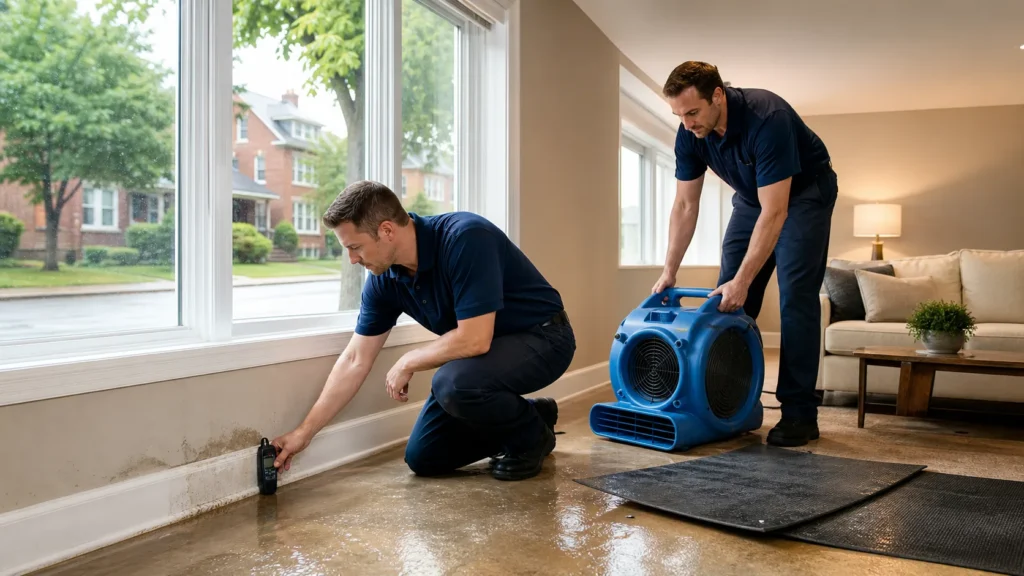
Protect Your Evanston Property After Heavy Rain
Heavy rain can cause water damage in Evanston faster than many property owners expect. Late-summer storms and early-fall rain can bring strong winds, clogged gutters, and drainage systems that cannot keep up. Water may enter through basement walls, foundation cracks, roof leaks, window wells, damaged siding, plumbing backups, or overflowing gutters.
Even a small amount of water can soak flooring, drywall, insulation, furniture, and personal belongings. Master Service Pro serves Evanston and communities throughout Lake, Cook, and DuPage Counties. Acting quickly helps limit damage and reduce the chance that damp materials turn into a larger mold problem.
How Water Damage Can Spread Quickly
Once rainwater gets inside, it rarely stays in one place. Water can travel beneath flooring, wick upward through drywall, soak insulation, and settle behind cabinets, appliances, and baseboards. What looks like a small puddle may have reached materials you cannot see.
Visible water is only part of the problem. After standing water is removed, moisture may still be trapped in subfloors, framing, carpeting, upholstery, and wall cavities. That hidden moisture can leave a property feeling damp long after the floor looks dry.
Signs we often look for include:
- Musty odors or stale indoor air
- Warped floors, peeling paint, or bubbling walls
- Water stains on ceilings, walls, or baseboards
- Damp carpeting and upholstery
- Elevated indoor humidity or moisture readings
Professional moisture testing helps us find wet areas without relying on appearance alone. This matters because hidden dampness can create mold risks and lead to more repairs if it is left untreated.
The First 24 Hours Can Limit Costly Repairs
The first day after water damage matters because wet materials can break down quickly. Flooring may swell, drywall can soften, and furniture can absorb moisture. Damp conditions may also support mold growth within 24 to 48 hours, especially when moisture remains behind walls or under flooring.
Until trained help arrives, we recommend focusing on safety and protecting dry belongings. If it is safe, you can take a few simple steps:
- Shut off electricity to affected areas if there is no risk in doing so
- Move dry belongings away from wet areas
- Place foil or blocks beneath furniture legs to reduce transfer from wet flooring
- Take clear photos of affected rooms and belongings for insurance documentation
- Stay away from water that may contain sewage, soil, or electrical hazards
Do not use a household vacuum on standing water. Avoid entering rooms with electrical concerns, removing wet drywall without protection, or assuming that a surface is dry simply because it no longer looks wet. Emergency water removal and professional drying are safer ways to address the full extent of the problem.
Professional Drying Prevents Hidden Moisture Problems
Proper restoration begins with an inspection and moisture mapping. Our team identifies where water traveled, extracts standing water, and determines which materials can be dried and which may need removal. From there, we use air movement, dehumidification, cleaning, sanitizing, and final moisture checks to confirm that the affected area is drying as it should.
Fans alone may circulate air, but they usually cannot remove moisture trapped beneath floors, inside walls, or within insulation. Commercial drying equipment, moisture meters, and thermal imaging tools help us locate damp materials that may otherwise be missed.
Rainwater entering through a roof may begin relatively clean, but the situation changes if it contacts soil, sewage, or a drain backup. Contaminated water can require more involved cleaning and removal procedures. Once drying is complete, mold removal, repairs, remodeling, or property maintenance may be needed to return the area to normal condition.
Common Rain Damage Risks to Watch This Fall
As fall rain follows late-summer storms, leaves can build up in gutters and storm drains. Older drainage systems, aging sump pumps, and small exterior defects can make it easier for water to reach the interior of a property.
We commonly find trouble around basement window wells, roof flashing, downspouts that discharge too close to the foundation, cracked masonry, blocked drains, and poorly graded landscaping. Residential, commercial, and industrial properties can all face these issues.
Regular attention can help reduce the risk:
- Keep gutters and roof drainage paths clear
- Extend downspouts away from the foundation
- Test sump pumps and address drainage concerns promptly
- Inspect window wells, roof flashing, and visible foundation cracks
- Arrange professional plumbing services when backups, drains, or sump pump concerns appear
A water stain, wet basement corner, damp carpet, or musty odor may seem minor at first. Treating it as an early warning can help prevent moisture from spreading into nearby materials.
Restore Your Home With Confidence
Master Service Pro provides responsive, thorough support for water damage in Evanston, from assessment through restoration. Our team uses proven drying and cleanup methods to help protect your property and create a safe, comfortable space again. Contact us to discuss your restoration needs and schedule service.
Frequently Asked Questions
What Should I Do First If Heavy Rain Causes Water Damage In My Evanston Home?
If it is safe, protect dry belongings, document the damage with photos, and avoid areas with electrical hazards or contaminated water. We recommend professional assessment as soon as possible so hidden moisture does not remain behind.
How Quickly Can Mold Grow After Water Damage?
Mold may begin growing within 24 to 48 hours when moisture remains in building materials. Prompt extraction, drying, and moisture monitoring can help reduce the risk.
Can I Dry A Wet Basement With Fans Alone?
Fans may help move air, but they often cannot remove moisture beneath flooring, inside walls, or within insulation. Professional equipment and moisture testing are important for complete drying.
Will My Insurance Cover Heavy Rain Water Damage?
Coverage depends on the cause of the damage and the details of your policy. Sudden water intrusion may be covered in some situations, while flood damage and maintenance-related issues may require separate coverage. Photos and timely documentation can support the claims process.
When Should I Call A Water Damage Restoration Company?
We recommend requesting professional help as soon as you notice standing water, wet carpeting, leaking ceilings, basement seepage, stains, or musty odors. Fast action can limit drying time and help prevent more extensive damage.