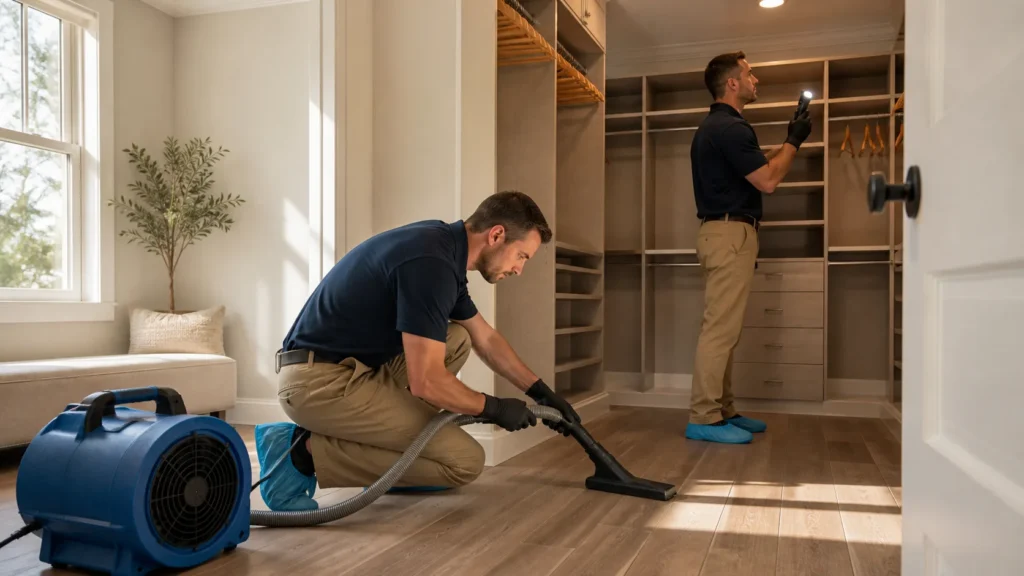
A musty closet is easy to ignore during a busy fall season, but the smell may be a sign that moisture is trapped where you cannot see it. Early October is a smart time to investigate, before furnaces begin running regularly and closed-up indoor air makes odors harder to pinpoint.
In Northbrook, closets can hold humid air for weeks behind shut doors. Finding the source now, rather than masking the odor, can help protect clothing, drywall, shelves, carpet, and nearby rooms from a bigger moisture problem.
Make Closets Fresh and Dry Before Heating Starts
A closet should smell clean and dry, not stale or damp. Musty odors can come from humid summer air, condensation on a cool exterior wall, wet coats or shoes, a small plumbing leak, or water-damaged items stored in a tight space. Cardboard boxes, textiles, and carpeting can also hold moisture longer than expected.
Air fresheners and odor sprays may cover the smell for a while, but they do not correct the reason it started. Before cleaning affected materials, we recommend finding and fixing the moisture source. Otherwise, the odor and possible mold concern may return when conditions change.
Why Northbrook Closets Turn Musty Before Heating Season
Late-summer humidity and early-fall temperature swings can create moisture on cooler surfaces. When warm, humid air meets a cooler wall, pipe, floor, or window area, condensation may form. Closets near exterior walls, bathrooms, laundry rooms, basements, and attached garages can be more exposed to these conditions.
Because closet doors often stay closed, air movement is limited. Moisture may settle into drywall, wood shelving, carpet, stored clothing, or boxes without drying fully. We often find that a closet odor is connected to a nearby issue rather than the closet itself.
Common places for hidden moisture to begin include:
- A slow pipe leak behind a wall or near a supply line
- A roof, window, or exterior moisture leak
- Damp conditions moving up from a basement
- A bathroom with poor ventilation
- A past water event that was not fully dried
- Wet shoes, coats, laundry, or fabrics put away too soon
A musty smell does not always mean there is mold growth. Still, it is an early warning sign worth taking seriously. Visible spotting, warped shelving, peeling paint, damp baseboards, or an odor that comes back after cleaning may point to a larger concern behind a wall, beneath flooring, or inside stored belongings.
How Mold Remediation in Northbrook Protects Your Home
Professional mold remediation in Northbrook starts with a careful evaluation of the affected space and the moisture source. We inspect the closet and surrounding areas for signs of water movement, staining, damp building materials, plumbing concerns, condensation patterns, and mold-like growth.
That assessment helps us determine whether the issue is limited to an easy-to-reach surface or whether moisture has reached insulation, carpet, framing, or adjacent rooms. A thorough look can prevent unnecessary removal while identifying materials that cannot be properly cleaned or dried.
When mold-affected materials need attention, controlling the work area matters. Spores and debris should not be allowed to spread into bedrooms, hallways, HVAC areas, or other enclosed spaces. Depending on the condition of the closet, the process may include:
- Addressing active leaks or moisture intrusion first
- Protecting nearby unaffected materials
- Removing damaged porous materials when necessary
- Cleaning affected structural surfaces carefully
- Drying the area to appropriate moisture levels
- Evaluating contents such as linens, rugs, clothing, and upholstery separately
The cause must be addressed along with the visible problem. If a closet smells musty because of a leaking pipe, poor ventilation, or moisture entering from outside, cleaning alone will not provide a lasting result. Pairing remediation with the right plumbing repair, water damage restoration, or building repair helps reduce the chance of repeat damage.
Keep Closet Moisture From Returning This Winter
Once the closet is dry and restored, a few simple habits can help you notice problems sooner. We recommend leaving space between stored belongings and exterior walls, avoiding tightly packed storage, and keeping damp fabrics, shoes, and coats out of enclosed spaces until they are fully dry. Opening closet doors periodically can also improve air circulation.
Pay attention to odors that return after heavy rain, frequent plumbing use, or major temperature changes. Those patterns can provide a clue about where moisture is coming from. Small stains beneath sinks, near washing machines, around toilets, along baseboards, or near supply lines should not be overlooked.
Balanced indoor humidity and regular HVAC maintenance can support a drier environment, but a dehumidifier or air freshener is not a substitute for correcting a leak, condensation issue, or mold-affected material. Persistent odors deserve a professional evaluation before the source reaches other parts of the property.
Our cleaning technicians are IICRC certified, and we serve residential, commercial, and industrial properties throughout Lake County, Cook County, McHenry County, DuPage County, Kane County, Will County, and Chicago, IL. When a closet issue involves water damage, plumbing, repair needs, carpet, or upholstery, addressing the connected problem can help keep the entire space dry.
Before winter arrives, take recurring closet odors as a reason to look closer. Early attention can help protect stored belongings and reveal moisture concerns while they are still limited to a smaller area.
Protect Your Home With Expert Mold Care
Master Service Pro provides thorough inspections and targeted solutions to help restore a cleaner indoor environment. Our IICRC-certified cleaning technicians serve Lake County, Cook County, McHenry County, DuPage County, Kane County, Will County, and Chicago, IL. For professional mold remediation in Northbrook, contact us to schedule an evaluation.
Frequently Asked Questions About Closet Mold
Can A Musty Closet Smell Mean There Is Mold Behind The Wall?
A musty smell can point to hidden moisture or mold growth, especially when the odor remains after cleaning. An inspection can help determine whether the problem is on the surface, behind drywall, beneath flooring, or connected to plumbing or exterior moisture.
Should I Run The Furnace If I Smell Mold In A Closet?
You can use your heating system, but a persistent odor should be evaluated promptly. Heating changes indoor airflow and humidity, which may make odors more noticeable or move air from the affected area into other rooms.
Can I Clean Closet Mold With Household Products?
Small surface concerns can appear simple, but improper cleaning may leave moisture behind or spread material into nearby spaces. Larger, recurring, or hidden concerns should be evaluated by a professional remediation team.
What Causes Mold In A Closet During Fall In Northbrook?
Humid summer air, condensation on cooler walls, slow plumbing leaks, roof or window leaks, damp stored belongings, and limited airflow can all contribute. Closets near bathrooms, basements, laundry rooms, and exterior walls may have greater moisture exposure.
How Can I Prevent Musty Closet Odors This Winter?
Keep closets dry, allow for airflow, and avoid storing damp clothing or shoes. Watch for leaks and water stains, and address water damage promptly. If an odor returns or visible mold appears, the underlying moisture source should be identified and corrected.