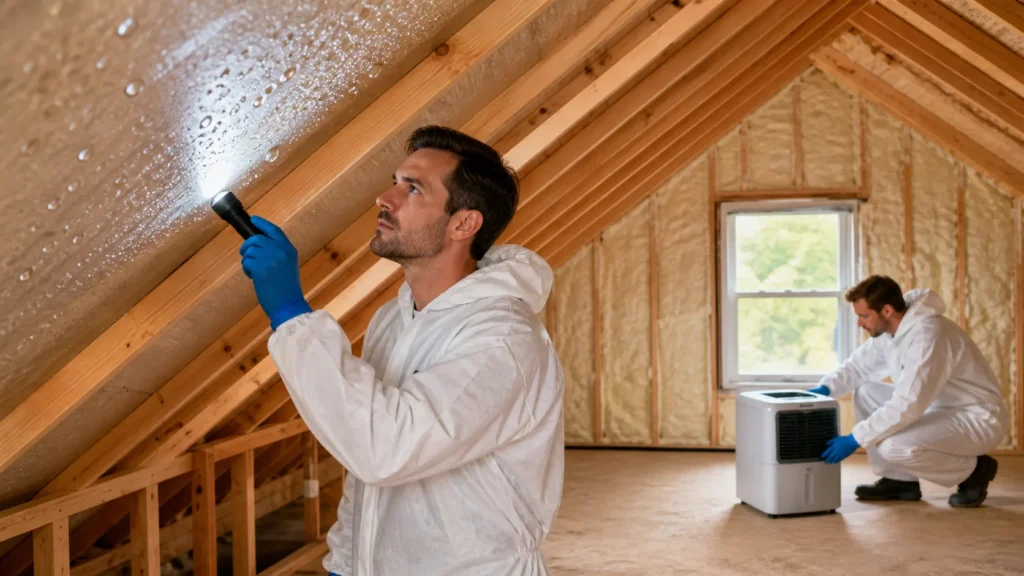
Attic Condensation Can Trigger Mold Removal in Wilmette
As Wilmette temperatures begin to fall in late October, attic condensation can become an easy problem to miss. Warm indoor air rises into the attic, meets cold roof surfaces, and leaves moisture behind on roof decking, framing, nails, and insulation. When that moisture stays in place, mold may begin growing before you see any warning signs inside your home.
We recommend taking attic moisture seriously early in the season. Prompt mold removal in Wilmette can help limit contamination, protect materials, and prevent a smaller moisture concern from becoming a larger restoration project during winter.
Why Wilmette Attics Collect Condensation in Fall
Daily life adds a surprising amount of moisture to indoor air. Cooking, showering, laundry, and humidifiers all release humidity that can travel upward through gaps between your living space and attic. Once that warm air reaches cold roof sheathing or framing, it can turn into water droplets.
Air often escapes through small openings that are hard to notice, including:
- Gaps around recessed lights and ceiling fixtures
- Attic hatches without a tight seal
- Wiring and plumbing penetrations
- Openings near ducts and vents
Ventilation problems can make the situation worse. Blocked soffit vents, limited ridge ventilation, disconnected exhaust ducts, and bathroom fans that empty into the attic can all trap moisture where it does not belong. Chilly nights and changing fall temperatures can create repeated condensation cycles, even before winter weather fully arrives.
Spot the Early Signs of Attic Moisture and Mold
A quick look in the attic may reveal dark areas on roof sheathing, white or greenish spotting, damp insulation, or rusted nails. Water droplets on framing are another sign that warm indoor air may be reaching a cold attic surface.
You may also notice clues from inside the home, such as ceiling stains, peeling paint along ceiling lines, stale odors, or indoor air that feels unusually humid. insulation can look compressed, matted, or wet when moisture has been present for a while.
Not every attic moisture problem comes from the same source. Condensation, roof damage, plumbing leaks, and improperly vented appliances can produce similar symptoms. That is why we recommend a professional moisture assessment before assuming you have a roof leak or attempting to clean visible growth on your own.
Mold Removal in Wilmette Takes More Than Cleanup
Visible mold is only part of the concern. Wiping or spraying a stained area may not address moisture inside insulation, behind framing, or in other hard-to-reach attic spaces. If the moisture source remains, mold can return.
A proper mold removal process starts by assessing the affected materials and finding out why they became damp. Depending on the condition of the attic, the work may involve containment, cleaning or removing affected materials, drying the space, and treating contaminated surfaces appropriately. Just as important, the attic conditions that allowed moisture to build up must be corrected.
When growth is widespread, recurring, or connected to wet insulation or water damage elsewhere, professional support can help address the full scope of the issue. We can assist with mold removal, cleaning, reconstruction, plumbing, and maintenance needs when moisture has affected more than one part of a property.
Stop Condensation Before the Deep Freeze
Preventing attic condensation usually requires several parts of the home to work together. Air sealing, insulation, exhaust duct routing, and ventilation all matter. Adding ventilation alone may not solve the problem if warm, humid household air continues leaking into the attic.
Before colder weather settles in, we recommend having these conditions reviewed:
- Air leaks between the living area and attic
- Insulation levels and wet or damaged insulation
- An insulated, weatherstripped attic hatch
- Bathroom and kitchen exhaust ducts that discharge outdoors
- Damaged, loose, or poorly routed ductwork
Seasonal attic checks after heavy rain, early snow, or major temperature swings can uncover moisture before it spreads. Property owners should also pay attention to new musty odors, staining, or changes in ceiling paint. Addressing the source in late fall can reduce the chance of mold and water damage building up through the coldest months.
Restore a Cleaner, Healthier Attic
Master Service Pro provides thorough mold removal in Wilmette tailored to the conditions affecting your attic. We identify affected materials, address contamination carefully, and help you understand the next steps for your property. Contact us to discuss your concerns and arrange professional service.
Attic Condensation and Mold Questions Answered
Can Attic Condensation Cause Mold Growth?
Yes. Repeated condensation can keep roof decking, framing, and insulation damp enough for mold to develop. The risk rises in cold weather when warm indoor air reaches a poorly sealed or poorly ventilated attic.
What Does Attic Mold Usually Look Like?
Attic mold may look black, gray, green, or white on wood sheathing, rafters, or insulation. It may also create a musty odor, although a professional assessment can help tell the difference between mold, staining, and other discoloration.
Can I Remove Attic Mold Myself?
Small areas may seem manageable, but attic mold can be difficult to assess safely and completely. Larger growth, recurring mold, wet insulation, or suspected hidden contamination should be evaluated by a qualified restoration professional.
Does More Attic Ventilation Always Solve Condensation?
Not always. Ventilation matters, but condensation can continue when warm, humid air leaks from the home into the attic. Air sealing, insulation, exhaust duct routing, and ventilation need to work together.
When Should I Schedule Mold Removal In Wilmette?
An inspection is appropriate when you notice musty odors, visible growth, damp insulation, ceiling stains, or condensation on attic surfaces. Our cleaning technicians are IICRC certified and serve Lake County, Cook County, McHenry County, DuPage County, Kane County, Will County, and Chicago, IL. Early attention can help limit damage before winter moisture creates a larger problem.