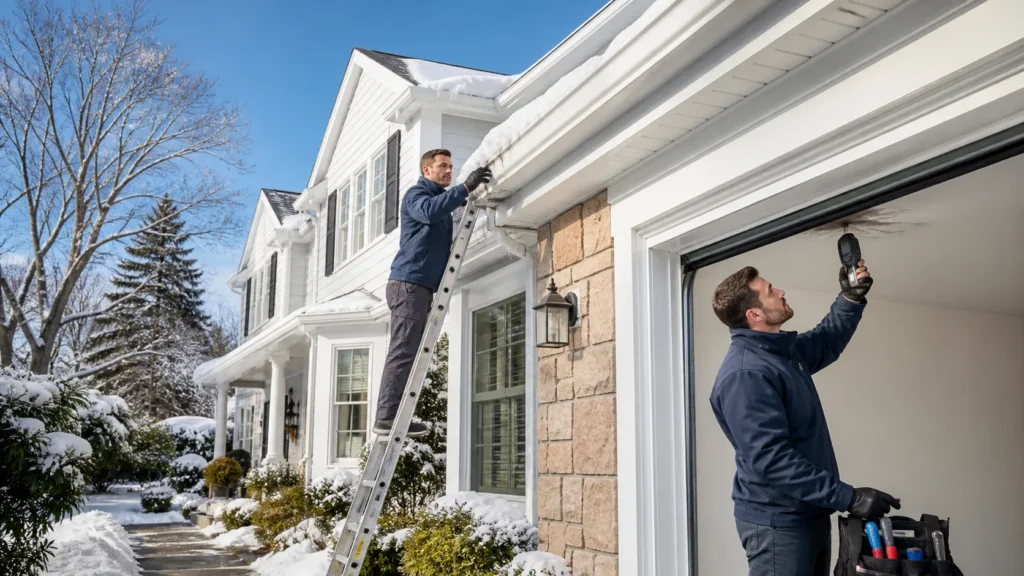
Early Snow Can Put Wilmette Properties at Risk
Early snow in Wilmette can arrive before a property is fully ready for winter. A light snowfall may look harmless, but melting snow, blocked drainage, freezing temperatures, and hidden roof problems can all let moisture inside.
Water can enter through roof gaps, worn flashing, clogged gutters, foundation cracks, window wells, and plumbing lines. Even a small leak can affect drywall, insulation, flooring, furniture, and indoor air quality if it is not found quickly. At Master Service Pro, we help residential, commercial, and industrial property owners address unexpected moisture problems before they spread.
Melting Snow and Ice Dams Can Cause Water Damage
Snow itself is not always the biggest concern. The trouble often starts when temperatures rise during the day and drop again overnight. Snow melts on roofs, sidewalks, and around foundations, then refreezes where water cannot drain properly.
Clogged gutters and downspouts can force snowmelt over roof edges or down exterior walls. That water may work through damaged siding, roof flashing, soffits, and openings around windows. We recommend having downspouts direct water several feet away from the foundation whenever possible, since water pooling near the building can lead to basement seepage.
Foundation concerns deserve attention after the first snow and again during a thaw. Poor grading, cracked concrete, blocked exterior drains, and low-lying landscaping can allow melting snow to collect against the structure. Water can then find small openings and affect basements, crawl spaces, storage rooms, and lower-level business areas.
Ice dams create another roof-level risk. They form when snow melts higher on a warm roof and refreezes near the colder roof edge. As ice builds up, water may back up behind it and slip beneath shingles.
Watch for signs such as:
- Water stains on ceilings or near exterior walls
- Damp attic insulation or peeling paint
- Drips from light fixtures
- Discoloration around windows
- Wet spots that appear after a thaw
Water can travel through framing before it becomes visible, so a ceiling stain may not sit directly below the leak. Avoid climbing onto icy roofs or trying unsafe ice removal methods. When indoor moisture appears, prompt professional inspection can help limit damage to ceilings, drywall, insulation, and other materials.
Frozen Pipes Can Cause Sudden Flooding
Early snowfall often comes with overnight freezing temperatures. Pipes in exterior walls, attics, crawl spaces, garages, basements, and unheated commercial spaces may be exposed to the cold before a building has settled into its winter routine.
As water freezes, it expands inside the pipe. Pressure can build until a pipe cracks or bursts. The full problem may not show up until temperatures rise and the ice begins to thaw, allowing water to escape into cabinets, wall cavities, equipment rooms, or nearby living spaces.
A few warning signs can point to a frozen or leaking line:
- Reduced water flow from a faucet
- Frost on visible pipes
- Dripping sounds behind walls
- Damp drywall or unusual odors
- An unexplained increase in water use
Insulating exposed pipes, disconnecting outdoor hoses, and addressing drafts around plumbing can reduce risk. Keeping indoor temperatures steady is also important, especially in vacant buildings or rooms that are used only occasionally. If a pipe bursts, shutting off the main water supply quickly can limit the spread of water while professionals handle extraction, drying, and repairs.
Hidden Moisture Can Lead to Material Damage and Mold
Not every snow-related leak leaves a puddle on the floor. Moisture can settle behind walls, beneath flooring, inside ceilings, under carpeting, or around stored belongings. Those hidden areas may stay damp long after snowmelt has disappeared outside.
Drywall, insulation, carpet padding, upholstery, laminate flooring, and wood framing can all absorb moisture. Wood may swell or warp, while porous materials can hold water and become harder to dry. Left untreated, damp building materials can also create conditions where mold may begin developing within 24 to 48 hours.
Musty odors, dark spotting, bubbling paint, warped baseboards, damp carpeting, and lingering humidity can all point to hidden moisture. Surface cleanup alone may not solve the issue when water is trapped inside structural cavities or beneath materials. Our team uses professional moisture detection, water extraction, structural drying, cleaning, and mold removal methods to help identify what is wet and address the full affected area.
Before and after early snowfall, we encourage property owners to inspect gutters, downspouts, exterior drains, window wells, roofs, and foundation areas. Removing leaves and debris can help water move away from the building instead of collecting where it does not belong.
Winter Preparation for Wilmette Properties
A simple winter emergency plan can make a stressful leak or flood easier to manage. Know where the main water shutoff valve is located, keep lower-level belongings off the floor when heavy snow or a thaw is expected, and pay attention to new stains, odors, or damp materials.
Master Service Pro provides water damage restoration, mold removal, carpet and upholstery cleaning, plumbing, repair, and remodeling services. All of our cleaning technicians are IICRC certified, and we serve Lake County, Cook County, McHenry County, DuPage County, Kane County, Will County, and Chicago, IL.
Fast attention to leaks, pooling water, and wet materials can help prevent a small snow-related problem from becoming widespread water damage in Wilmette.
Protect Your Home From Further Damage
Master Service Pro provides prompt assessment, cleanup, and restoration for water damage in Wilmette. Our IICRC-certified cleaning technicians use proven methods to help limit damage and restore affected areas. We serve Lake County, Cook County, McHenry County, DuPage County, Kane County, Will County, and Chicago, IL. Contact us to request help for your property.
Frequently Asked Questions About Early Snow Damage
Can Early Snow Cause Basement Flooding In Wilmette?
Yes. Snowmelt can collect around the foundation when gutters, downspouts, grading, or exterior drains do not move water away effectively. The water may then seep through foundation cracks, window wells, or other small openings.
What Should I Do If I See A Water Stain On My Ceiling After Snow?
Treat the stain as a possible roof or ice dam leak. Move belongings away from the area, contain active drips if it is safe to do so, and have the moisture source and affected materials professionally evaluated.
How Can I Prevent Frozen Pipes During Early Winter Weather?
Protect exposed plumbing, address drafts near pipes, disconnect outdoor hoses, and keep indoor temperatures consistent. Pay special attention to plumbing in garages, crawl spaces, attics, basements, and exterior walls.
How Quickly Can Mold Grow After Water Damage?
Mold may begin growing within 24 to 48 hours when moisture remains in building materials. Prompt water extraction and thorough drying can help reduce the chance of mold development.
When Should I Call A Professional For Water Damage In Wilmette?
Professional help is recommended when water affects ceilings, walls, flooring, carpets, insulation, furniture, or structural areas. It is also appropriate for burst pipes, recurring leaks, sewage-contaminated water, and suspected mold growth.