TL;DR:
- Certified mold remediation involves identifying and fixing moisture sources to prevent mold from returning. It uses containment, HEPA filtration, and independent testing to ensure indoor air quality safety. Families should hire certified services for mold areas larger than 10 square feet or if mold recurrence occurs.
Certified mold remediation is the professional process of removing mold, correcting moisture sources, and verifying safe indoor air quality using standards like IICRC S520. For families, the benefits of certified mold remediation go far beyond scrubbing visible spots off a wall. The US EPA identifies moisture control as the single most important factor in preventing mold from returning. Without fixing the water problem, mold comes back. Certified technicians, such as those at Masterservicepro, address both the mold and its root cause in one process, protecting your family’s health and your home’s air quality long term.
1. How certified mold remediation improves indoor air quality for families
Certified mold remediation directly reduces airborne mold spores by removing the source materials that harbor them. Mold grows inside porous materials like carpet, ceiling tiles, and drywall. Porous moldy materials often must be discarded entirely because mold penetrates deep into their fibers, making surface cleaning ineffective.
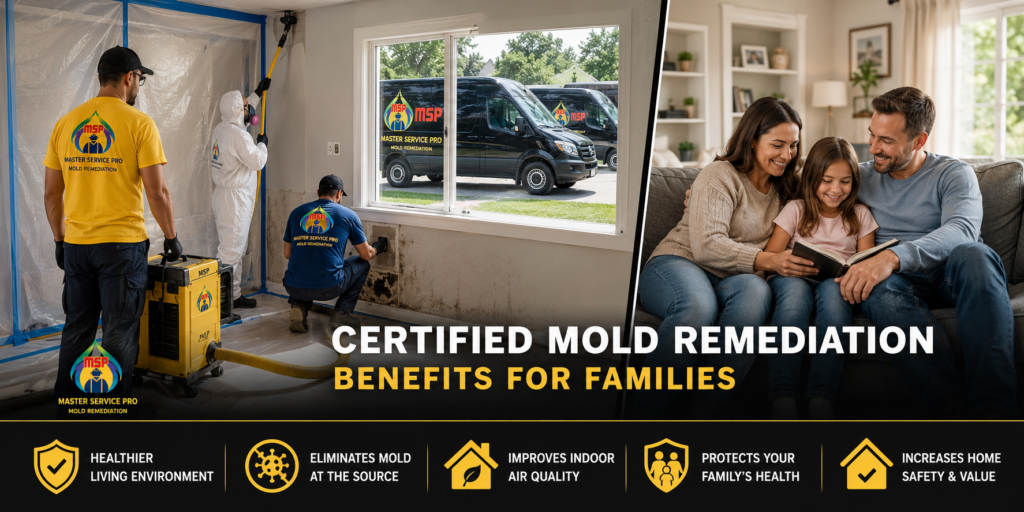
Certified teams set up physical containment using plastic sheeting to isolate the work area before any removal begins. They seal HVAC vents and exhaust contaminated air directly outdoors. This prevents mold spores from spreading to clean rooms during the cleanup process.
HEPA vacuuming and air scrubbers capture microscopic spores that standard vacuums push back into the air. DIY methods and non-certified contractors rarely use this equipment. That gap is exactly why families who attempt their own mold removal often see symptoms persist even after visible mold disappears.
- Containment barriers isolate the mold zone before any disturbance begins
- HEPA air scrubbers filter spores down to 0.3 microns from the air
- Sealed HVAC vents stop spores from traveling through ductwork
- Negative air pressure exhausts contaminated air safely outside the home
- Post-cleanup air testing confirms spore levels are back to safe ranges
Pro Tip: Ask any mold contractor whether they use negative air pressure containment. If they cannot explain it, they are not following certified remediation protocols.
2. Why moisture control is the most critical benefit of certified remediation
Moisture control is the foundation of every effective mold remediation process. The EPA states clearly that mold will return if the underlying water problem is not fixed, even after thorough surface cleaning. Certified technicians are trained to find hidden leaks, condensation points, and dampness that homeowners typically cannot detect on their own.
Recurring mold problems almost always trace back to an uncorrected moisture source. The Minnesota Department of Health links recurring mold directly to failure in diagnosing and fixing root moisture causes. That means families who hire non-certified contractors often pay twice, once for the cleanup and again when the mold returns.
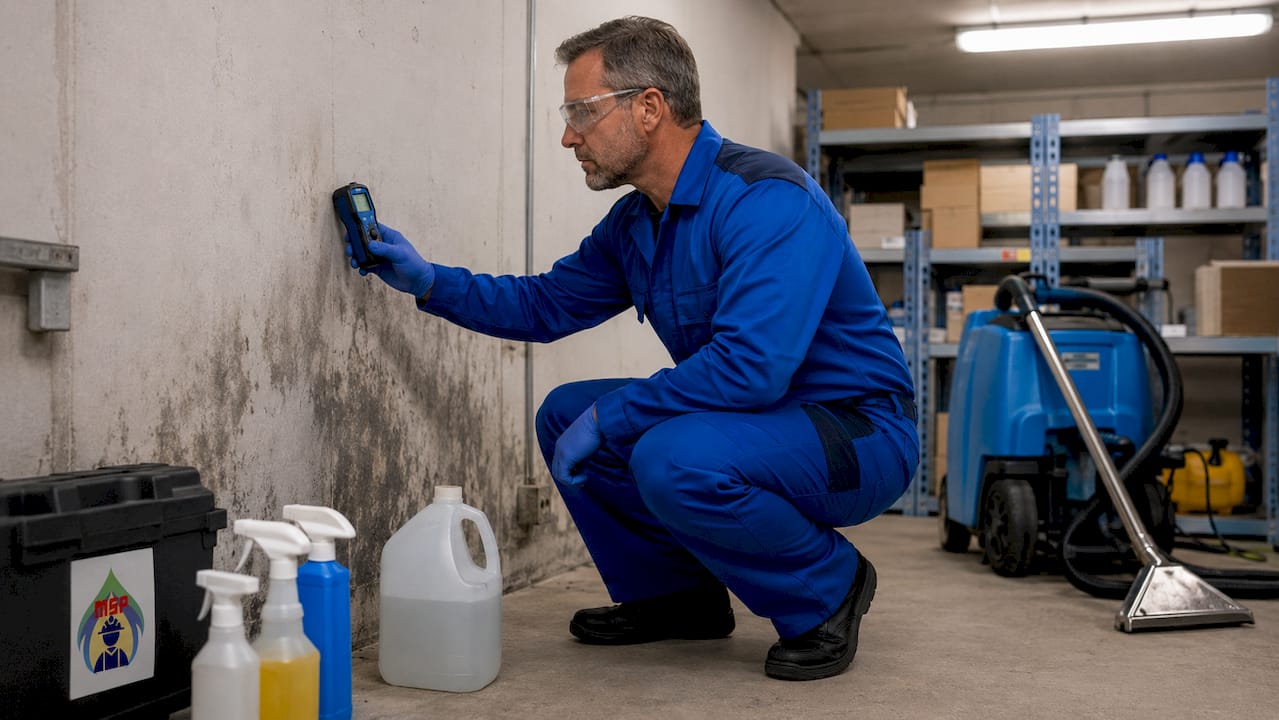
Certified remediation integrates moisture diagnostics into every job. Technicians use moisture meters, thermal imaging, and humidity readings to map the full scope of the problem before removal begins.
- Locate the moisture source using moisture meters and thermal cameras
- Repair or refer the water intrusion whether it is a plumbing leak, roof issue, or foundation seepage
- Dehumidify the affected area to bring relative humidity below 60%, ideally to the 30–50% range recommended by the EPA
- Dry structural materials within 24–48 hours of water exposure to prevent new mold growth
- Verify dryness before sealing or rebuilding any affected surfaces
Pro Tip: Indoor humidity above 60% is enough for mold to grow without any visible water leak. A certified technician will measure humidity levels in every affected room, not just the area with visible mold.
3. Health and safety advantages of hiring a certified mold remediation team
Certified remediation teams protect your family during the cleanup itself, not just after it. The Minnesota Department of Health links health and safety benefits directly to exposure containment measures used during professional mold cleanup. Without those measures, the removal process can temporarily spike airborne spore counts to levels far higher than the original problem.
Certified technicians wear N-95 respirators, goggles, and full protective suits. This prevents them from tracking spores into clean areas of your home. Families with children, elderly members, or anyone with asthma or allergies face the highest risk from uncontrolled spore exposure during cleanup.
“Certified remediation is not just about removing what you can see. It is about protecting everyone in the home from what you cannot see during the process.” — Masterservicepro technician perspective
Third-party clearance testing after remediation is the final safety checkpoint. The IICRC S520 standard requires post-remediation verification by an independent party, not the contractor who did the work. That independent confirmation is what gives families documented proof that their home is safe.
- N-95 respirators and goggles protect workers and prevent cross-contamination
- Full work-area containment with plastic sheeting limits spore spread to other rooms
- Sealed HVAC vents during remediation stop spores from entering the duct system
- Independent clearance testing confirms air quality is safe before the family re-enters
- Documented results provide a written record for insurance and future home sales
4. Certified vs. non-certified mold remediation: what families actually get
The difference between certified and non-certified mold remediation is not just a credential on a business card. It is the difference between a permanent fix and a temporary one.
| Factor | Certified Remediation | Non-Certified Service |
|---|---|---|
| Standards followed | IICRC S520 protocol | No defined standard |
| Moisture source diagnosis | Included in every job | Rarely performed |
| Work-area containment | Required procedure | Often skipped |
| HEPA filtration | Standard equipment | Not typically used |
| Post-cleanup verification | Independent clearance test | Self-reported or none |
| Insurance documentation | Provided | Usually unavailable |
| Mold recurrence risk | Low, root cause addressed | High, surface only |
The IICRC S520 standard outlines containment, HEPA filtration, removal of contaminated materials, and independent verification as required steps. Non-certified contractors skip one or more of these steps on most jobs. That shortcut costs families more money over time and leaves health risks unresolved.
Wisconsin DHS frames certified remediation as a risk management decision, not just a convenience choice. Families who treat certification as optional often discover the real cost when mold returns within months.
5. When families should prioritize certified mold remediation services
Some mold situations require certified professional intervention. Knowing when to call a certified team protects your family from both health risks and wasted money on inadequate cleanup.
The EPA recommends professional remediation for any mold area larger than 10 square feet. That is roughly a 3-foot by 3-foot patch, smaller than most people expect. Anything beyond that size releases too many spores during removal for a homeowner to manage safely.
- Mold area exceeds 10 square feet and requires professional containment and removal
- Mold has returned after a previous cleanup, signaling an unresolved moisture source
- The moisture source is unknown and requires diagnostic equipment to locate
- Household members are vulnerable, including children, elderly adults, or anyone with respiratory conditions or a compromised immune system
- Mold is in HVAC systems, crawl spaces, or inside walls where containment is critical
- You are preparing to sell the home and need documented clearance testing for disclosure
The Wisconsin DHS hiring guide specifically advises hiring a contractor when the mold problem is large, recurrent, or when the moisture source is unknown. These three conditions cover the majority of serious mold situations families face. Families dealing with crawl space mold should treat it as a priority call, not a wait-and-see situation.
Key takeaways
Certified mold remediation protects families by fixing moisture sources, containing spore spread, and verifying safe air quality through independent testing, not just surface cleaning.
| Point | Details |
|---|---|
| Moisture control is the priority | Mold returns without fixing the water source, regardless of how thorough the surface cleanup was. |
| Containment protects the whole home | Certified teams seal work areas and HVAC vents to stop spores from spreading during removal. |
| IICRC S520 sets the standard | Certified remediation follows a defined protocol including HEPA filtration and independent clearance testing. |
| 10 sq. ft. is the professional threshold | The EPA recommends certified remediation for any mold area larger than 10 square feet. |
| Independent testing confirms safety | Third-party clearance testing provides documented proof that indoor air quality is safe after remediation. |
What I have learned after years of watching mold jobs go wrong
The most common mistake I see families make is hiring the cheapest contractor and calling it done when the visible mold is gone. Visible mold is the symptom. The moisture problem is the disease. I have walked into homes where a previous contractor bleached the walls, painted over them, and left. Six months later, the mold was back, worse than before, because the slow leak behind the drywall was never touched.
The second thing families consistently underestimate is the importance of independent clearance testing. Most contractors will tell you the job is done when they pack up their equipment. That is not the same as a third-party environmental test confirming your air is clean. The IICRC S520 standard exists precisely because self-reported completion is not a reliable safety measure. Families deserve a written result from someone with no financial interest in saying the job is finished.
If you have children or anyone in your home with asthma, allergies, or a weakened immune system, certified remediation is not optional. It is the only responsible choice. The Winnetka homeowner’s guide to mold remediation covers this well. Certification is not a marketing badge. It is the guarantee that the person in your home knows what they are doing and can prove it.
— John
Certified mold remediation services in Lake County and Cook County, IL
Masterservicepro serves families across Lake County, Cook County, DuPage County, Will County, and Kane County, IL with IICRC-certified mold remediation and water damage restoration services. Every job includes moisture diagnostics, full work-area containment, HEPA air filtration, and post-remediation documentation. Masterservicepro’s A-to-Z service model means you work with one certified team for both mold removal and the underlying water damage repair, with no need to coordinate multiple contractors. With a 100% satisfaction guarantee and a track record of five-star reviews across the Chicago metro area, Masterservicepro is the certified team families in the region trust when the health of their home is on the line. Call for a mold inspection consultation today.
FAQ
What does certified mold remediation include?
Certified mold remediation includes moisture source identification, work-area containment, HEPA filtration, removal of contaminated materials, and independent post-cleanup air quality testing following the IICRC S520 standard.
How does mold affect family health?
Mold exposure causes allergic reactions, respiratory irritation, and worsened asthma symptoms, with children, elderly adults, and immunocompromised individuals facing the highest risk from uncontrolled spore exposure.
When should a family hire a certified mold remediation contractor?
The EPA recommends hiring a certified professional when the mold area exceeds 10 square feet, when mold has returned after previous cleanup, or when the moisture source is unknown.
Does certified remediation prevent mold from coming back?
Certified remediation significantly reduces recurrence by diagnosing and correcting the moisture source, not just removing visible mold. Mold returns when the water problem is left unresolved.
What is independent clearance testing and why does it matter?
Independent clearance testing is a post-remediation air quality check performed by a third party, not the contractor, to confirm that mold spore levels are safe before the family re-enters the treated area.