
TL;DR:
- Commercial water extraction involves staged assessment, removal of standing water, and structural drying with specialized equipment. The process varies based on water category and building features, requiring continuous monitoring and multiple extraction passes for complete results. Proper sequencing and equipment matching prevent hidden damage and ensure a thorough restoration.
Commercial water extraction is the professional process of removing standing water and moisture from commercial properties using industrial-grade equipment and staged techniques to prevent further structural damage and prepare the building for full restoration. Property owners and managers who understand how commercial water extraction works are better positioned to make fast decisions, communicate with restoration crews, and protect their assets. The process follows a defined sequence: assessment and classification, water removal, drying equipment placement, daily monitoring, and final inspection. Each phase depends on the one before it, and skipping steps creates hidden damage that surfaces weeks later.
What equipment and techniques are used in the commercial water extraction process?
Commercial water extraction relies on a layered equipment strategy because no single machine handles every surface or volume. Professionals match tools to the specific conditions found on site.
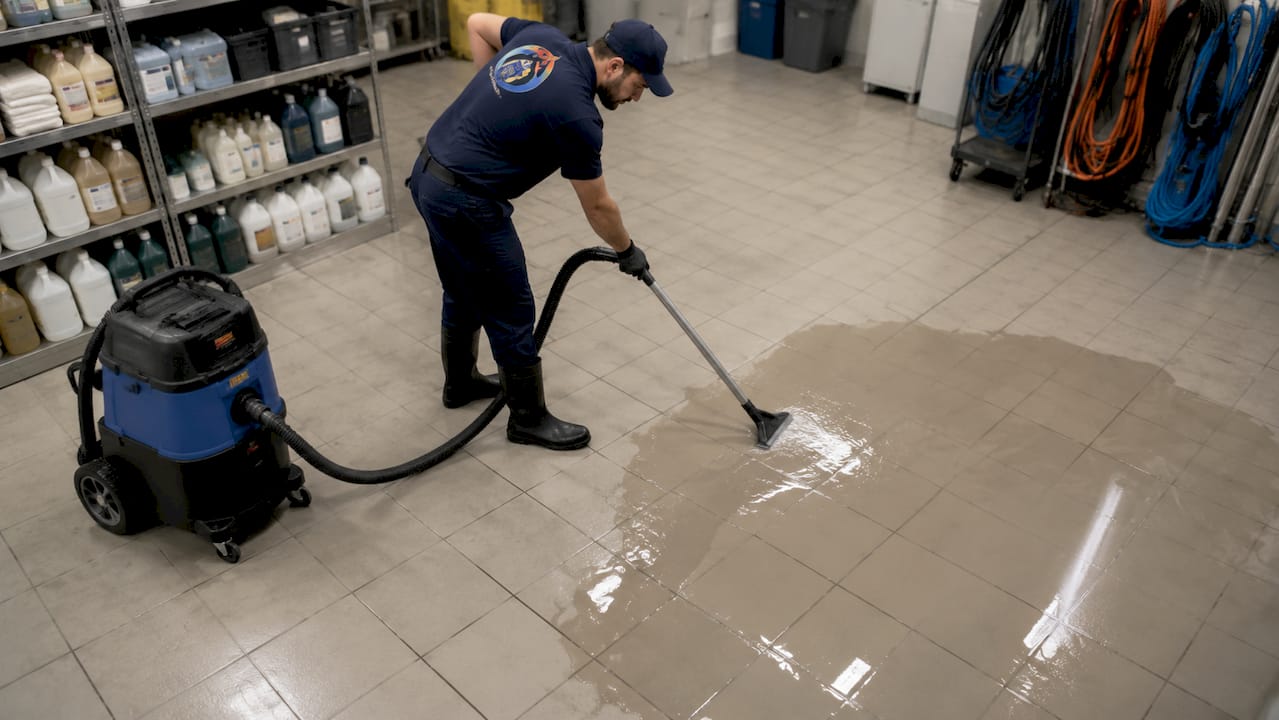
Truck-mounted extractors are the workhorses for large-scale flooding. These units deliver flow rates of 80–150 gallons per hour, making them the fastest option for removing standing water from open commercial floors. Their power comes from the vehicle engine, so they maintain consistent suction regardless of how saturated the space becomes.
Portable extractors and submersible pumps handle areas where truck-mounted hoses cannot reach. Elevator shafts, stairwells, and rooms far from exterior access points all require portable units. Submersible pumps drop directly into deep water accumulation and run continuously until the volume drops to a level that extraction wands can manage.
Weighted extraction tools are specifically designed for carpet and padding. Standard vacuum wands only pull water from the carpet surface. Weighted tools compress carpet fibers and force water out of the backing and padding underneath, which is where the majority of retained moisture sits. Multiple passes are required, with moisture readings taken between each pass to confirm progress.
Hard floor surfaces, including tile, concrete, and hardwood, require dedicated floor extraction attachments that create a sealed suction path across the surface. These tools prevent water from spreading laterally as it is pulled up.
Once standing water is removed, industrial drying equipment takes over. LGR (low grain refrigerant) dehumidifiers pull moisture from the air and from materials simultaneously. Air movers accelerate surface evaporation by directing high-velocity airflow across wet materials, feeding moisture-laden air toward the dehumidifiers.
Thermal imaging cameras and calibrated moisture meters complete the equipment picture. Thermal imaging locates hidden moisture behind walls and under flooring that is invisible to the eye. Moisture meters then verify the exact readings at those locations, confirming whether extraction and drying are reaching the target areas.
Pro Tip: Never rely on surface appearance to judge extraction progress. A floor that looks dry to the eye can still register dangerously high moisture readings in the subfloor. Always request moisture meter data, not just a visual assessment.
How does water classification affect the extraction strategy?
Water category and damage class are the two variables that determine how aggressive the extraction and remediation process must be. Getting this classification wrong puts occupants at risk and can void insurance claims.
| Classification | Description | Extraction and treatment requirements |
|---|---|---|
| Category 1 | Clean water from supply lines or rain | Standard extraction and drying; no antimicrobial treatment required |
| Category 2 | Gray water with contaminants (appliances, sump overflow) | Extraction plus antimicrobial treatment; some material removal may be needed |
| Category 3 | Black water (sewage, floodwater) | Full PPE required; extraction, antimicrobial treatment, and controlled demolition of affected porous materials |
| Class 1 | Minimal absorption; only part of a room affected | Fastest drying; least equipment needed |
| Class 2 | Entire room affected; moisture in walls up to 24 inches | Moderate drying time; wall cavity drying may be required |
| Class 3 | Ceilings, walls, and floors saturated | Extended drying; maximum equipment deployment |
| Class 4 | Specialty drying for hardwood, concrete, or plaster | Longest drying cycle; low humidity and high airflow required |
Category 2 and 3 water damage requires additional remediation steps that go beyond extraction. Antimicrobial treatments are applied to all affected surfaces. Controlled demolition removes drywall, insulation, and flooring that cannot be dried in place. These steps are not optional. Porous materials saturated with contaminated water cannot be dried and reused safely.
Safety protocols for Category 3 events include full personal protective equipment for all technicians: respirators, Tyvek suits, and chemical-resistant gloves. Affected areas are contained to prevent cross-contamination to unaffected zones of the building. The water damage categories present at your property directly determine how long the process takes and what materials can be salvaged.
What are the typical phases and timeline for commercial water extraction?
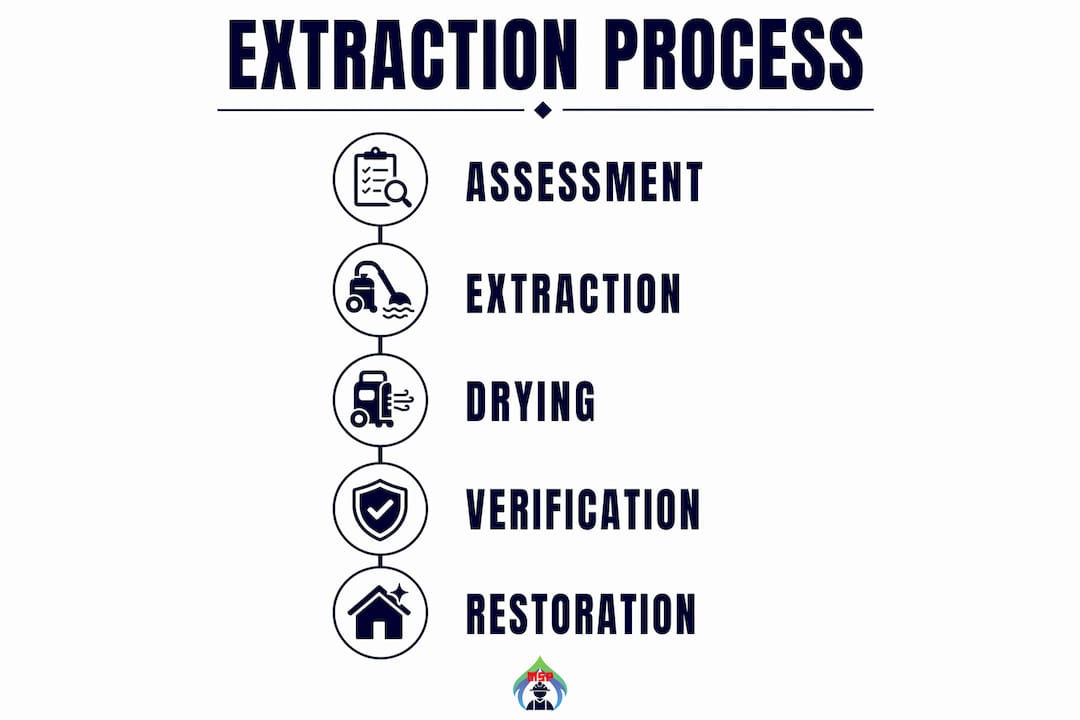
The commercial water extraction process follows five defined phases. Each phase has a measurable outcome that must be confirmed before the next begins.
-
Assessment and classification. Technicians document the affected area, identify the water source, classify the water category and damage class, and establish moisture baseline readings. This phase produces the scope of work and determines equipment needs.
-
Water extraction. Standing water is removed using truck-mounted extractors, portable units, and submersible pumps as needed. Extraction typically takes 2–6 hours depending on water volume and floor area. Carpet and padding receive weighted extraction passes. Hard floors receive surface extraction. The phase ends when no standing water remains and moisture readings confirm adequate removal.
-
Drying equipment placement. LGR dehumidifiers and air movers are positioned according to a drying plan. Placement follows a calculated ratio of equipment to affected square footage. Wall cavity drying systems are installed where moisture has penetrated wall assemblies.
-
Daily monitoring and adjustment. Technicians return each day to record moisture readings at all mapped locations. Equipment is repositioned to address areas that are drying slower than projected. Daily monitoring and equipment repositioning are what separate professional drying from simply leaving fans running. Drying typically takes 3–5 days for standard water damage events.
-
Final inspection and documentation. Once all moisture readings reach the pre-established drying goals, equipment is removed. A final moisture map is produced and provided to the property owner and insurer as documentation that drying is complete.
Key stat: Extended dwell time before extraction begins is the single largest driver of increased damage scope. Every hour water sits in a structure, it penetrates deeper into subfloor layers, wall cavities, and building materials, expanding the restoration footprint and cost.
What challenges are unique to commercial water extraction?
Commercial properties present complications that residential jobs rarely involve. Property managers need to understand these challenges to set realistic expectations and coordinate effectively with restoration crews.
-
Raised access flooring is common in data centers, server rooms, and modern office buildings. Water accumulates in the void beneath the panels and is completely invisible from above. Thermal imaging detects this hidden accumulation, and technicians lift individual panels to insert pumps directly into the void. Each void section requires its own drying target and verification reading.
-
Multi-floor extraction sequences follow a specific order. Crews work from the lowest affected floor upward. Extracting upper floors before lower ones pushes water down through penetrations and defeats the work already completed below.
-
Hose length and access constraints affect which equipment can be deployed where. Truck-mounted extractors have practical hose limits, and running hoses through lobbies, elevators, or occupied tenant spaces creates liability and access issues. Combining truck-mounted and portable extractors resolves this by positioning truck units at the closest exterior access point and using portables for interior zones.
-
Tenant access and business continuity create scheduling pressure. Restoration crews must often work in phases around occupied areas, which extends the overall timeline.
-
Multiple extraction passes are standard, not exceptional. Moisture meter verification after each pass determines whether another pass is needed. Porous subfloor materials, particularly concrete and wood, retain water well below the surface and require repeated extraction before drying equipment can work effectively.
Pro Tip: If your building has raised access flooring in any area, tell the restoration crew before they begin. Skipping void extraction in those zones will result in mold growth beneath the floor within days, even if the surface above looks and reads dry.
| Challenge | Detection method | Resolution |
|---|---|---|
| Raised floor void water | Thermal imaging, panel lifting | Pump insertion into void; separate drying targets |
| Multi-floor water migration | Moisture mapping by floor | Extract lowest floor first; work upward |
| Hose access limits | Site walkthrough | Combine truck-mounted and portable extractors |
| Residual subfloor moisture | Moisture meter readings | Multiple extraction passes; verify between passes |
Key Takeaways
Commercial water extraction succeeds when assessment, extraction, drying, and moisture verification are executed in sequence with the right equipment matched to the water category and building type.
| Point | Details |
|---|---|
| Staged process is non-negotiable | Skipping assessment or verification phases creates hidden damage that worsens over time. |
| Equipment must match the surface | Weighted tools for carpet, surface extractors for hard floors, and pumps for voids each serve a distinct role. |
| Water category drives the protocol | Category 3 events require PPE, antimicrobial treatment, and controlled demolition beyond standard extraction. |
| Drying takes 3–5 days minimum | Extraction removes standing water in hours; structural drying requires days of monitored equipment operation. |
| Moisture meters, not eyes, confirm dryness | Visual dryness is not a reliable indicator. Calibrated readings at baseline and target levels verify completion. |
Why property managers underestimate extraction depth
The most common mistake I see property managers make is treating extraction as a one-time event rather than a verified process. A crew shows up, removes the visible water, and the manager assumes the job is done. Three weeks later, the flooring buckles or mold appears behind a wall that looked perfectly fine.
The reality is that water moves into materials faster than it moves out. A concrete slab can absorb water several inches deep during a flooding event, and that moisture will not evaporate on its own in a reasonable timeframe. Without LGR dehumidifiers running at the right capacity and air movers directing airflow across the slab, that moisture stays locked in the structure.
I have also seen property managers push back on the number of extraction passes a crew recommends, viewing it as unnecessary time and cost. The moisture meter readings do not lie. If the subfloor is still reading above the drying goal after the first pass, a second pass is not optional. It is the difference between a complete restoration and a partial one that fails in 30 days.
The other misconception worth addressing is the idea that faster is always better. Aggressive drying with maximum equipment does speed up the timeline, but it must be balanced against the risk of secondary damage. Forcing too much airflow across hardwood floors, for example, can cause warping. Experienced technicians adjust equipment settings and placement daily based on actual readings, not a fixed schedule.
— John
Masterservicepro handles commercial water extraction in Illinois
When water damage hits your commercial property in Lake County, Cook County, DuPage County, Will County, or Kane County, Masterservicepro deploys IICRC-certified technicians with truck-mounted extractors, portable units, LGR dehumidifiers, and calibrated moisture monitoring equipment. The team handles Category 1 through Category 3 water damage under one roof, eliminating the need to coordinate multiple contractors during a time-sensitive event. Every job includes documented moisture mapping from extraction through final inspection. For property owners who need a clear picture of what comes next, the water damage restoration service page outlines the full scope of commercial services available. You can also review the drying timeline guide to understand what to expect during the structural drying phase.
FAQ
What does commercial water extraction actually involve?
Commercial water extraction is a staged process covering assessment, standing water removal with industrial extractors, structural drying with dehumidifiers and air movers, and daily moisture monitoring until drying goals are met. The process follows IICRC S500 standards for water damage restoration.
How long does commercial water extraction take?
Extraction of standing water typically takes 2–6 hours depending on volume and floor area. Structural drying after extraction takes 3–5 days for standard water damage, and longer for Category 2 or 3 events or Class 3 and 4 damage classifications.
How do technicians know when extraction is complete?
Technicians verify extraction adequacy using calibrated moisture meters, not visual inspection. Readings are taken at baseline and compared against established drying goals; multiple extraction passes are common before those targets are reached.
Does water category change what equipment is used?
Yes. Category 3 events require full PPE for technicians, antimicrobial treatments applied to all affected surfaces, and controlled demolition of porous materials that cannot be safely dried in place. Category 1 events use standard extraction and drying without those additional steps.
Can commercial extraction be done while the building is occupied?
Partial occupancy is possible in unaffected zones, but affected areas must be restricted during extraction and active drying. Restoration crews sequence work around tenant access and hose routing constraints, which can extend the overall project timeline.