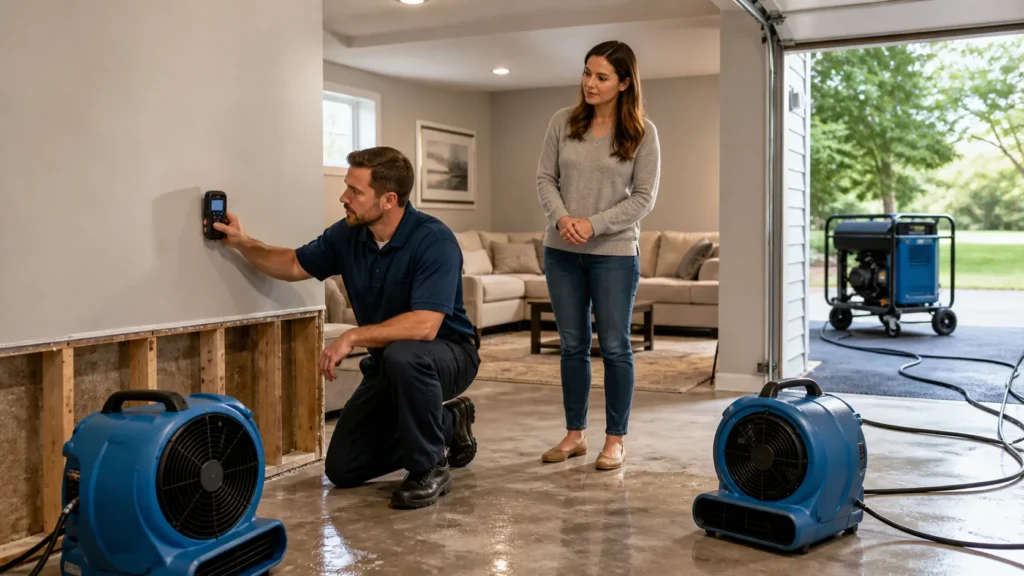
Power Outages and Water Damage in Downers Grove
A late-September thunderstorm can knock out power fast. While the rain may stay outside, a sump pump can stop, and basement water may begin rising before you realize there is a problem. That is one reason power outages can lead to water damage in Downers Grove homes.
We often see trouble start with the systems homeowners depend on every day. Pumps, dehumidifiers, and leak alarms need electricity to do their jobs. Knowing what to watch for can help you respond safely and limit the spread of moisture.
Why Power Loss Causes Water Damage
When electricity goes out, several protective systems may stop at once. A sump pump cannot move groundwater away from the foundation, while an ejector pump may not remove wastewater from lower-level plumbing. Battery backup pumps can help, but only if their batteries are charged and working properly.
During fall storms, heavy rain, wind, falling leaves, and saturated soil can all add pressure around a home. Water may enter through foundation cracks, window wells, roof leaks, floor drains, or backed-up sewer lines. Even a small amount of water can travel beneath flooring or behind finished walls.
We recommend watching for these outage-related risks:
- A sump pit that is filling without the pump running
- Water near a floor drain or basement wall
- A sewage ejector pump that is not operating
- Overflow near an HVAC condensate pump or appliance
- Gutter or window-well drainage problems outside
Professional technicians provide water damage restoration, including extraction, structural drying, cleaning, repair, and remodeling support for properties throughout the Chicago-area suburbs.
Protect Your Home During an Active Outage
Safety comes first when water and electricity may be present. Do not stand in water near outlets, appliances, electrical panels, cords, or damaged wiring. If you are unsure whether the basement is electrically safe, stay out and wait for qualified help.
When it is safe to do so, check the sump pit and keep an eye on low areas of the basement. Move valuables, boxes, and furniture off the floor if you can do it without entering unsafe water. Flashlights are safer than candles during an outage.
A portable generator may help power certain equipment, but it must operate outdoors and according to the manufacturer’s instructions. Use appropriate extension cords, and never connect a generator directly to household wiring unless a qualified electrician has installed a transfer switch.
Before cleanup begins, take photos and videos of visible water, affected belongings, and damaged materials. Documentation can be helpful when reporting a loss. Acting quickly and safely can help limit water damage in Downers Grove homes before it reaches drywall, carpeting, or stored items.
Stop Hidden Moisture Before Mold Takes Hold
Standing water is only part of the concern after an outage. Moisture can remain inside drywall, insulation, cabinets, flooring, subfloors, and other building materials long after surfaces appear dry. If those materials stay wet, mold may begin growing quickly.
That is why our response goes beyond removing visible water. We inspect the affected areas, extract water, check for hidden moisture, place drying equipment, sanitize affected surfaces when needed, and document drying progress. This process helps us identify damp areas that may otherwise be missed.
Professional mold removal may be needed when mold growth is found or suspected after a water event. Post-water-damage cleaning can also help address affected contents and surfaces once the area is safe to enter.
Pay attention to warning signs after the power returns:
- Damp or soft drywall
- Musty odors in the basement or lower level
- Wet carpeting, padding, or baseboards
- Swollen flooring or cabinet materials
- Condensation and lingering humidity
Prompt drying helps protect the building materials that make up your home, not just the items you can see.
Prepare Your Home Before Fall Storms
A little preparation can make an outage less stressful. We recommend testing your sump pump regularly and checking any battery backup system before stormy weather arrives. Replace weak batteries and consider whether a secondary or water-powered backup pump is appropriate for your property.
Exterior maintenance matters too. Keep gutters clear, direct downspouts away from the foundation, remove debris from window wells, inspect roof flashing, and seal visible foundation gaps. These steps can reduce the amount of water collecting near vulnerable areas.
It is also wise to review your homeowners insurance policy. Water backup, sewer backup, and flood-related damage may be handled differently depending on the policy and its exclusions. Keep an inventory of important belongings, emergency contacts, and restoration information in an easy-to-reach place.
For homes with finished basements, regular inspections can reveal early concerns such as slow drainage, recurring dampness, or a sump pump that cycles oddly. Addressing those warning signs before a storm can reduce the chance of a larger cleanup later.
Restore Your Home With a Clear Recovery Plan
Master Service Pro can help you address water damage in Downers Grove with thorough cleanup, moisture removal, and restoration support. Our team works to identify affected areas and help limit further damage to your home. Contact us to discuss your situation and arrange prompt service.
Common Questions About Power Outage Water Damage
Can A Power Outage Cause Basement Flooding Even When The Basement Has No Leaks?
Yes. If a sump pump, ejector pump, or drainage pump loses power during heavy rain, water can rise and enter through the sump pit, floor drain, or small foundation openings.
How Quickly Should I Seek Water Damage Restoration After An Outage?
Seek help as soon as it is safe to do so. Fast extraction and drying can help limit damage to flooring, drywall, insulation, furniture, and other affected materials.
Is It Safe To Clean Up Flooded Water After A Power Outage?
Do not enter standing water if electrical hazards may be present. Professional cleanup is recommended when water appears contaminated, comes from a sewer backup, or covers a large area.
Can Wet Walls And Carpeting Develop Mold After A Power Outage?
Yes. Wet walls, carpet, padding, and insulation can hold hidden moisture that supports mold growth. Proper moisture detection and drying help identify dampness behind walls and beneath flooring.
What Should I Do If My Sump Pump Stops During A Storm?
Check whether the pump has power and inspect the float switch only if it is safe. Use a battery backup or generator only according to safe operating instructions. If water enters the home, avoid electrical hazards and arrange for professional assessment and drying.