Water damage categories are classifications defined by the ANSI/IICRC S500 standard that determine contamination level, safety requirements, and the correct restoration approach for any water loss event. Three categories rank contamination severity, while four separate classes rank drying complexity. Knowing the difference between a burst supply line and a sewage backup is not just useful knowledge. It directly affects how much you pay, how safe your home is, and whether your insurance claim holds up. This guide covers water damage categories explained in full, including how categories and classes work together, why contamination escalates faster than most homeowners expect, and what each scenario means for your restoration decisions.
What are the three water damage categories explained?
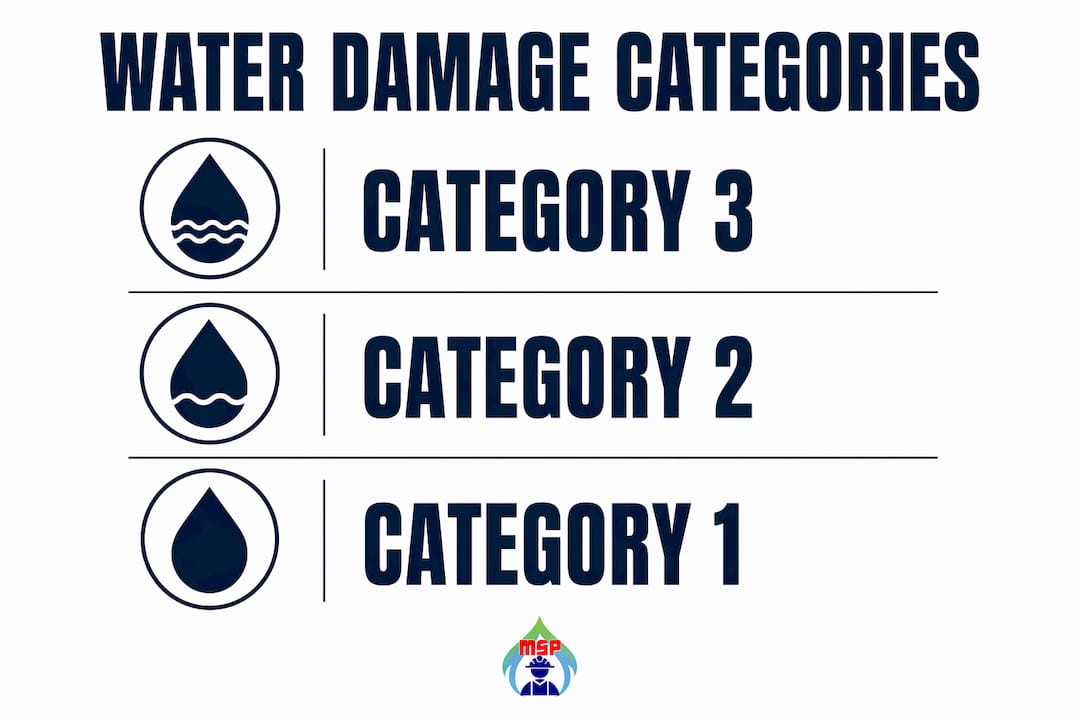
The IICRC S500 standard classifies water damage into three contamination categories based on the source and biological risk of the water, not the size of the affected area. This distinction matters because two flooded basements can look identical yet require completely different safety protocols depending on where the water came from.
| Category | Common Name | Typical Sources | Contamination Risk |
|---|---|---|---|
| Category 1 | Clean water | Burst supply lines, overflowing sinks, rain intrusion | Low at source, escalates over time |
| Category 2 | Gray water | Washing machine overflow, dishwasher leaks, toilet overflow (urine only) | Moderate, contains chemicals and microorganisms |
| Category 3 | Black water | Sewage backups, floodwaters, rising groundwater | High, grossly contaminated, biohazard level |
Category 1: Clean water originates from a sanitary source and poses no immediate health threat at the time of contact. A broken supply line under your kitchen sink or an overflowing bathtub both qualify. The critical caveat is that Category 1 water does not stay clean. Left untreated, it absorbs contaminants from building materials, organic debris, and ambient bacteria within hours.
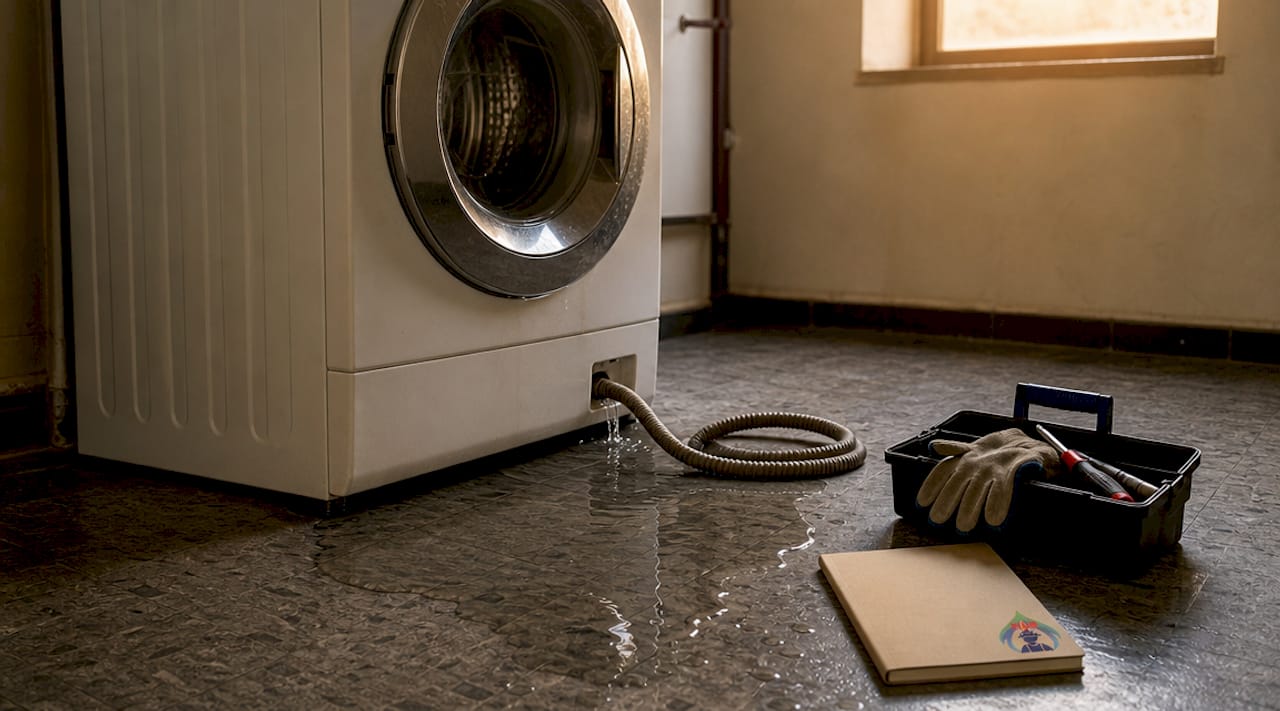
Category 2: Gray water carries significant contamination from chemicals, detergents, or biological matter. A washing machine overflow, a dishwasher leak, or a toilet overflow involving only urine all fall here. Direct contact with gray water can cause illness, so protective gloves and respiratory precautions are standard practice during cleanup. Porous materials like carpet padding that absorb gray water typically require removal rather than drying in place.
Category 3: Black water is grossly contaminated and represents the most hazardous restoration scenario. Category 3 cleanup requires full personal protective equipment, biocide treatment, and complete removal of all porous materials that absorbed the water. Sewage backups, floodwaters carrying soil and debris, and any water that has been standing long enough to support microbial growth all qualify as Category 3. This is the most expensive and health-critical water damage scenario a property can face.
Pro Tip: If you are unsure of your water source, treat it as Category 2 until a certified technician confirms otherwise. Underestimating contamination is far more dangerous than overestimating it.
How do water damage classes affect the drying process?
While categories describe contamination, water damage classes describe how much water has been absorbed and how difficult it will be to dry. The IICRC S500 defines four classes, and they determine which equipment gets deployed, how long drying takes, and whether selective demolition is needed.
- Class 1: Minimal absorption. Water affected only part of a room and low-porosity materials like concrete or tile. A small area of wet flooring with no wall saturation. Drying is straightforward and typically completed within two to three days using standard air movers and dehumidifiers.
- Class 2: Significant absorption across an entire room. Water has wicked up walls at least 12 inches and saturated carpet and padding throughout the space. Moderate drying equipment is needed, and drying times extend to three to five days depending on conditions.
- Class 3: Extensive saturation. Water has saturated walls, ceilings, insulation, and structural materials throughout the affected area. This often results from overhead leaks or sprinkler activations. Class 3 jobs demand high-volume air movers, commercial dehumidifiers, and careful moisture mapping to confirm complete drying.
- Class 4: Specialty drying for low-evaporation materials. Hardwood floors, concrete slabs, plaster walls, and crawl space subfloors fall here. Standard evaporation methods do not work because moisture is trapped deep within dense or low-permeance assemblies.
Class 4 drying requires specialty equipment such as LGR (low-grain refrigerant) dehumidifiers or desiccant dehumidifiers, along with techniques like tenting or plenum drying that create targeted vapor pressure gradients to pull moisture out of dense materials. These jobs take longer and cost more, and many homeowners are surprised to learn their hardwood floor qualifies as a Class 4 scenario even when the water source was clean.
Pro Tip: Ask your restoration contractor to document both the category and the class in writing before work begins. This documentation protects you during the insurance claim process and confirms the correct equipment and protocols are being used.
The key distinction to remember: category tells you how safe the water is, and class tells you how hard it will be to dry. A Class 4, Category 1 job (clean water in hardwood floors) is very different from a Class 2, Category 3 job (sewage in carpet). Both the contamination level and the drying scope must be assessed together to build an accurate restoration scope and estimate.
Why do water damage categories change over time?
One of the most misunderstood facts about water damage is that categories are not fixed. Category 1 water can degrade to Category 2 in approximately 48 hours and to Category 3 within 72 hours under warm indoor conditions. This escalation is driven by microbial growth, contact with contaminated surfaces, and the absorption of organic material from building assemblies.
Here is the progression homeowners need to understand:
- Hours 0 to 24: Clean water from a supply line break is still Category 1. Drying can begin immediately. DIY extraction with a wet/dry vacuum is reasonable for small areas if you act fast.
- Hours 24 to 48: Bacteria from building materials, dust, and ambient air begin colonizing the standing water. The water is transitioning toward Category 2. Professional extraction and antimicrobial treatment become necessary.
- Hours 48 to 72: Microbial populations are established. The water is now Category 2 or approaching Category 3 depending on temperature and surface contact. Porous materials that absorbed the water must be treated as contaminated.
- Beyond 72 hours: The water is Category 3 regardless of its original source. Mold can begin growing within 24 to 48 hours of water exposure, particularly when indoor temperatures fall between 65 and 85°F and relative humidity exceeds 60%. At this stage, full remediation protocols apply.
The financial and health implications of this timeline are significant. A Category 1 job that a homeowner delays addressing for three days becomes a Category 3 job with biohazard cleanup costs, potential mold remediation, and a more complex insurance claim. Restoration teams document the category at initial contact and track changes throughout the project to maintain accurate scope and insurer compliance. If the category shifts after discovery, that change must be documented to protect both the homeowner and the contractor.
Warm temperatures accelerate microbial growth, which is why a flooded basement in summer escalates faster than the same event in winter. The type of surface also matters. Carpet and drywall absorb and harbor bacteria far faster than sealed concrete or ceramic tile. If you have a flooded basement cleanup situation, the clock starts the moment water enters the space.
What are the best practices for restoration by category and class?
Restoration strategy depends directly on the category and class combination. The right approach for a Category 1, Class 1 scenario is completely different from a Category 3, Class 3 event, and treating them the same way is one of the most costly water damage mistakes a homeowner can make.
Category 1 restoration allows for limited DIY involvement when the affected area is small and the water source is confirmed clean. Extract standing water, remove saturated materials like carpet padding, and set up fans and a dehumidifier. If drying is not complete within 24 to 48 hours, call a professional. Any delay past that window risks mold growth and category escalation.
Category 2 and 3 restoration requires professional remediation without exception. For Category 2 or 3 events, remediation precedes drying and involves physical containment of the affected area, HEPA air filtration, and negative air pressure to prevent cross-contamination to unaffected spaces. Technicians wear full PPE including respirators, gloves, and protective suits. All porous materials that absorbed contaminated water are removed and disposed of properly.
Key practices by class:
- Class 1 and 2: Standard air movers and refrigerant dehumidifiers. Moisture readings taken daily. Drying typically complete in two to five days.
- Class 3: High-volume equipment, possible selective demolition of drywall to dry wall cavities, extended monitoring.
- Class 4: Specialty drying systems, tenting over hardwood floors, desiccant dehumidifiers, and drying times that can extend one to two weeks.
Misclassifying a water category leads directly to inadequate safety controls. Treating Category 2 water as Category 1 means skipping containment and PPE, which exposes occupants and workers to biological hazards. It also creates documentation gaps that can cause insurance claims to be denied or reduced.
Mold prevention is the non-negotiable priority across all categories and classes. Mold growth begins within 24 to 48 hours of water exposure, which means the drying clock starts at the moment of water intrusion, not at the moment you call a contractor. If you suspect mold has already developed, a mold remediation assessment should be part of the restoration plan before drying equipment is set.
For insurance purposes, accurate classification is not optional. Category and class documentation determines restoration scope, equipment justification, and claim approval. Insurers use this documentation to verify that the work performed matches the damage present. A well-documented Category 3, Class 3 claim with proper remediation records is far more likely to be approved in full than a vague claim with no classification records.
Key takeaways
Water damage categories and classes together determine every decision in a restoration project, from safety protocols to drying equipment to insurance documentation.
| Point | Details |
|---|---|
| Categories define contamination | Category 1 is clean, Category 2 is contaminated, and Category 3 is a biohazard requiring full remediation. |
| Classes define drying complexity | Class 1 is simple; Class 4 requires specialty equipment for dense materials like hardwood and concrete. |
| Categories escalate within 72 hours | Clean water becomes Category 3 in about 72 hours, making immediate action the single most important factor. |
| Misclassification creates real risk | Treating Category 2 as Category 1 skips containment and PPE, endangering occupants and voiding insurance claims. |
| Documentation protects your claim | Accurate category and class records at every stage of restoration are required for full insurance approval. |
Why I think most homeowners underestimate the category system
I have seen the same scenario play out dozens of times. A homeowner discovers water in their basement, mops it up, sets a box fan in the corner, and considers the problem solved. Three weeks later, they are calling about a mold smell they cannot locate. The water was Category 1 when it entered. By the time the fan was running, it was already transitioning to Category 2.
The category system is not bureaucratic paperwork invented by the IICRC to complicate insurance claims. It is a practical safety framework that tells you exactly how dangerous your situation is and what it will take to fix it correctly. The class system is equally underused. Most homeowners have never heard of Class 4, yet a significant portion of hardwood floor water damage jobs qualify for it. Standard drying equipment applied to a Class 4 scenario does not just dry slowly. It fails to dry the material at all, leaving trapped moisture that feeds mold for months.
The uncomfortable truth is that the cost of getting this wrong is almost always higher than the cost of getting it right the first time. A proper assessment from an IICRC-certified technician takes less than an hour and gives you a documented baseline that protects your health, your property, and your insurance claim. Knowing how long drying actually takes for your specific class is information worth having before you agree to any restoration scope.
— John
How Masterservicepro handles every category and class
When water damage hits your home or property, the last thing you need is uncertainty about who to call or whether the job is being done right.
Masterservicepro’s IICRC-certified technicians assess and document both the contamination category and the drying class from the first visit, covering Category 1 through Category 3 events and all four drying classes. From water damage restoration to mold remediation and flooded basement cleanup, every job is handled under one roof with proper containment, EPA-approved treatments, and full insurance documentation. Serving Lake County, Cook County, DuPage County, Will County, and Kane County, IL, Masterservicepro responds fast because the 72-hour escalation window waits for no one. Call today for a same-day assessment backed by a 100% satisfaction guarantee.
FAQ
What is the difference between water damage categories and classes?
Categories (1 through 3) describe contamination level and safety risk, while classes (1 through 4) describe how much water was absorbed and how difficult drying will be. Both must be assessed together to determine the correct restoration approach.
Can Category 1 water damage become Category 3?
Yes. Clean water from a supply line or appliance leak can degrade to Category 3 within approximately 72 hours in warm conditions as microbial growth establishes and contaminants from building materials are absorbed.
What does Class 4 water damage mean for my hardwood floors?
Class 4 means moisture is trapped in a low-evaporation material like hardwood, concrete, or plaster. Standard air movers will not dry it effectively. Specialty equipment such as LGR or desiccant dehumidifiers and techniques like floor tenting are required, and drying can take one to two weeks.
Do I need a professional for Category 1 water damage?
Small Category 1 losses with minimal absorption (Class 1) can sometimes be managed with prompt DIY extraction and drying. If the area is larger than a few square feet, involves wall saturation, or is not fully dry within 24 to 48 hours, professional restoration is necessary to prevent mold and category escalation.
How does water damage classification affect my insurance claim?
Accurate category and class documentation is required for insurers to approve the full scope of restoration work. Undocumented or misclassified damage can result in partial payment or claim denial, making proper assessment and written records from a certified technician a critical step in any water loss event.