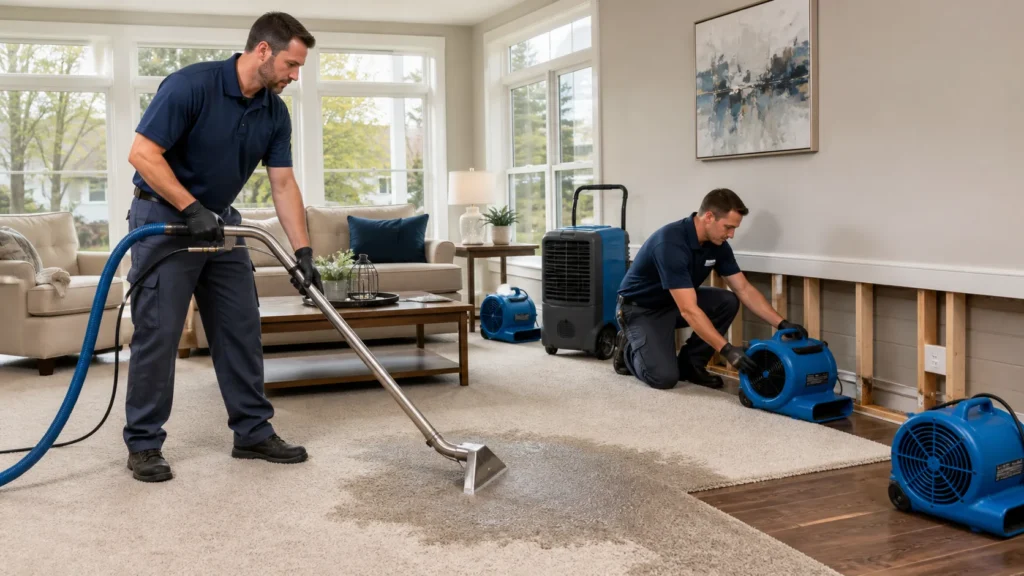
Water damage can move quickly through a property, even when the puddle on the floor seems small. After a burst pipe, appliance leak, roof leak, or storm intrusion, fast professional action can limit damage to finishes, furnishings, and building materials.
For water damage in Arlington Heights, extraction and drying work together but do different jobs. Extraction removes the water you can see. Drying addresses moisture left behind in walls, floors, cabinets, insulation, and framing, where problems can grow quietly.
Water Extraction Removes the Immediate Threat
Water extraction is the process of removing visible or pooled water from a property. Once the water source has been stopped, we begin removing as much bulk water as possible with the right equipment for the situation.
Depending on the loss, our work may involve truck-mounted extractors, submersible pumps, wet vacuums, or specialized carpet extraction equipment. Getting water out early helps shorten the time materials stay wet and can reduce deterioration, odors, and the chance of hidden moisture becoming a larger concern.
Areas that may need extraction include:
- Basement floors and finished basement carpeting
- Carpet, padding, and upholstery
- Hardwood, tile, and other flooring surfaces
- Crawl spaces and areas around cabinets
- Commercial flooring and work areas
The right method depends on the depth of water, the materials affected, and the type of water involved. Some losses also require cleaning, disinfection, or removal of materials that cannot be safely restored. We inspect the affected area before deciding how to proceed.
Drying Restores Safe Moisture Levels
A floor or wall can feel dry to the touch while moisture remains inside it. Water can travel beneath flooring, behind baseboards, into drywall, and through insulation before it becomes visible. That is why extraction alone does not complete the restoration process.
After bulk water is removed, we set up professional drying equipment designed to pull moisture from materials and the surrounding air. This may include air movers, commercial dehumidifiers, air filtration equipment, controlled temperature adjustments, and targeted drying systems for walls or floors.
Our technicians use moisture meters, thermal imaging, and humidity readings to find damp areas and track progress. These tools help us avoid guessing about whether a space has dried. Instead, we can monitor conditions and determine when materials have returned to appropriate moisture levels.
Complete drying helps reduce issues such as:
- Wood warping or buckling
- Peeling paint and swollen trim
- Damp odors in carpets and walls
- Microbial growth caused by lingering moisture
- Long-term concerns inside structural materials
Why Both Steps Matter for Water Damage in Arlington Heights
Extraction is the fast response to bulk water. Drying is the follow-through that handles the moisture extraction equipment cannot fully reach. One without the other can leave a property with unfinished restoration needs.
If water is extracted but drying is skipped, moisture may remain under flooring or inside walls. On the other hand, trying to dry a space without first removing standing water can slow the process and make conditions harder to control. A complete response addresses both the immediate water and the moisture that spreads beyond it.
For water damage in Arlington Heights, our professional workflow generally includes inspecting the loss, stopping the source when possible, extracting water, removing unsalvageable materials, cleaning affected areas, placing drying equipment, and monitoring moisture conditions. Once drying is complete, repairs may be needed for damaged finishes or contents.
Water losses can affect more than floors and walls. When needed, we can also address mold removal, carpet and upholstery cleaning, and repair services after water has damaged finishes or belongings.
November Conditions Can Increase Water Risks
November weather can bring colder temperatures, heavy rain, early snow, and changing conditions that put pressure on homes and buildings. Frozen or stressed plumbing, clogged gutters, roof leaks, snowmelt, and basement seepage can all create water problems when property owners least expect them.
Closed windows and running heating systems may reduce natural airflow indoors. That makes professional dehumidification and moisture monitoring especially helpful during colder months, when damp materials may not dry as readily on their own.
Before winter weather becomes more severe, we recommend having professionals assess concerns involving basement drains, sump pumps, appliance hoses, exposed pipes, attic insulation, roof flashing, and window wells. Small warning signs, such as a musty smell, damp carpet, staining, or peeling paint, deserve attention before they turn into a larger loss.
Commercial and industrial properties also need a fast plan after water intrusion. Wet floors can create slip hazards, while damaged inventory, equipment, or work areas can interrupt daily operations. Prompt documentation and a clear restoration process can also help when insurance information is needed.
A Professional Recovery Plan
Water extraction and structural drying are complementary services, not interchangeable choices. The goal is not simply to remove a puddle. It is to locate affected materials, remove water, dry hidden moisture, and restore the property as thoroughly as the situation requires.
Restore Your Property With Confidence
For dependable water damage in Arlington Heights, Master Service Pro provides extraction, drying, and cleanup tailored to your property’s needs. Our IICRC-certified cleaning technicians use proven methods to address moisture thoroughly and support a safe recovery. We serve residential and commercial properties with clear communication and careful attention to affected materials. Contact us to schedule service with our team.
FAQs
What Is The Difference Between Water Extraction And Drying?
Water extraction removes standing and excess water from floors, carpets, and other surfaces. Drying uses specialized equipment to remove moisture trapped inside building materials and restore appropriate humidity and moisture levels.
Can I Dry Water Damage With Household Fans?
Household fans may provide limited airflow, but they typically cannot remove enough moisture from walls, flooring, insulation, or framing. Professional air movers, dehumidifiers, and moisture-monitoring tools provide a more complete drying process.
How Long Does Professional Water Damage Drying Take?
Drying time depends on the amount of water, affected materials, indoor temperature, humidity, and how quickly extraction begins. Many projects take several days, while hidden moisture or extensive damage can require additional time.
Does Water Extraction Prevent Mold Growth?
Fast extraction reduces the water available for mold growth, but extraction alone may not remove hidden moisture. Complete drying, cleaning, and moisture verification help reduce the chance of moisture-related mold concerns.
When Should I Call A Professional For Water Damage In Arlington Heights?
Professional help is appropriate as soon as you discover standing water, wet carpet, soaked drywall, plumbing leaks, basement flooding, sewage backups, or storm-related intrusion. Prompt extraction and drying can reduce the scope of damage and help protect the materials that make up your property.