
A mold inspection is a specialized assessment that detects hidden fungal growth, moisture intrusion, and air quality hazards that a standard home inspection cannot identify. Home buyers request mold inspections because undiscovered mold can cost tens of thousands of dollars to remediate and cause serious respiratory health problems after closing. The industry term for this process is a professional mold assessment, though buyers and real estate agents commonly call it a mold inspection. Understanding why buyers request mold inspection, what the process involves, and how to use the results gives you real power at the negotiating table.
Why buyers request mold inspection: the core reasons
Mold inspections exist because standard home inspections are not designed to find hidden mold. Standard home inspections rely on visual, non-invasive checks and exclude opening walls, where many costly mold problems reside. A general home inspector walks through the property, notes visible defects, and moves on. They will not pull back insulation, drill into drywall, or collect air samples.
Visible mold often represents only a small portion of total contamination, with much hidden in wall cavities or under flooring. Water migrates into concealed spaces through capillary action, feeding mold colonies that grow completely out of sight for months or years. By the time you see a stain on the ceiling or smell something musty in the basement, the contamination behind the surface is typically far worse.

Musty odors often indicate microbial volatile organic compounds from active mold growth. Sellers sometimes mask these odors with fresh paint or air fresheners, which can signal hidden mold rather than eliminate it. A trained mold inspector knows exactly what to look for and where to look.
What does a professional mold inspection involve?
Professional mold inspections for single-family homes typically take 2 to 4 hours and involve advanced testing methods like moisture mapping and thermal imaging. That is a significant difference from the 30-minute visual sweep a general home inspector might spend on the same property. Here is what a thorough mold assessment includes:
- Moisture meter readings on walls, ceilings, floors, and around plumbing fixtures to detect elevated moisture content before mold becomes visible
- Thermal imaging to identify temperature differentials behind walls that indicate water intrusion or wet insulation
- Air sampling using spore trap cassettes collected in multiple rooms and outdoors to compare indoor and outdoor mold spore counts
- Surface sampling via tape lifts or swabs from suspicious areas to identify specific mold species in the lab
- Visual inspection of attics, crawlspaces, basements, HVAC systems, and bathrooms where moisture problems concentrate
Samples collected during the inspection go to an accredited laboratory, typically EMSL Analytical or Eurofins, for analysis. Lab results identify the mold species present and the spore concentration levels, which determines whether remediation is needed and how extensive it must be.
Pro Tip: Always hire a mold inspector who does not also offer remediation services. Independent inspectors avoid the conflict of interest that can lead to inflated findings and biased remediation quotes.
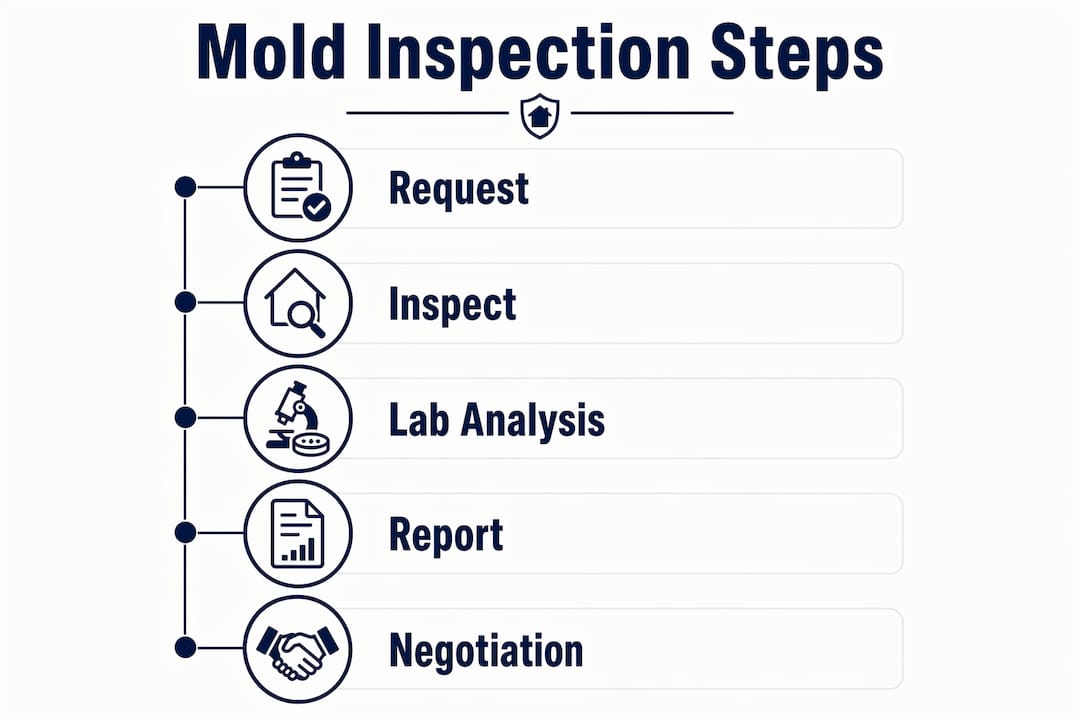
How mold inspections protect buyers financially and legally
The financial case for mold inspection is straightforward. Remediation costs for hidden mold issues discovered after closing can range from $1,500 for a small bathroom problem to $50,000 or more when structural repairs are required. That range represents the difference between a minor inconvenience and a financial crisis. Discovering the problem before you own the home changes everything.
Here is how a mold inspection report protects your financial position during a real estate transaction:
- Price negotiation. A documented mold problem gives you hard evidence to request a purchase price reduction equal to or greater than the estimated remediation cost.
- Remediation contingency. You can require the seller to complete professional remediation and provide clearance testing results before closing.
- Contract withdrawal. If the contamination is severe and the seller refuses to negotiate, you can walk away without losing your earnest money, provided your contract includes an inspection contingency.
- Legal protection. Inspection reports create a paper trail. If a seller failed to disclose known mold issues, your documented findings support legal action after closing.
Mold inspection reports give buyers leverage to negotiate price reductions, request remediation, or walk away entirely. This is the real value of the inspection beyond health protection. Mold discovered after closing becomes your problem and your expense. Mold discovered during due diligence becomes a negotiating tool.
Mold also affects resale value. A property with a documented history of mold problems, even after remediation, may appraise lower or sit on the market longer. Buyers who skip the inspection and discover mold later face both the remediation cost and a reduced resale ceiling.
How can buyers interpret mold inspection reports effectively?
Mold inspection reports synthesize visual observations, lab results, and moisture data into recommendations targeting root causes, not just surface mold presence. Reading the report correctly is what turns findings into decisions. Here are the key sections you will find in any professional report:
- Visual observations: Written descriptions and photos of suspect areas, moisture damage, staining, and odors noted during the walkthrough
- Moisture readings: Numerical data from moisture meters, flagging any reading above 16% in wood or 1% in concrete as elevated
- Lab results: Spore counts by species for each air sample, expressed as spores per cubic meter of air
- Interpretation: The inspector’s analysis comparing indoor counts to outdoor baseline counts and identifying problem areas
- Recommendations: Specific remediation actions, moisture source corrections, and follow-up testing requirements
The most important comparison in any mold report is indoor spore counts versus outdoor spore counts. Outdoor air naturally contains mold spores. When indoor counts significantly exceed outdoor counts, or when indoor samples contain species like Stachybotrys chartarum (black mold) or Chaetomium that are rare outdoors, you have a confirmed problem.
Elevated moisture readings without visible mold often point to hidden microbial growth. This is one of the most important findings a report can contain, because it identifies active conditions that will produce mold if not corrected. A report showing high moisture in a crawlspace, even with low spore counts, tells you that mold is coming unless the moisture source is fixed.
Pro Tip: Treat your mold report as a diagnostic tool, not a pass/fail grade. A report with minor findings and a clear moisture source identified is far more useful than a clean report from an inspector who skipped the crawlspace.
| Report element | What to look for |
|---|---|
| Indoor vs. outdoor spore counts | Indoor counts should not significantly exceed outdoor baseline levels |
| Mold species identified | Stachybotrys, Chaetomium, or Aspergillus/Penicillium in high counts signal serious problems |
| Moisture readings | Any reading above threshold in walls or floors requires source investigation |
| Recommendations section | Specific, targeted actions indicate a thorough inspector |
When should buyers request a mold inspection during the home buying process?
The right time to schedule a mold inspection is during the due diligence or inspection contingency period, immediately after your offer is accepted. This window, typically 7 to 14 days depending on your contract, is when you have the most leverage and the most time to act on findings. Waiting until the final walkthrough leaves you no room to negotiate or withdraw.
Certain properties deserve a mold inspection regardless of visible signs:
- Homes with a history of water damage, including past flooding, plumbing leaks, or roof repairs, because water events create the moisture conditions mold needs to grow
- Properties with crawlspaces or unfinished basements, where poor ventilation and ground moisture create chronic humidity problems. Crawlspace mold poses direct health risks that travel through the home’s air supply
- Homes vacant for six months or more, because HVAC systems sitting idle allow humidity to build unchecked
- Older homes built before 1980, particularly those with original plumbing, because decades of slow leaks often produce hidden contamination
- Properties in humid climates or near water, including homes in Illinois near Lake Michigan or the Fox River, where ambient humidity is consistently elevated
Properties with prior water damage, long vacancy, or crawlspaces deserve prioritized mold inspections due to high moisture risks. Scheduling the inspection early in your contingency period maximizes your options. If the report comes back clean, you proceed with confidence. If it reveals problems, you have time to get remediation estimates, negotiate with the seller, or make an informed decision to walk away.
Key takeaways
A mold inspection is one of the most financially protective steps a home buyer can take, because undiscovered mold shifts all remediation costs and health risks onto the buyer after closing.
| Point | Details |
|---|---|
| Standard inspections miss hidden mold | General home inspectors do not open walls or collect air samples where most mold problems hide. |
| Remediation costs are significant | Post-closing mold remediation ranges from $1,500 to $50,000 depending on contamination severity. |
| Reports create negotiation leverage | Documented findings allow buyers to request price reductions, require remediation, or exit the contract. |
| Moisture readings matter as much as spore counts | Elevated moisture without visible mold signals active conditions that will produce growth. |
| Timing determines your options | Scheduling during the inspection contingency period gives you maximum leverage and decision time. |
What I have learned from watching buyers skip this step
After years of working in mold remediation across Lake County, Cook County, and DuPage County, I have seen the same scenario play out too many times. A buyer skips the mold inspection to save $300 to $500, closes on the home, and calls us six weeks later because the basement smells wrong or their child’s allergies have gotten worse. By that point, the mold is their problem, their cost, and their stress.
What surprises most people is that the homes that produce the worst post-closing mold discoveries are not the obviously distressed properties. They are the well-staged, freshly painted homes where a seller addressed surface issues without fixing the moisture source underneath. Fresh paint over a moldy wall is one of the most common things we document during remediation work. The paint delays the visible signs by months, but the mold keeps growing.
The other thing I want buyers to understand is that a mold report is not something to fear. Buyers sometimes avoid requesting an inspection because they worry about what they might find. That thinking is backwards. Finding a problem before closing gives you options. Finding it after closing gives you a bill. The mold inspection process is not about disqualifying a home. It is about knowing exactly what you are buying and having the information to protect yourself.
One more point worth making: clearance testing after remediation is just as important as the initial inspection. If a seller agrees to remediate before closing, require post-remediation verification from an independent inspector before you sign. Remediation without verification is just a promise.
— John
Take the next step before you close
If you are buying a home in Lake County, Cook County, DuPage County, Will County, or Kane County, IL, Masterservicepro provides certified mold inspections and full-service remediation under one roof. Our IICRC certified technicians use moisture mapping, thermal imaging, and accredited lab testing to give you a complete picture of any property’s mold status before you commit. When inspection findings require remediation, our mold remediation guide walks you through every step of the process. You will not need to coordinate multiple contractors or wonder whether the job was done right. Call Masterservicepro before your inspection contingency expires and get the answers you need to close with confidence.
FAQ
What does a mold inspection cost for a home buyer?
A professional mold inspection for a single-family home typically costs between $300 and $600 depending on property size and the number of samples collected. Lab analysis fees are often included in that price.
Can a standard home inspection find mold?
Standard home inspections are limited to visual, non-invasive checks and do not include air sampling or moisture mapping, so they frequently miss mold hidden inside walls, under flooring, or in crawlspaces.
How do buyers detect mold before closing without an inspection?
Buyers can watch for musty odors, water stains, peeling paint, and discoloration near plumbing fixtures, but these signs are unreliable. Microbial volatile organic compounds from active mold growth can be masked by fresh paint or air fresheners, making a professional inspection the only reliable detection method.
What should buyers do if the mold inspection report shows a problem?
Get a written remediation estimate from a certified contractor, then use that figure to negotiate a price reduction or require the seller to complete remediation with independent clearance testing before closing.
Does mold affect a home’s resale value?
Yes. A documented mold history, even after remediation, can reduce appraised value and extend time on market. Buyers who discover undisclosed mold after closing also have grounds for legal action against the seller.