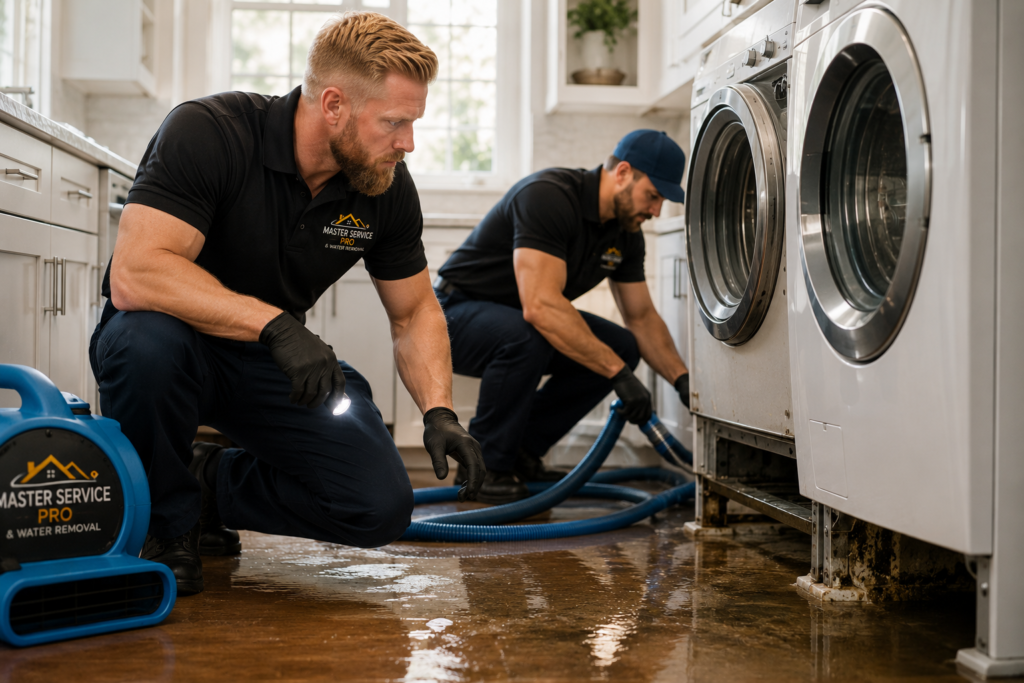
A small puddle near the refrigerator or washing machine can seem harmless at first. If it goes unnoticed, though, that water may move under flooring, behind cabinets, and into nearby walls. We often see water damage in Barrington homes that started with a slow appliance leak rather than a dramatic flood.
Late-summer heat and humidity can add to the problem as air conditioners, ice makers, dishwashers, and washing machines get frequent use. Below, we explain common leak sources, what to do when water appears, hidden mold concerns, and why thorough drying matters.
Identify the Appliances Most Likely to Leak
Laundry rooms and kitchens are common places for hidden moisture. Rubber washing machine hoses can crack as they age, while loose drain connections, damaged door seals, and overflowing laundry sinks can send water across floors quickly. Even a small drip behind the machine can soak baseboards, drywall, and flooring materials over time.
Dishwashers can also leak from worn door gaskets, loose supply lines, clogged filters, or deteriorating seals beneath the unit. Water may travel under kitchen flooring before you see staining or swelling near cabinets.
Other appliances and systems to watch include:
- Refrigerators with ice maker lines or water dispenser tubing
- Water heaters with tank corrosion or pressure-relief valve concerns
- HVAC systems with clogged condensate drain lines
- Appliances with loose connections, cracked hoses, or failing seals
Routine inspections can help us catch smaller concerns before they lead to widespread moisture. Pay close attention to unexplained damp spots, cabinet damage, or changes in flooring near appliances.
Take Fast Steps When Water Reaches Floors and Walls
Safety comes first when an appliance leaks. Turn off the appliance and stop the water source if it is safe to do so. If there is a nearby shutoff valve, close it. When the leak cannot be controlled, shutting off the main water supply may be necessary. Never step into standing water near outlets, cords, or electrical equipment.
Once the water has stopped, protect belongings and document what you find. A few practical first steps include:
- Move furniture, boxes, rugs, and personal items away from wet areas
- Place towels around a small, contained leak when it is safe
- Take photos of affected floors, walls, cabinets, and contents
- Avoid assuming the area is dry just because the surface feels dry
Visible drying is not always enough. Moisture can remain beneath hardwood, vinyl, carpet padding, cabinets, subflooring, and inside wall cavities. Our professional restoration work may include moisture meters, thermal imaging, extraction, air movement, dehumidification, and monitoring to identify and dry hidden areas.
Limit Late-Summer Moisture and Mold Risks
Warm, humid August weather can slow the drying process after an appliance leak. When moisture stays in materials such as drywall paper, wood, carpet backing, insulation, or cabinetry, mold conditions may develop. Prompt drying helps limit the chance that a small leak turns into a larger indoor air quality concern.
Signs of hidden moisture can include musty odors, warped baseboards, bubbling paint, loose flooring, recurring stains, increased indoor humidity, or discoloration near appliances. These signs do not always reveal how far water has traveled, which is why a professional assessment can be helpful.
Regular maintenance also matters. We recommend checking visible appliance hoses, cleaning dishwasher filters, inspecting refrigerator water connections, following manufacturer guidance for water heater maintenance, and keeping HVAC condensate drains clear. If you notice persistent odors or suspicious staining, professional mold inspection and removal may be appropriate.
Restore Water Damage in Barrington Before It Spreads
Appliance leaks can affect more than the room where they begin. Water may damage flooring, swell cabinets, stain ceilings below, create lingering odors, and reach materials that need specialized drying or removal. A professional restoration process helps determine what can be dried and cleaned and what may need replacement.
Our process may involve assessing the affected space, mapping moisture, extracting water, removing unsalvageable materials when needed, drying structural materials, dehumidifying, cleaning, sanitizing, and verifying conditions after drying. We serve residential, commercial, and industrial properties throughout Lake, Cook, and DuPage Counties.
Before fall weather, holiday gatherings, and heavier indoor water use arrive, it is wise to take appliance leaks seriously. A small puddle can point to moisture beneath the surface, so stopping the source and addressing wet materials early can help protect your property.
Protect Your Home From Further Damage
Master Service Pro provides prompt, careful support when appliance leaks threaten your home. Our team can assess the situation and provide professional water damage in Barrington restoration services to help limit further damage. For help with your property, contact us to schedule an assessment.
Appliance Leak Questions From Barrington Homeowners
What Should I Do First When An Appliance Leaks In My Home?
Turn off the appliance and stop the water source if it is safe to do so. Move items away from the affected area, avoid electrical hazards, document the damage, and contact a water damage restoration professional if water has reached flooring, walls, cabinets, or carpeting.
Can A Leaking Washing Machine Cause Hidden Water Damage?
Yes. Water from a washing machine leak can travel beneath flooring, behind walls, and into adjacent rooms. Even when the surface appears dry, moisture may remain in subflooring, padding, insulation, and baseboards.
How Can I Tell If An Appliance Leak Caused Mold Growth?
Musty odors, warped materials, discoloration, bubbling paint, recurring stains, and persistent humidity can indicate hidden moisture or mold conditions. A professional inspection can help identify affected materials and recommend the appropriate cleanup process.
Does Homeowners Insurance Cover Appliance Leak Damage?
Coverage depends on the policy, the cause of the leak, and whether the damage was sudden and accidental or related to long-term maintenance issues. Homeowners should document the damage and contact their insurance provider for policy-specific guidance.
When Should I Call A Professional For Water Damage In Barrington?
Call a professional when the leak involves more than a small surface area, affects flooring or walls, has been present for an unknown amount of time, causes a musty odor, or creates concerns about mold, electrical safety, or structural damage.