When Basement Humidity Signals Water Damage in Vernon Hills
A damp, musty basement after heavy rain or a stretch of late-summer humidity can feel like a normal seasonal nuisance. Still, lingering moisture is often more than a comfort issue. It may point to water intrusion, a hidden plumbing leak, foundation seepage, poor drainage, or wet materials behind finished walls.
When you notice these changes, it is wise to take them seriously. Master Service Pro helps identify moisture sources and address water damage in Vernon Hills homes, commercial buildings, and industrial properties before the problem spreads.
Know When Normal Humidity Becomes a Warning Sign
The U.S. Environmental Protection Agency recommends keeping indoor relative humidity below 60%, ideally between 30% and 50%. A basement that stays above 60% humidity can create conditions that support mold growth, condensation, and damage to building materials. Even if you do not see a puddle, the air may be telling you that moisture is building up somewhere out of sight.
A basement may feel humid because water is moving through porous concrete, entering through floor cracks, slipping around unsealed utility openings, or traveling in with warm outdoor air. September can make these issues more noticeable. Heavy rainfall, clogged gutters, and early fall temperature changes may increase condensation on cool basement surfaces.
Watch for warning signs such as:
- Condensation on pipes, windows, or ductwork
- Musty odors that return after cleaning
- Damp carpet, soft flooring, or peeling paint
- Warped baseboards, rust, or visible mold
- A dehumidifier that runs constantly but does not improve the space
Running a portable dehumidifier may make the air feel better for a while, but recurring humidity deserves a closer look. The source of the moisture matters just as much as the humidity reading.
Common Causes of Basement Water Damage
We often find that basement moisture starts outside the foundation. Chicago-area rainstorms can saturate the soil around a home or building. As water collects against the foundation, pressure can push it through porous concrete, small cracks, and gaps around pipes or utility lines.
Common sources of basement water problems include:
- Foundation cracks and hydrostatic pressure
- Poor yard grading or overflowing gutters
- Failed sump pumps and sewer backups
- Appliance leaks near water heaters or laundry areas
- Broken plumbing lines behind walls or beneath floors
Hidden leaks can be especially frustrating in finished basements. A slow drip behind drywall, beneath flooring, or near a water heater may raise humidity long before staining or standing water becomes obvious. By the time a musty smell appears, insulation, framing, or flooring may already be holding moisture.
Before cleaning, repairs, or remodeling begin, we recommend identifying where the water is coming from. Drying the surface without correcting the source can leave the same problem waiting behind the wall or under the floor.
Hidden Moisture Can Lead to Mold and Structural Damage
According to U.S. Environmental Protection Agency cleanup guidance, wet materials should be dried within 24 to 48 hours to help prevent mold growth. Drywall, insulation, wood framing, carpet, flooring, stored belongings, and finished basement features can all absorb moisture. What begins as a humid smell can turn into swelling materials, peeling finishes, or visible mold growth.
Mold spores may also affect indoor air quality, especially for people with allergies, asthma, or respiratory sensitivities. Covering the odor with air fresheners or relying only on a dehumidifier does not remove moisture from saturated building materials.
Professional moisture control can include finding hidden wet areas, extracting water when needed, drying affected materials, monitoring humidity, and removing mold when necessary. This approach helps address the conditions behind the odor instead of simply masking them.
Professional Moisture Detection Protects Your Basement
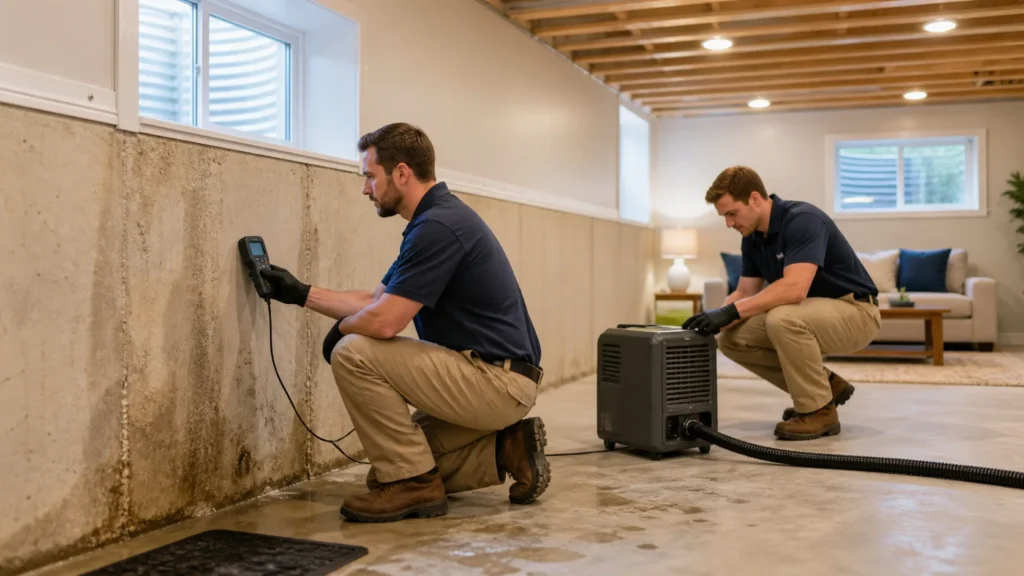
When humidity will not go away, our team can inspect beyond what is visible. Moisture meters, thermal imaging, humidity readings, and visual inspections can help locate water behind walls, under flooring, around foundations, and near plumbing connections.
A professional restoration plan may include:
- Inspecting the affected space and locating the moisture source
- Stopping active leaks or water intrusion
- Extracting water and drying damp materials
- Monitoring moisture levels during the drying process
- Removing mold when conditions call for it, followed by repairs or remodeling
Quick action matters when humidity comes with water stains, wet flooring, visible mold, sewage odors, or a recent flood or plumbing issue. Addressing water damage in Vernon Hills early can help limit the amount of material affected and make it easier to restore the basement safely.
Before fall weather brings more rain and temperature swings, pay attention to gutters, downspouts, sump pumps, foundation walls, plumbing connections, and basement storage areas. A basement that remains humid despite ventilation and dehumidification may have a moisture source that needs professional attention.
Protect Your Basement From Further Damage
Master Service Pro can assess moisture concerns and recommend the right next steps for your property. For prompt help with water damage in Vernon Hills, our team is ready to identify the source and support a thorough recovery. Contact us to schedule an inspection and get clear guidance for protecting your basement.
FAQs
What Humidity Level Is Too High For A Basement?
The U.S. Environmental Protection Agency recommends keeping indoor humidity below 60%, ideally between 30% and 50%. Levels that stay above 60% can increase the risk of condensation, mold growth, and damage to materials.
Can A Humid Basement Mean There Is A Hidden Leak?
Yes. Hidden plumbing leaks, appliance leaks, foundation seepage, and water intrusion behind finished walls can raise humidity before you see standing water or obvious staining.
Will A Dehumidifier Solve Basement Water Damage?
A dehumidifier can reduce moisture in the air, but it cannot repair an active leak, foundation crack, failed sump pump, or wet building materials. The water source still needs to be found and corrected.
How Quickly Can Mold Grow After Basement Water Damage?
U.S. Environmental Protection Agency cleanup guidance recommends drying wet materials within 24 to 48 hours to help prevent mold growth. Prompt drying and moisture control can help reduce the chance of further damage.
When Should I Call A Water Damage Professional In Vernon Hills?
Professional help is appropriate when you notice persistent musty odors, visible mold, damp walls, wet flooring, recurring humidity above 60%, water stains, plumbing leaks, or moisture after heavy rain.