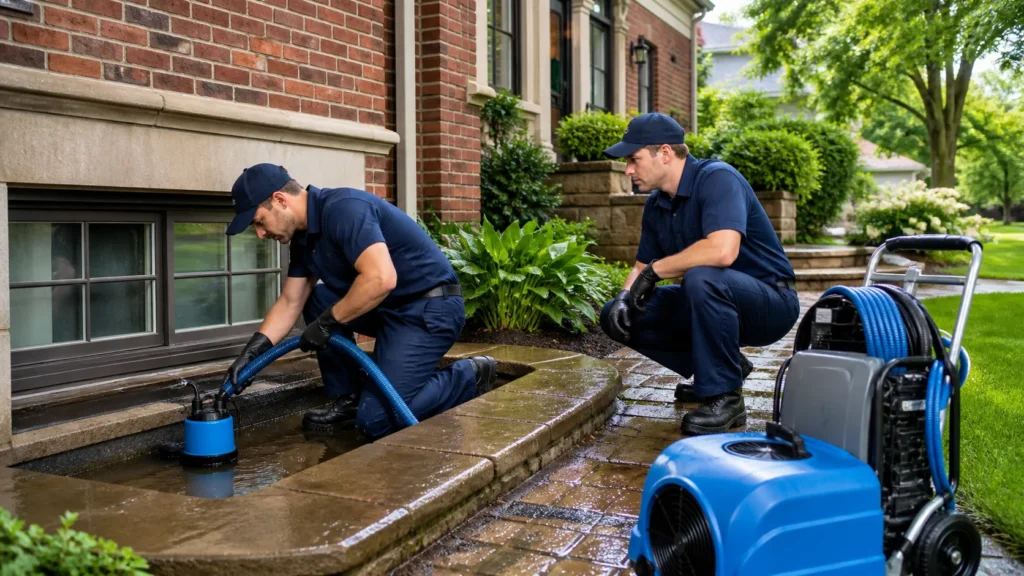
Stop Window Well Flooding Before It Spreads
A flooded window well can send water into a Hinsdale basement faster than many property owners expect. October rainstorms, falling leaves, and early freeze-thaw weather can all overwhelm drainage near below-grade windows. Finished basements, older drainage systems, and aging window seals may leave homes especially open to water damage in Hinsdale.
The first signs are often easy to miss. You may notice standing water in the well, dampness on a basement wall, a musty smell, wet carpet near a window, or visible seepage around the frame. Even a small amount of water can soak drywall, insulation, flooring, furniture, and stored belongings. We recommend prompt professional assessment because moisture can travel farther than what you see on the surface.
Why Water Collects Below Grade
Window wells are designed to bring light and access to basement windows, but they can also collect rainwater, melting snow, roof runoff, and water from landscaping. When the drain at the bottom is clogged or the surrounding soil is compacted, water may have nowhere to go except against the home.
In Hinsdale, we often see water concerns connected to features such as older foundations, finished basements, below-grade bedrooms, worn window seals, and landscaping that slopes toward the house. A downspout that empties near a window well can add a surprising amount of water during a storm.
Fall weather can make these problems more noticeable. Leaves, soil, and debris may block drains, while heavier rain can expose weak spots in seals and foundation walls. As temperatures begin to dip, water caught in small cracks can freeze and expand, making future leaks worse.
Common warning signs include:
- Water pooled inside the window well
- Damp or stained basement walls
- Carpet that feels wet near a basement window
- A musty odor in the basement
- Peeling paint, bubbling drywall, or visible seepage
Find the Cause Before Repairing the Damage
Pumping standing water out of a window well may bring short-term relief, but it does not always fix the cause. Recurring flooding can point to a blocked well drain, broken drain pipe, damaged cover, cracked foundation wall, failing caulk, poor grading, or downspouts that discharge too close to the property.
Water entering at a basement window can also be confused with a plumbing issue or a foundation leak. That is why we look beyond the visible puddle when assessing water damage. Identifying where the water came from helps guide the right repairs and reduces the chance of another wet basement after the next storm.
If water enters your basement, focus on safety first. Avoid electrical outlets, appliances, cords, and equipment in wet areas. If it is safe to do so, move belongings away from the water and take photos of visible damage for your records. Wet materials should be assessed quickly, especially carpet, padding, drywall, insulation, and wood items.
Respond Quickly to Basement Water Damage
Once water gets through a basement window, it can spread behind walls, under flooring, and into insulation. A damp surface may look minor while moisture remains hidden in building materials. Fast water extraction and structural drying can help limit damage and reduce the risk of mold growth.
Our restoration process begins with a moisture inspection to identify affected areas. From there, we remove water, place drying equipment where needed, monitor drying progress, clean impacted surfaces, and recommend repairs when materials cannot be saved. Each situation is different, especially when water has reached finished areas or porous materials.
Prompt drying matters because damp drywall, carpet, wood, and insulation can support mold growth when they stay wet. Musty odors, discoloration, or soft materials may indicate that moisture has lingered longer than it should. Addressing the water source and drying the affected space are both important parts of protecting indoor air quality.
Prevent Future Window Well Floods
Prevention starts outside, before water has a chance to build up against below-grade windows. We recommend having drainage components and basement openings inspected before winter weather arrives, particularly if you have seen water in the well before.
Helpful prevention measures include:
- Keeping window wells clear of leaves, soil, and debris
- Checking that window well drains are open and working
- Extending downspouts away from the foundation
- Maintaining grading that directs water away from the home
- Inspecting window seals and visible foundation cracks
A durable, properly fitted window well cover can help keep out rain, leaves, animals, and debris while still allowing natural light into basement spaces. Covers are only one part of the solution, though. If water repeatedly collects in a well, the drain, grading, foundation, or drainage piping may need professional evaluation rather than another one-time cleanup.
All cleaning technicians are IICRC certified and serve Lake County, Cook County, McHenry County, DuPage County, Kane County, Will County, and Chicago, IL. For lasting protection, keep window wells clear, direct roof runoff away from the foundation, and address recurring water buildup by identifying and correcting the underlying drainage issue.
Protect Your Hinsdale Home From Further Damage
For prompt help with water damage in Hinsdale, our team can assess the affected areas and begin the restoration process. Master Service Pro provides thorough cleanup and restoration services tailored to your home’s needs. Our cleaning technicians are IICRC certified and ready to help. Contact us to schedule service.
FAQs
Can Window Well Flooding Cause Foundation Damage?
Yes. Repeated water buildup near a foundation can increase pressure against basement walls, worsen existing cracks, and allow water to seep into the home. Addressing drainage concerns early can help reduce the chance of more extensive repairs.
What Should I Do If Water Enters My Basement Through A Window Well?
Stay away from electrical hazards, remove belongings from wet areas if it is safe, and document visible damage with photos. Prompt water removal, drying, and moisture inspection can help keep moisture from spreading into walls, flooring, and insulation.
How Can I Prevent Leaves From Clogging My Window Well Drain?
Clear leaves, soil, and debris from the window well regularly, especially during fall. A properly fitted cover can also help keep debris out while allowing natural light into the basement.
Will Wet Basement Carpet Need To Be Replaced After Window Well Flooding?
Not always. The outcome depends on how much water entered, how long the carpet stayed wet, the type of water involved, and whether the carpet, padding, and subfloor can be thoroughly dried and cleaned. A professional inspection can help determine the best option.
How Quickly Can Mold Grow After Basement Flooding?
Mold may begin developing within 24 to 48 hours when moisture remains in carpet, drywall, insulation, wood, or other porous materials. Rapid water removal and complete drying are important for reducing mold concerns.