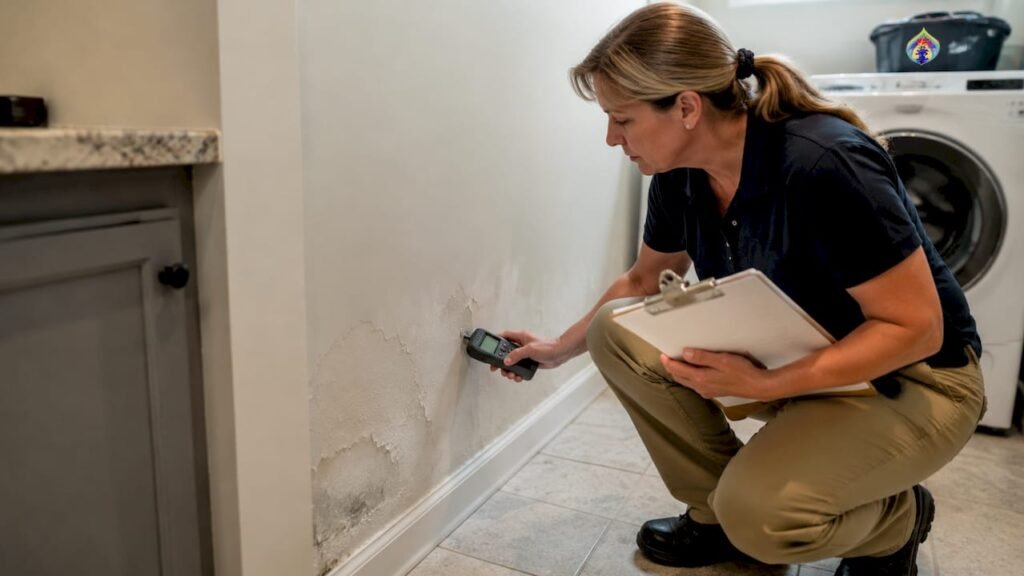
Old water damage causes mold because moisture trapped inside building materials creates the exact conditions mold spores need to germinate and spread. This process, known in the restoration industry as secondary damage, often begins invisibly within 24–48 hours of initial water exposure. The real danger is that surfaces can feel completely dry while moisture remains locked inside drywall, wood framing, and insulation. Understanding why old water damage causes mold is the first step toward protecting your home and your health before a hidden problem becomes a costly one.
How does old water damage create conditions for mold?
Mold spores are present in virtually every indoor and outdoor environment. According to the U.S. EPA, mold spores need moisture and organic food sources like drywall paper, wood, and carpet backing to grow. Water damage supplies both in one event.
When water enters your home through a burst pipe, a roof leak, or a flooded basement, it does not stay on the surface. Water wicks deep into porous materials through capillary action. Drywall absorbs water like a sponge. Wood framing swells and retains moisture for weeks. Insulation traps water and holds it against structural members with almost no airflow to help it dry.
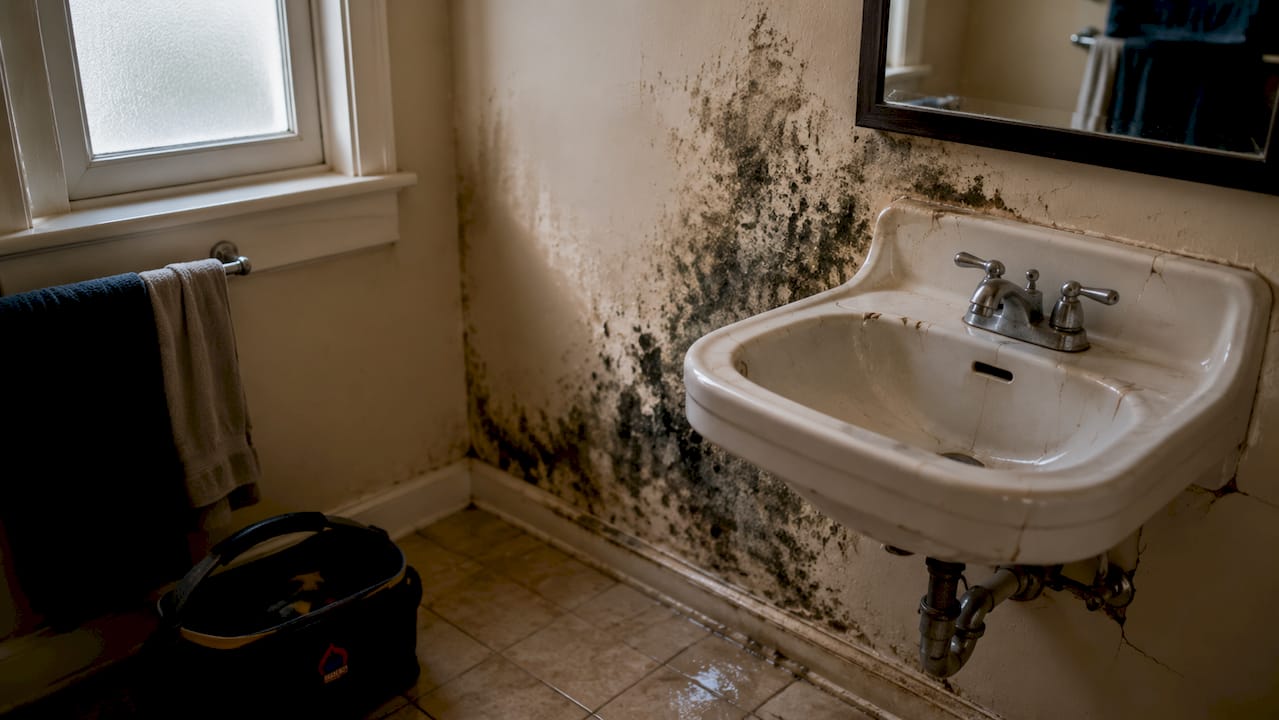
The 48-hour drying window is the most critical factor in preventing mold growth from water damage. The EPA confirms that drying within 24–48 hours typically prevents mold from taking hold. Miss that window and spores already present on building surfaces begin to germinate. Once hyphae, the thread-like roots of mold, penetrate a material, the surface can appear dry while active mold continues growing beneath it.
Hidden moisture is the reason old water damage remains dangerous long after the visible water is gone. The EPA notes that moisture trapped in building cavities behind drywall or under subflooring can sustain mold colonies for years without detection. Pre-1980 homes face a higher risk because they commonly lack modern vapor barriers and contain more porous materials that wick and hold moisture.
The four conditions that allow mold to grow after water damage are:
- Moisture source. Any water intrusion that is not fully dried within 48 hours creates a viable moisture reservoir.
- Organic material. Drywall paper, wood studs, carpet fibers, and ceiling tiles all serve as food for mold.
- Temperature. Indoor temperatures between 60°F and 80°F are ideal for mold germination.
- Time. The longer moisture remains, the deeper mold roots penetrate and the harder remediation becomes.
Pro Tip: Use a non-invasive moisture meter on walls and floors after any water event, even minor ones. Readings above 16% moisture content in drywall indicate conditions favorable for mold growth.
What are the timelines and signs of mold growth after water damage?
Mold moves faster than most homeowners expect. Mold spores germinate within 24–48 hours of moisture exposure on organic building materials. That timeline applies to old water damage too, because any new humidity event or seasonal moisture fluctuation can reactivate dormant spores in previously wet materials.
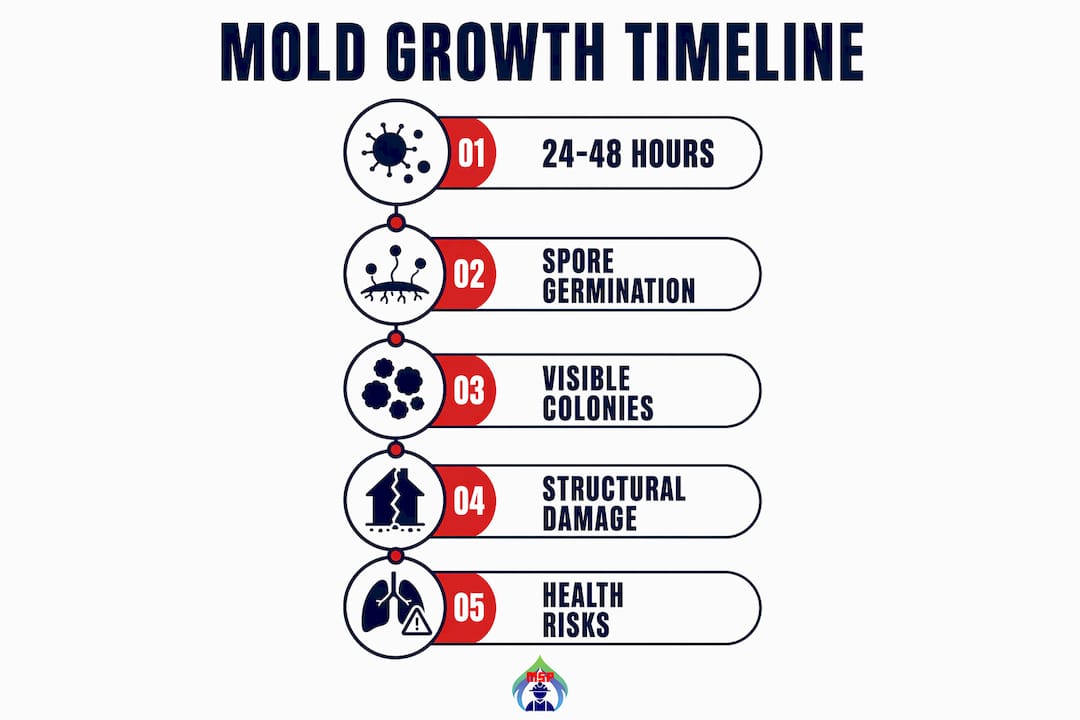
Visible fuzzy colonies typically appear within 3–7 days of sustained moisture. Mature, spore-releasing colonies develop within 7–14 days of continuous exposure. By the time you see a dark patch on your ceiling or wall, the colony has already been active for at least a week.
The signs of mold growth from water damage include:
- Musty odor. A persistent musty smell signals microbial volatile organic compounds, or mVOCs, produced by active mold metabolism. This odor often appears before any visible growth develops.
- Discoloration. Yellow, brown, or black staining on walls, ceilings, or floors often indicates mold or moisture damage beneath the surface.
- Bubbling or peeling paint. Paint separates from drywall when moisture accumulates behind it.
- Warped flooring. Wood floors that cup or buckle signal moisture trapped in the subfloor.
- Allergy-like symptoms. Sneezing, coughing, or eye irritation that worsens indoors points to airborne mold spores.
Key stat: Remediation costs can multiply by 3 to 10 times if mold is left untreated for more than 72 hours after initial water exposure. Early detection is not just a health decision. It is a financial one.
Hidden mold is the most dangerous category. Colonies frequently grow behind drywall, under carpet padding, inside crawlspaces, and above ceiling tiles. You can have a significant mold problem with no visible signs at all. A musty smell in a room with no visible staining is a reliable indicator that hidden mold is active.
Why is mold from old water damage a health and structural risk?
Mold from unresolved water damage is not just a cosmetic problem. Research published by the European Society of Medicine found that 98% of examined studies report respiratory symptoms in occupants of water-damaged buildings, and 96.8% report immune system abnormalities. Those numbers reflect chronic exposure, exactly the situation created by hidden mold from old water damage.
The health effects stem from a complex mixture of microbial fragments, mycotoxins, and volatile compounds. These substances cause oxidative stress and chronic inflammation in the body. Children, elderly residents, and people with asthma or compromised immune systems face the highest risk.
“Mold does not just affect air quality. It actively digests the materials it grows on, breaking down the structural integrity of your home over time.”
Structurally, mold digests cellulose and other organic compounds in wood and drywall. A floor joist or wall stud with active mold loses strength progressively. Left unchecked for months or years, this degradation can compromise load-bearing elements and require full structural replacement rather than simple remediation. The cost difference between early remediation and structural repair is substantial.
Fixing visible mold without addressing the moisture source guarantees recurrence. Mold spores are always present in indoor environments. Remove the colony but leave the moisture, and new growth returns within days. This is why professional mold remediation always includes moisture source identification as a required first step.
How can you detect and prevent mold from old water damage?
Early detection saves money and protects health. The most reliable tool for finding hidden moisture is a calibrated moisture meter. Probe walls, floors, and ceilings in areas that experienced past water events. Any reading that exceeds normal baseline levels for the material type warrants further investigation.
The areas most likely to harbor hidden mold after old water damage are:
| Location | Why it retains moisture | Detection method |
|---|---|---|
| Behind drywall | Paper facing absorbs and holds water | Moisture meter, thermal imaging |
| Under carpet and padding | Padding traps water against subfloor | Lift corner, check for staining or odor |
| Crawlspaces | Poor ventilation, ground moisture | Visual inspection, humidity gauge |
| Basements | Below-grade walls wick groundwater | Moisture meter, dehumidifier readings |
| Attic spaces | Roof leaks, condensation from HVAC | Visual inspection after rain events |
Pro Tip: Schedule a professional mold inspection for any property that experienced flooding, a plumbing leak, or roof damage in the past two years, even if no visible signs are present.
Preventing mold after water damage requires acting on the moisture source, not just the symptom. Fix leaks immediately. Addressing leaks early prevents the sustained moisture that feeds mold colonies. Run dehumidifiers in basements and crawlspaces during humid months to keep relative humidity below 60%. Improve ventilation in bathrooms, kitchens, and laundry areas where moisture accumulates daily.
When water damage occurs, professional drying equipment including industrial air movers and dehumidifiers achieves the thorough drying that household fans cannot. Understanding how long water damage takes to dry helps you set realistic expectations and avoid assuming the problem is resolved before it truly is. IICRC-certified technicians use moisture mapping to confirm complete drying before closing walls or replacing flooring.
Key Takeaways
Old water damage causes mold because moisture trapped in porous building materials creates persistent conditions for mold spore germination, structural degradation, and serious health risks that worsen the longer the moisture remains unaddressed.
| Point | Details |
|---|---|
| 48-hour drying window | Drying water damage within 48 hours prevents mold; delays multiply remediation costs by 3 to 10 times. |
| Hidden moisture persists | Moisture trapped behind drywall or under flooring sustains mold growth for months or years without visible signs. |
| Musty odor is a warning | A persistent musty smell signals active mold producing mVOCs, often before any visible colony appears. |
| Health risks are documented | Studies link chronic exposure in water-damaged buildings to respiratory symptoms and immune system abnormalities. |
| Fix the source first | Removing mold without eliminating the moisture source guarantees the colony returns within days. |
What I’ve learned from years of watching homeowners underestimate old water damage
The most common mistake I see is the assumption that a dry surface means a dry wall. Homeowners patch the ceiling, repaint, and move on. Six months later they call because the musty smell is back and the drywall is soft. The mold never left. It just kept growing where no one was looking.
The second mistake is treating musty odors as a minor nuisance. That smell is biological evidence. Mold is actively metabolizing material inside your walls and releasing compounds into your air. If your home smells musty after any past water event, treat it as a confirmed finding, not a suspicion.
I have also seen property managers delay professional assessment because they assume the cost is not justified for a “small” old leak. The math almost always works against that decision. A $300 inspection that catches a hidden colony early costs far less than a $15,000 remediation and structural repair six months later. The mold remediation process is straightforward when caught early. It becomes complicated and expensive when it is not.
My honest advice: if your home had any water intrusion in the past two years and you have not had a professional moisture assessment, schedule one. The cost is low. The peace of mind is real.
— John
Protect your home with professional water damage and mold services

Water damage that is not fully dried and remediated by certified professionals creates a direct path to mold growth, structural damage, and health risks. Masterservicepro provides IICRC-certified water damage restoration and complete mold remediation services across Lake County, Cook County, DuPage County, Will County, and Kane County, IL. Our technicians use professional moisture mapping, industrial drying equipment, and EPA-approved remediation protocols to address both visible and hidden mold. From the initial inspection through final clearance testing, Masterservicepro handles every step under one roof. Contact us today to schedule an assessment and stop old water damage from becoming a mold problem.
FAQ
How fast does mold grow after water damage?
Mold spores begin germinating within 24–48 hours of moisture exposure on organic building materials. Visible colonies typically appear within 3–7 days, and mature spore-releasing colonies develop within 7–14 days.
Can old water damage cause mold years later?
Yes. Moisture trapped in building cavities like wall interiors, subfloors, and crawlspaces can sustain mold growth for years. Any new humidity event can also reactivate dormant spores in previously saturated materials.
What are the signs of mold from old water damage?
The most reliable early sign is a persistent musty odor, which signals active mold producing microbial volatile organic compounds. Visible discoloration, bubbling paint, warped flooring, and allergy-like symptoms that worsen indoors are also common indicators.
Is mold from water damage dangerous to health?
Research shows that occupants of water-damaged buildings experience respiratory symptoms and immune system abnormalities at high rates. Mycotoxins and microbial fragments released by active mold colonies cause oxidative stress and chronic inflammation with prolonged exposure.
How do I prevent mold after water damage?
Dry all affected materials within 48 hours using professional-grade equipment. Fix the underlying moisture source, whether a leak, poor drainage, or high humidity, before closing walls or replacing flooring. A certified mold inspection confirms complete drying and rules out hidden colonies.