TL;DR:
- Containment barriers prevent mold spores from spreading during remediation by creating a sealed, negative-pressure environment. Proper use involves sealing all penetrations, maintaining negative 5 pascals pressure, and monitoring continuously with a manometer. Full containment is essential for larger areas or proximity to HVAC systems to protect building occupants and property value.
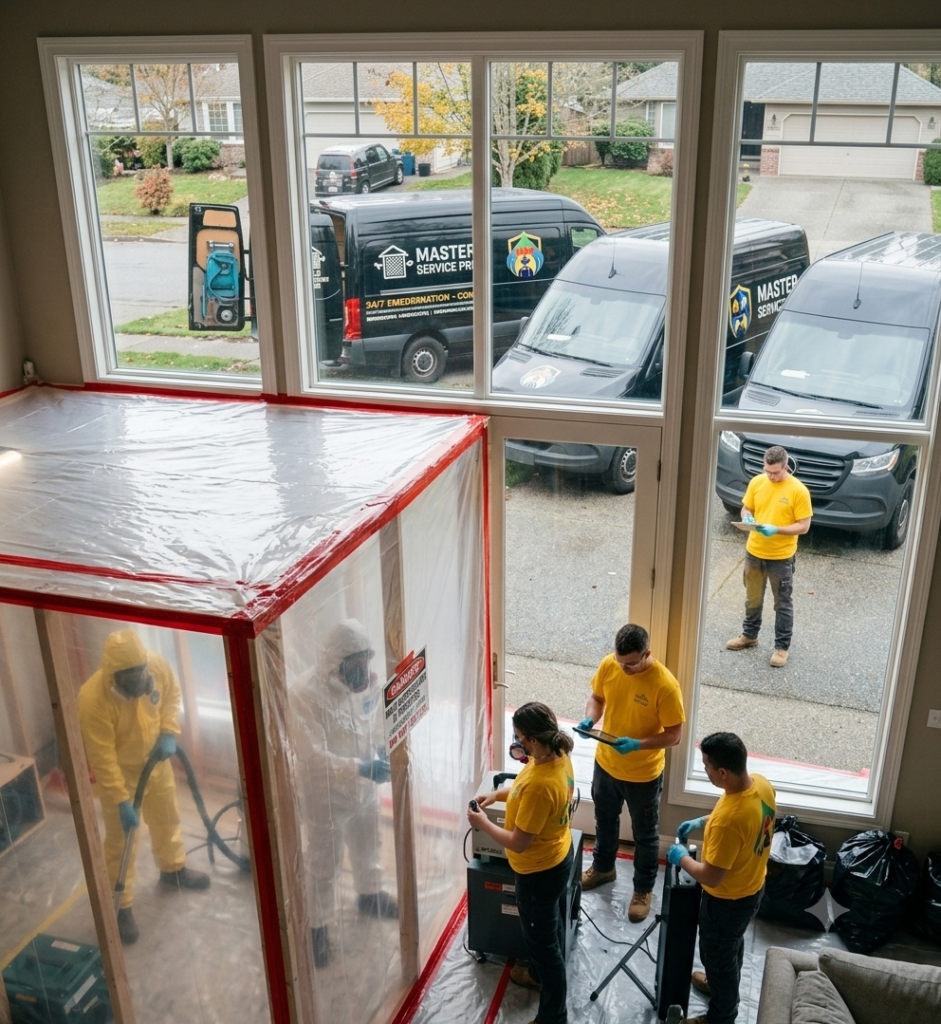
Containment barriers are defined as physical and mechanical systems that isolate mold-affected areas during remediation to prevent spore spread to clean spaces. The role of containment barriers in mold remediation goes beyond simply hanging plastic sheeting. A proper containment system combines polyethylene sheeting, HEPA-filtered air scrubbers, and negative pressure to create a sealed, controlled environment. Without it, disturbed mold spores spread throughout adjacent rooms and HVAC pathways, turning a localized problem into a building-wide contamination event. Standards from the IICRC S520 and the EPA define exactly how this system must be built and maintained.
How do containment barriers physically prevent mold spread?
Containment barriers work through two mechanisms: physical isolation and controlled airflow. Polyethylene sheeting forms the physical boundary around the work area, blocking foot traffic and direct contact with contaminated surfaces. HEPA-filtered air scrubbers exhausted outdoors then create negative pressure inside the containment zone, pulling air inward so spores cannot escape outward into clean areas.
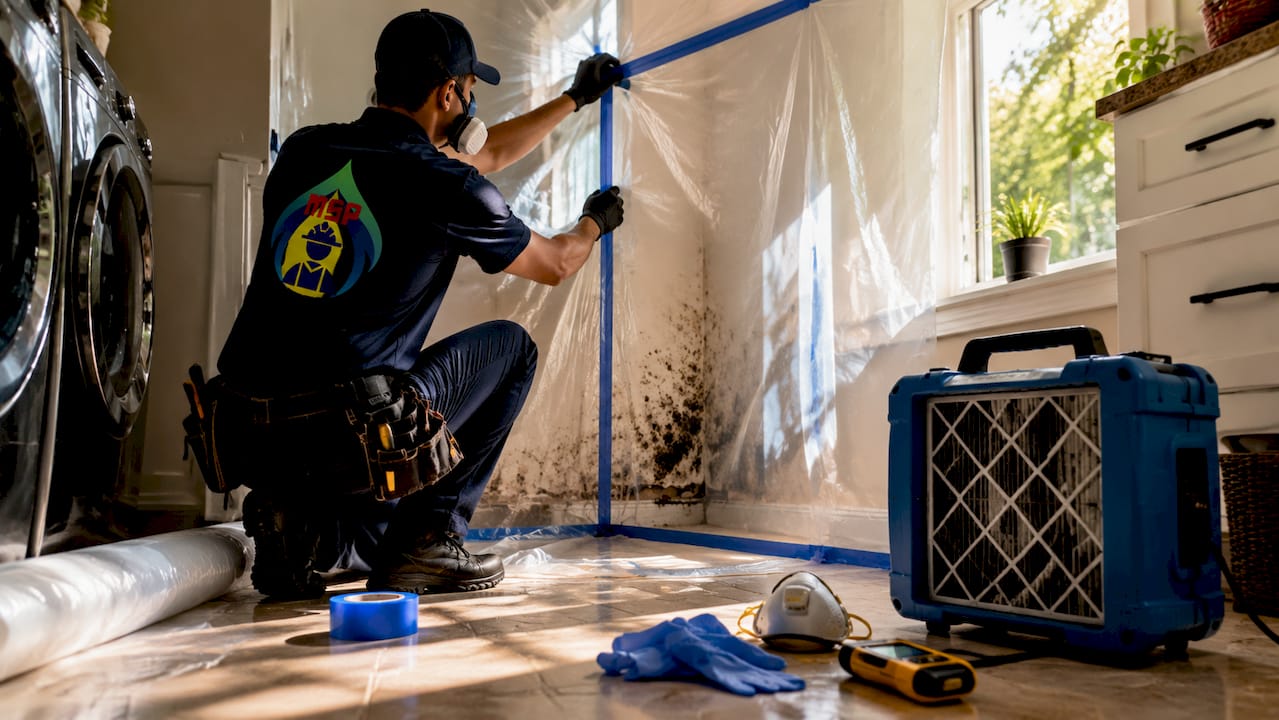
The negative pressure target recognized by the IICRC S520 is approximately negative 5 pascals relative to adjacent spaces. That specific pressure level matters because it guarantees directional airflow at all times, not just when workers are actively disturbing mold. HEPA filtration captures 99.97% of particles 0.3 microns and larger, but filtration alone is not containment. The scrubber only works when containment keeps airborne spores within the controlled space for filtration.
Sealing every penetration is equally critical. Seams, access doors, electrical box openings, and HVAC registers all require physical sealing with tape and sheeting. Turning the HVAC system off is not sufficient. Unsealed HVAC openings allow air movement that bypasses the containment barrier entirely, spreading contamination to other building areas.
- Polyethylene sheeting creates the physical wall around the work zone.
- HEPA air scrubbers exhausted outdoors maintain negative pressure.
- All seams and penetrations must be taped airtight.
- HVAC supply and return registers must be physically sealed, not just switched off.
- Pressure must be verified before demolition begins.
Pro Tip: Watch the plastic sheeting during remediation. If it billows inward, your negative pressure is holding. If it flutters outward, containment has failed and work must stop immediately until the breach is corrected.
What are the different types of containment used in mold remediation?
The IICRC S520 standard defines two primary containment levels based on the size and location of mold growth. Choosing the wrong level is not just a compliance problem. Under-containment poses the same contamination risks as no containment at all.
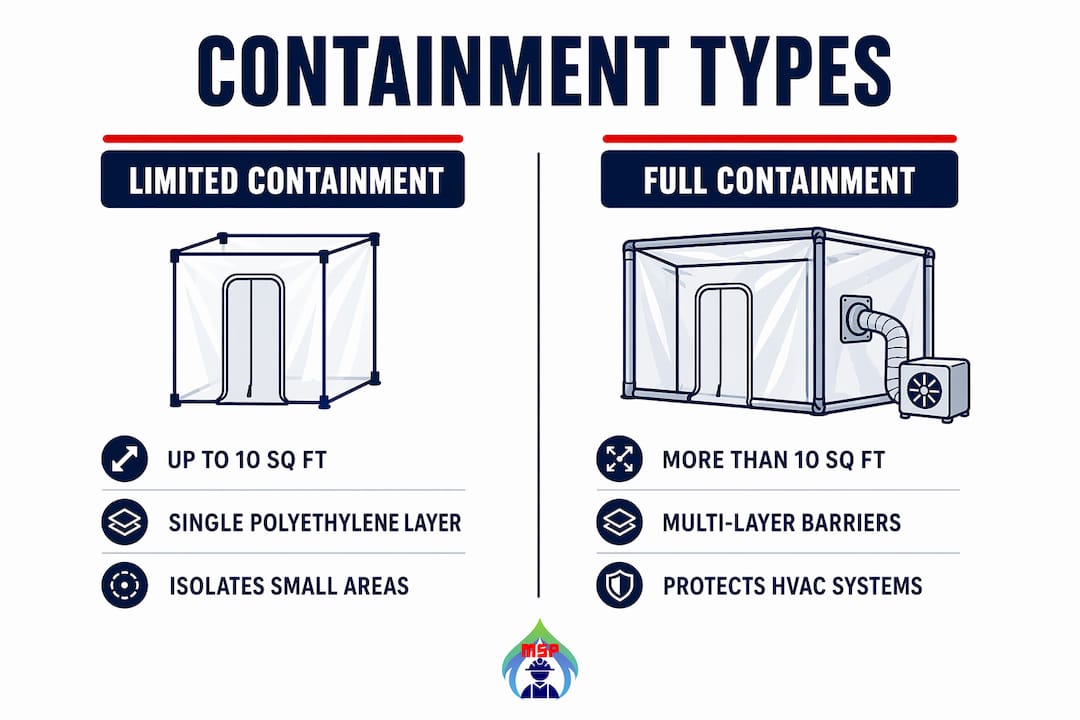
Limited containment applies when mold growth covers 10 square feet or less. It uses a single layer of polyethylene sheeting, one air scrubber, and basic access control such as a flap entry. This setup suits small bathroom mold patches or isolated wall sections.
Full containment is required when mold covers more than 10 square feet or when contamination touches HVAC components. Full containment uses double plastic layers, a decontamination anteroom for workers to remove PPE before exiting, continuous negative pressure monitoring, and pressure targets around negative 5 pascals. Access is controlled through zipper doors rather than simple flap entries.
| Feature | Limited containment | Full containment |
|---|---|---|
| Mold area covered | 10 sq ft or less | More than 10 sq ft or HVAC-adjacent |
| Plastic layers | Single layer | Double layer |
| Pressure monitoring | Basic | Continuous with manometer |
| Worker access control | Flap entry | Zipper door with anteroom |
| Air scrubbers | One unit | Multiple units as needed |
| Insurance compliance | Standard | Required for larger claims |
The choice between these levels affects cost, safety, and whether your insurance carrier will accept the remediation report. Property managers and business owners dealing with commercial spaces should default to full containment whenever HVAC systems are anywhere near the affected area.
- Limited containment works for small, isolated patches with no HVAC involvement.
- Full containment is non-negotiable for larger areas or any HVAC proximity.
- Decontamination anterooms prevent workers from carrying spores out of the zone.
- Zipper doors maintain pressure integrity better than flap entries during frequent access.
What standards and best practices guide mold containment barrier use?
The IICRC S520 is the primary industry standard for mold remediation containment in the United States. It defines containment levels, pressure targets, and monitoring requirements that professional remediators must follow. The EPA provides complementary guidance, including a straightforward visual diagnostic: if the plastic sheeting billows inward, containment integrity holds. Outward flutter means the system has failed.
Manometers are the standard tool for measuring pressure differential between the containment zone and adjacent clean spaces. Continuous pressure monitoring using manometers is required throughout remediation, not just at setup. If pressure drops below the negative 5 pascal threshold at any point, work must stop until the breach is identified and corrected.
Best practice also requires a specific work sequence. Isolate contaminated materials first. Seal HVAC pathways before any disturbance begins. Implement thorough cleaning before removing the barrier. Rushing demolition or ignoring HVAC pathways risks overwhelming the containment system even when the sheeting itself is properly installed.
- Install and seal polyethylene sheeting around the entire work area before any demolition.
- Physically seal all HVAC supply and return registers with sheeting and tape.
- Start HEPA air scrubbers and verify negative pressure with a manometer before work begins.
- Monitor pressure readings continuously throughout the job.
- Stop work immediately if pressure drops or sheeting shows outward flutter.
- Complete cleaning and HEPA vacuuming before removing any containment barrier.
Pro Tip: Check your mold remediation compliance documentation. A professional remediation report should include pressure readings and containment setup records. If it does not, the job may not meet IICRC S520 requirements.
How do containment barriers protect homeowners, property managers, and business owners?
Containment barriers protect the building itself, not just the workers inside the work zone. PPE protects personnel and signage warns of hazards, but containment prevents spread of contamination to clean building spaces. That distinction matters enormously for property owners who need to keep parts of their building occupied during remediation.
For homeowners, effective containment means the bedroom two doors down from a moldy bathroom stays clean. For property managers, it means tenants in unaffected units face no health risk during the cleanup process. For business owners, it means operations in adjacent areas can continue without shutting down the entire facility.
The financial stakes are just as real. Cross-contamination caused by failed containment forces remediators to treat additional areas, multiplying costs and extending timelines. A well-executed containment strategy reduces the chance of costly rework and gives insurance carriers the documentation they need to process claims without dispute.
- Containment keeps spores out of clean rooms, hallways, and HVAC pathways.
- Occupied areas of a building remain safe when containment is properly maintained.
- Successful containment reduces total remediation cost by preventing cross-contamination.
- Insurance carriers require documented containment compliance for larger mold claims.
- DIY mold removal is only appropriate for patches under 10 square feet with no HVAC involvement. Anything larger requires a certified professional.
Knowing when to call a professional is one of the most practical decisions a property owner can make. The IICRC S520 threshold of 10 square feet is a clear line. If mold growth exceeds that area, or if you see mold near any air handler or duct, the risk of spreading contamination without professional containment equipment is too high to attempt it yourself.
Key Takeaways
Containment barriers are the single most critical element in mold remediation because they control airflow, isolate contamination, and protect every clean space in the building from spore spread.
| Point | Details |
|---|---|
| Negative pressure is non-negotiable | Maintain approximately negative 5 pascals inside the containment zone throughout the entire job. |
| Seal HVAC registers physically | Turning off the system is not enough; tape and sheet every supply and return opening. |
| Match containment level to mold size | Use limited containment for 10 sq ft or less; use full containment for larger or HVAC-adjacent areas. |
| Monitor pressure continuously | Use a manometer throughout remediation and stop work immediately if pressure drops. |
| Containment protects the building | PPE protects workers; containment barriers protect unaffected rooms, tenants, and property value. |
What I have learned from watching containment fail in the field
After years of working alongside remediation crews and inspecting completed jobs, the pattern I see most often is this: teams treat containment as a setup task rather than an ongoing engineering responsibility. They hang the plastic, start the scrubber, and then stop paying attention to the system while they focus on demolition.
The failures I have seen most frequently come from three places: inadequately taped seams that open under pressure, HVAC registers that were turned off but never physically sealed, and access doors that workers prop open for convenience. Each one of those failures can send a cloud of disturbed spores into a clean hallway in seconds. No HEPA filter and no cleaning procedure can undo that once it happens.
The insight that most property owners do not hear from contractors is this: containment is an engineered envelope, not a precaution. It requires the same attention to detail as any other structural system in your building. When you hire a remediation company, ask to see the pressure readings before work begins and ask how often they check them during the job. A professional team will have that answer ready. A team that hesitates should give you pause.
Choosing the right containment level for the contamination size is equally important. I have seen full-scale mold events treated with single-layer limited containment because the contractor wanted to save time. The result was a remediation that failed post-clearance testing and required a complete restart. The cost of doing it right the first time is always lower than the cost of doing it twice.
— John
Masterservicepro’s approach to professional mold containment
When mold remediation requires more than a DIY fix, the containment setup is where the job is won or lost. Masterservicepro’s IICRC-certified technicians build containment systems that meet IICRC S520 and EPA standards on every job, from small bathroom mold patches in Lake County homes to large-scale commercial remediation across Cook County and DuPage County. Every project includes documented pressure monitoring, physically sealed HVAC registers, and post-remediation clearance testing. If you are dealing with a mold problem or recent water damage restoration need, Masterservicepro handles both under one roof, eliminating the coordination problems that come with multiple contractors. Contact Masterservicepro for a professional evaluation and a remediation plan built around verified containment from start to finish.
FAQ
What is the purpose of containment barriers in mold remediation?
Containment barriers isolate mold-affected areas and create a negative-pressure environment that prevents spores from spreading to clean spaces during cleanup. They protect both building occupants and unaffected areas of the property.
How do I know if containment is working during remediation?
Watch the polyethylene sheeting. Inward billowing confirms negative pressure is holding. Outward flutter signals a containment breach, and work must stop until the issue is corrected.
When is full containment required instead of limited containment?
Full containment is required when mold growth exceeds 10 square feet or when contamination is near HVAC components. The IICRC S520 standard defines these thresholds clearly.
Can I remove mold myself without a containment barrier?
DIY removal is only appropriate for patches of 10 square feet or less with no HVAC involvement. Larger areas require professional containment equipment to prevent cross-contamination.
What tool measures negative pressure inside a containment zone?
A manometer measures the pressure differential between the containment area and adjacent clean spaces. Continuous monitoring with a manometer is required throughout the remediation process under IICRC S520 guidelines.